Citizens Energy: Making Energy Democracy Happen

By Uncategorized

This publication has been produced as part of the GEF transnational project Energy Democracy: Changing the Energy System.  

In this project, Green foundations from the United Kingdom, Greece, Macedonia and Belgium share their experiences and ideas and develop policy proposals to enable a transition to a renewable and democratic energy system.

The publication, written by Dirk Holemans and Kati Van de Velde from Flemish think tank Oikos explores the concepts of a democratic energy regime, drawing from examples in Germany and Denmark, and cooperation between citizens and local governments, focusing on case studies in the UK and Belgium.

Download your copy here. 

This publication is also available in Serbian, Portuguese, Spanish, Macedonian & Turkish.


Citizen’s Energy: Making Energy Democracy Happen (Brussels)

By

Context 

This conference is part of the Green European Foundation Energy Democracy transnational project, which aims to explore the potential of an energy transition for Europe and how to shape this process in a democratic, participatory way. 

Europe has to change its energy system into a fully renewable one to transition to a sustainable economy and to establish a real climate policy. This is a major challenge for every Member State of the European Union, but will only succeed if the states work together. 

European citizens are already playing an active role, together with governments at different levels, as they are organising themselves in national energy cooperatives and also the European Federation REScoop. 

Studies show that by 2050, around 45% of all EU households could be producing their own renewable energy, more than a third could come through renewable energy cooperatives. This constitutes a huge opportunity for regional economic development, as locally-owned renewable energy projects deliver eight times the value of projects that are owned by private companies not from the area. However, the reality in the different Member States is extremely diverse. While the contribution of citizens’ Energy co-ops and local communities is well recognized in Western Europe, the situation in Eastern Europe is quite the opposite. 

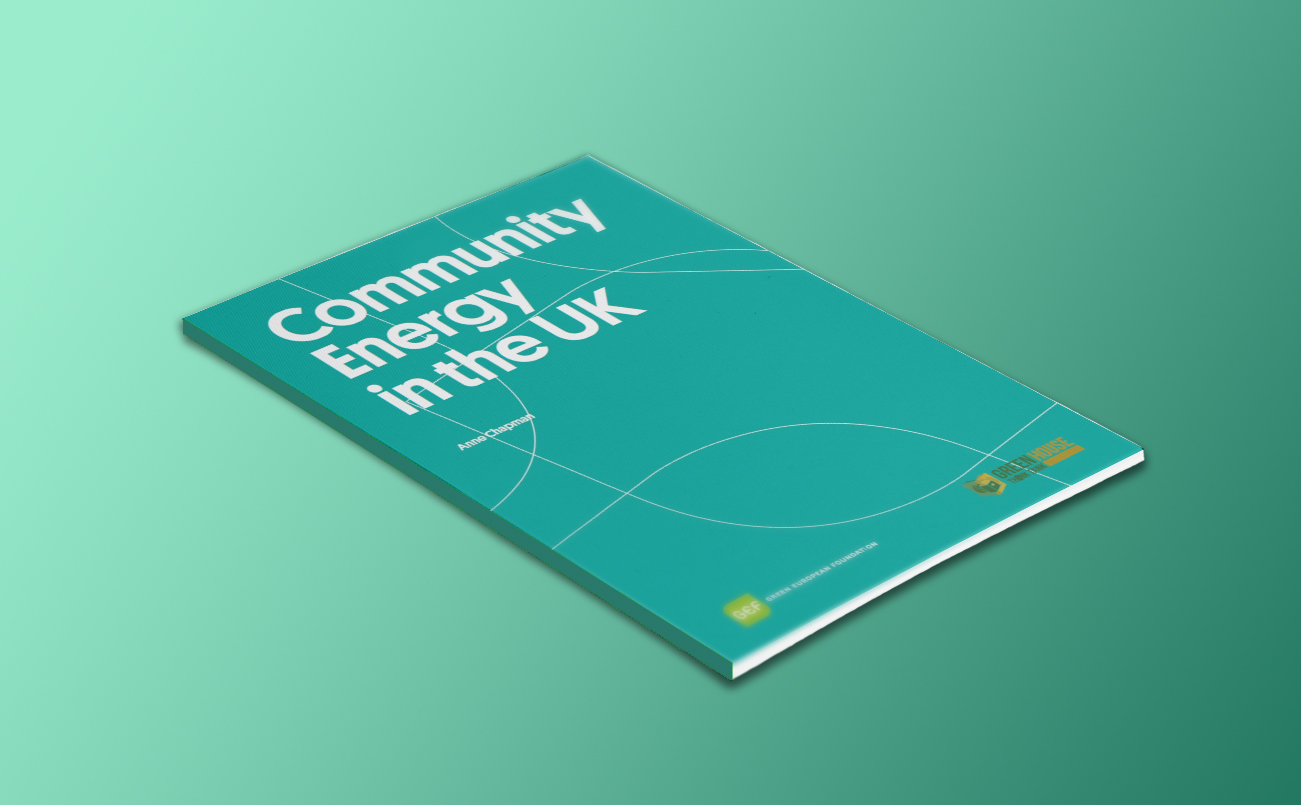
See also the publication that was produced for this project: Community Energy in UK. 

About the event 

Our energy system is outdated in many ways: fossil fuel based and thus unsustainable, technocratic, and dominated by a few big market players. But over the last few decades, citizens have been developing an alternative system that is renewable, decentralised and democratic.

The development of renewable energy cooperatives demonstrates what citizens are capable of, especially when they are supported by a partner state, one that develops a stimulating legal framework and offers smart incentives.

How can we strengthen this transition to an energy system of the future? This conference will bring together contributors from GEF partners, energy cooperatives and energy sectors to discuss renewable energy potential on both a European and local level.  

Speakers 

  • Dirk Holemans, coordinator Oikos Think Tank
  • Dirk Vansintjan, President REScoop.eu
  • Elise Steyaert, from local climate cooperation Klimaan and VEB (Vlaams Energie Bedrijf)  
  • Claire Roumet, Director Energy Cities 
  • Johan Daenen, Member of Flemish Parliament 
  • Bob d’Haeseller, Green Party in Eeklo (BE)
  • Anne Chapman, Director Green House Think Tank (UK)
  • Aurélie MaréchalDirector Green European Foundation

Programme

17:00 – Welcome by Aurélie Maréchal, Director of Green European Foundation
17:10 – Stage setting by Dirk Holemans, coordinator at Oikos think tank
17:30 – Local and citizen iniatatives with Elise Steyaert (Klimaan), Dirk Vansintjan (REScoop), Bob d’Haeseleer (Groen Eeklo)
18:30 – Q&A
19:00 – Coffee break and snacks
19:30 – Role of governments with Claire Roumet (Energy Cities), Johan Daenen (Member of Flemish Parliament), Anne Chapman (Green House Think Tank)
20:30 – Q&A

Tickets for the event can be purchased from the Oikos website here. 

Community Energy in the UK

By Uncategorized

This report is part of the Green European Foundation project, Energy Democracy, Changing the Energy System. It tells the story of people in the UK who have attempted to gain ownership of the bits of their energy system available to them – to meet the challenge posed by climate change – and to help people struggling with the cost of the energy needed to keep themselves warm and healthy.

Ecopolis 2018: Just Transition (Brussels)

By

Context

Is it possible to bring about fundamental changes to our societies while still respecting the boundaries of our planet and offering opportunities to develop for everyone? Is it possible to realise a Just Transition – across diverse sectors of society such as food, work, transport, energy etc. – in a increasingly polarised and inequitable world?

Facing this challenge will require far reaching changes of an unseen scale and speed while at the same time not leaving a part of the population behind.

How can social justice be strengthened and ecological sustainability be fostered at the same time? For a just transition, this seeming contradiction has to be resolved and cooperation in a superdiverse society must be realised, so everyone can have equal access to a valuable job, payable and sustainable housing, food and energy.

About the event

Ecopolis is an annual day gathering people who are concerned with the transition to a socio-ecological society. Because ecological challenges cross national and language boundaries, Ecopolis is diverse, international and interactive, with the Green European Foundation contributing to a strong European dimension of the event.

The event invites national and international authors to debate the transition of our societies. Academics, writers and civil society thinkers meet to enter into a constructive and open dialogue. Besides lectures, debates and interviews, there is an extensive book-fair with multilingual, ecological books and an internationally acclaimed documentary on the environment will be screened.

Speakers will include:

Kate Raworth, Economist and author of “Doughnut Economics – 7 Ways to Think Like a 21st-Century Economist”

Rachida Lamrabet, Novellist and author of “Vrouwland”, “Een kind van God” and others

Jeroen Theunissen, Writer and teacher at RITCS Brussels, author of “De omwegen” “Onschuld” and others

Sharan Burrow, General Secretary of the International Trade Union Confederation (ITUC)

Alberto Alemanno, Professor of EU Law at HEC Paris and Global Professor of Law at the New York University School of Law, Co-Founder and Director of The Good Lobby

Laurien Spruyt, Policy Officer ‘Mobility and Climate’ at Bond Beter Leefmilieu, Co-Creator of UGent1010 and former Campaign Coordinator of Climate Express

Jean-Pascal van Ypersele, Climatologist and Professor of Environmental Sciences at the Catholic University of Louvain

Yasmien Naciri, Marekting & Communication Entrepreneur, Columnist and author, Chairwoman of Amana n-pa and Fleks


Programme

11:00: The uncomfortable consumer: on a diet in the candy store

It’s a challenge, trying to live an environmentally conscious life, while society constantly tempts you to cheap city trips or cheap clothing. While each of us is muddling along, the temptation is systemic. Transition will only succeed if we tackle it structurally and if politicians dare to stick their necks out (government role, ‘moralising technology’).
Theatrical performers Anoek Nuyens and Rebekka de Wit present us their Monologue For A Consumer. Followed by a panel with, among others, Laurien Spruyt, policy officer Bond Beter Leefmilieu, and Jeroen Theunissen, author of Jouw Huid (‘Your Skin’).

12:15: Relay talks: citizens in action, from May ’68 ’til today

With which actions can citizens contribute to speeding up the transition? By lobbying as much as possible with the European institutions, and/or organising protest actions and blocking lignite plants? How does today’s action differ from a few decades ago?
With Yasmien Naciri, a young entrepreneur and author of Wij nemen het heft in handen, Samuel Cogolati, researcher at KULeuven and activist in the domain of the commons, Lenny Peeters, laureate of the Bronzen Uil prize for best debut novel in Dutch, and Paul Goossens, journalist for De Standaard.

13:30: The connection between identity debate, inequality and the ecological issue

From the perspective of social ecology, the ecological crisis, which is the result of the idea that man has to dominate nature, is connected with the domination of one person over the other.
A debate with among others Rachida Lamrabet, author of Zwijg allochtoon, Leo Lucassen, migration expert and professor at Leiden University, and Aziza El Miamouni from Wijkacademie Molenbeek.

15:00: Just Transition – The proof is in the eating

‘To change everything it takes everyone’, a just transition is about both decent jobs, climate policy as well as a just society. An interesting dialogue between trade union, industry and research community. With the economist Kate Raworth, author of The Doughnut Economy, Sharan Burrow, Secretary-General of the International Trade Union Confederation, and Thomas Leysen, Chairman of Umicore & KBC. Moderated by Karel Verhoeven (chief editor at De Standaard)

16:00: Grand Tour 2020

Pieter Van Bogaert talks with Guy Gypens, director of Kaaitheater, about his book Grand Tour 2020 – the report of a trip through ten European cities where he talked to ten artists about their ecological commitment (as an artist and as a citizen). The book is the final document of ten years of ‘Imagine 2020’, a European collaboration on art and ecology founded by Kaaitheater in 2008.

16:30: Does the climate summit of Poland tackle the challenges?

Two weeks after ECOPOLIS, the COP24 climate summit will take place in Poland, the country that still largely runs on coal(mines). What can we expect from this COP? What does ‘Just Transition’ mean for workers in polluting industries? Can we offer them green jobs?
With, among others, climate expert and IPCC member Jean-Pascal van Ypersele and Catalina Caro (CENSAT, Friends of the Earth Colombia). Moderated by Tine Hens.


The event will be simultaneously interpreted in English, French and Dutch.

Book your tickets for the event here 

For more info & updates on the programme, follow us on Twitter and Facebook.

You can find here the Facebook profile of the event  and here the website for the event.
 

commons

The Commons Transition in Practice (Brussels)

By

Context

Cities are becoming a new and hopeful transnational governance level. They are organising themselves in a whole tissue of networks (Fearless Cities, Fabcities, etc.), working together in domains like climate policy, renewable energy and urban economy.

At the same time, citizens are developing a whole range of urban commons, based on co-operation and an ethics of care. Tired of only being a powerless consumer or a passive citizen, we get active as maker, urban farmer, solidarity volunteer, user of shared resources, civic or social entrepreneur, etc. This goes along with the establishment of new organisations and infrastructures like fab labs, energy co-ops, co-working spaces, urban food production plots, and many more.

In recent years, we have seen cities like Ghent and Bologna moving a step further, establishing structures and processes that aim at building synergies between the public and the commons domain. This is part of a new political vision, the Partner State. So, a partner city sustains and gives incentives to alternative civil and economic institutions, like the commons and cooperatives. The conference, as part of this year’s transnational project around Urban Commons Transitions, therefore aims to look at these developments of collaborative city-making and to examine those prototypes of transformative cities as a driving force towards socio-ecological societies.

Lately institutions, research groups and organisations were created to investigate how commons could be integrated in a more sustainable way in the vivid networks of cities. 

About the Event

The seminar will be kicked off by two experts who will share their experiences and knowledge: Michel Bauwens (P2P-Foundation) and Elena De Nictolis (LabGov). Afterwards, all participants are invited to enrich the debate by contributing with their own perspective and experiences in the field.

This seminar organised with the support of our Flemish partner Oikos Think Tank is targeting participants that are already working on commons. By bringing together the theoretical and experiential experts, this event aims to tackle the challenges on how urban commons transitions can be a prototype for creating socio-ecological societies.  

More info and updates can be found in our Facebook event.

How to register

To register for this seminar follow these steps:

1. Send an e-email to info@oikos.be stating your motivation and shortly describing the commons initiative/project you are active in 

2. Participation fee: for organisations € 20, for private individuals € 10.

3. Transfer the participation fee to the following details: BE29 0015 9877 0164 (BIC: GEBA BE BB) of Oikos vzw with as a reference ‘seminar commons’

Your participation for this seminar will confirmed to you via e-mail.

Join our evening conference!

The seminar will be followed from 19h30 to 21h30 by a conference entitled ‘Creating Eco-Societies through Urban Commons Transitions‘. During this event, the experts will debate with a broader audience and share thoughts with commons’ initiatives already functioning in an Urban environment.

Creating Eco-Societies through Urban Commons Transitions (Brussels)

By

Context: Towards socio-ecological societies

Cities are becoming a new and hopeful transnational governance level. They are organising themselves in a whole tissue of networks (Fearless Cities, Fabcities, etc.), working together in domains like climate policy, renewable energy and urban economy.

At the same time, citizens are developing a whole range of urban commons, based on co-operation and an ethics of care. Tired of only being a powerless consumer or a passive citizen, we get active as maker, urban farmer, solidarity volunteer, user of shared resources, civic or social entrepreneur, etc. This goes along with the establishment of new organisations and infrastructures like fab labs, energy co-ops, co-working spaces, urban food production plots, and many more.

In recent years, we have seen cities like Ghent and Bologna moving a step further, establishing structures and processes that aim at building synergies between the public and the commons domain. This is part of a new political vision, the Partner State. So, a partner city sustains and gives incentives to alternative civil and economic institutions, like the commons and cooperatives. The conference, as part of this year’s transnational project around Urban Commons Transitions, therefore aims to look at these developments of collaborative city-making and to examine those prototypes of transformative cities as a driving force towards socio-ecological societies.

About the Event: A conference to inspire and motivate

Lately institutions, research groups and organisations were created to investigate how commons could be integrated in a more sustainable way in the vivid networks of cities. During this conference, organised with the support of the Flemish Think Tank Oikos, experts from different projects and institutions will inspire you with their knowledge and findings about sustainable commons in cities. 

Draft Programme

19:30 – 19:40 INTRODUCTION Dirk Holemans, Director of Oikos and GEF Board member

19:40 – 20:20 THE VISION OF TWO EXPERTS Michel Bauwens & Elena De Nictolis

20:20 – 20:50 THREE STORIES ON URBAN COMMONS

Marie Haspeslagh, Enchanté – a network of warm-hearted merchants

Lucie Evers, Partago – a coop for electric car sharing – Mobility Factory

3rd speaker to be announced

20:50 – 21:10 PANEL DISCUSSION “CHANGING THE CITY”, Marie Haspeslagh, Lucie Evers, tbc

21:10 – 21:30 CLOSING PANEL “URBAN COMMONS TRANSITION”, Michel Bauwens & Elena De Nictolis

Keynote speakers

Michel Bauwens

Founder and director of the P2P Foundation and expert in peer production, governance and property. Bauwens is a well-known public speaker and thought leader. In 2017 he wrote the Commons Transition Plan for Ghent, after a similar project for Ecuador.


Elena De Nictolis

Research associate at LabGov, the LABoratory for the GOVernance of the City as a Commons. She prepares a Phd thesis on public policies for urban co-governance and the relation with the quality of city democracy at LUISS University of Rome.


Register now

To attend this inspiring conference, follow this link and order your tickets on the bottom of the page.

To complete your registration, transfer the entrance fee of 5 € to BE29 0015 9877 0164 (BIC: GEBA BE BB) Oikos vzw with the reference ‘Commons Congress’.


Stay tuned for updates

Subscribe to our Facebook event, where you will receive the latest news on speakers and the detailed programme, and follow us on Facebook or Twitter to learn about our other activities.


Digital Democracy

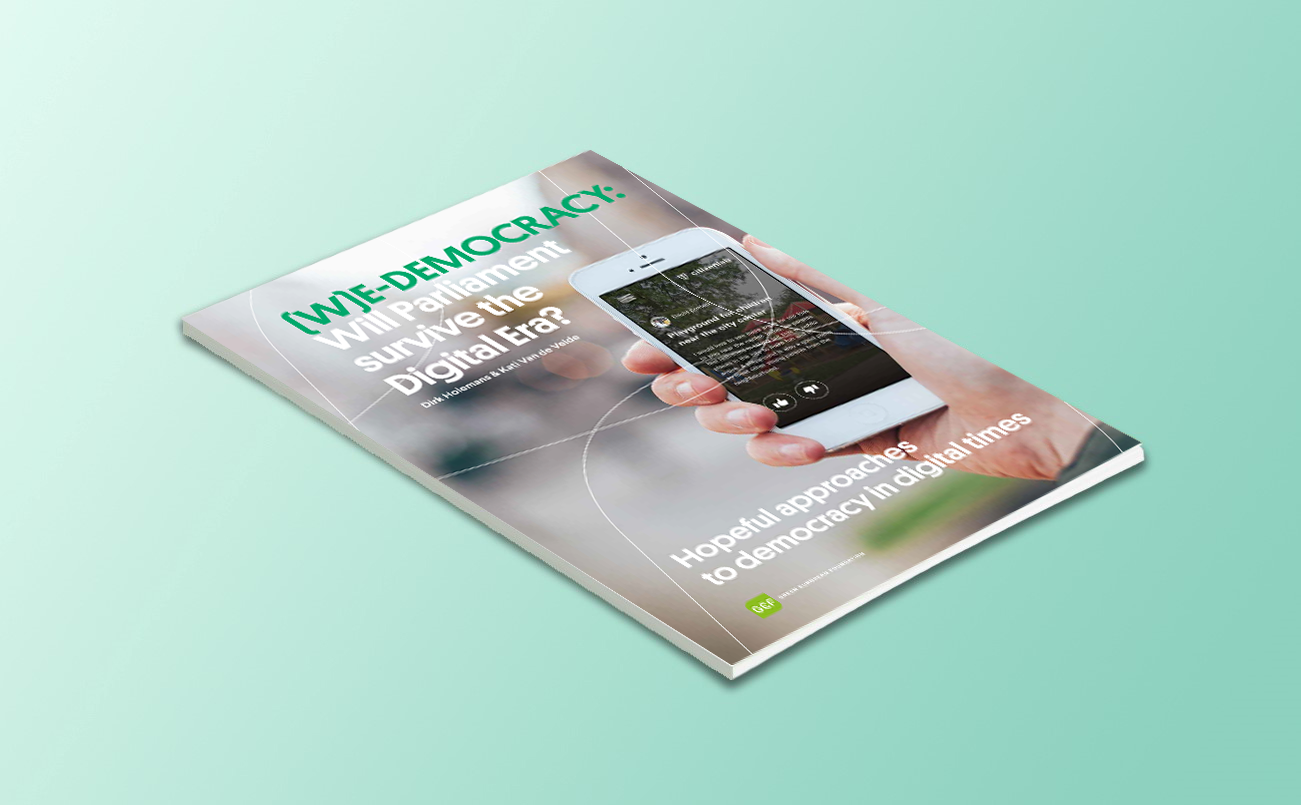
(W)E-DEMOCRACY: Will Parliament survive the Digital Era?

By Uncategorized

The 21st century democracy in Europe is in dire straits. Citizens feel disconnected with politics. Many people, especially youngsters, no longer see the traditional democracy as a good system of governance. Democracy like we know it today seems to be overdue for a profound upgrade. How can we reverse the erosion?  Will parliament survive the digital era?

Democratic institutions haven’t changed much since their formation in the 19th century. Even though our lives have been permeated with digital technologies, our parliaments and local councils have not. If we do not intervene quickly, our democracy is threatened to fall behind on digitalisation, and the gap between citizens and politics will grow even more.

Nonetheless our digitalised society offers a fertile breeding ground for citizens who organize themselves in innovative ways to participate in political decision-making. Digital initiatives like online knowledge centres and participation platforms pop up everywhere in Europe. For example, did you know that the mayors from Barcelona and Paris use digital platforms to actively engage citizens in outlining policy? What is the potential of these technologies to renew democracy? What are the challenges? What about participation of the elderly for instance? And how can local governments respond to these growing digital trends?

In this trend paper we explore innovative approaches to democracy. The paper was produced in the aftermath of the (W)E-Democracy European Thinking Day held in Brussels on 26th May 2017.

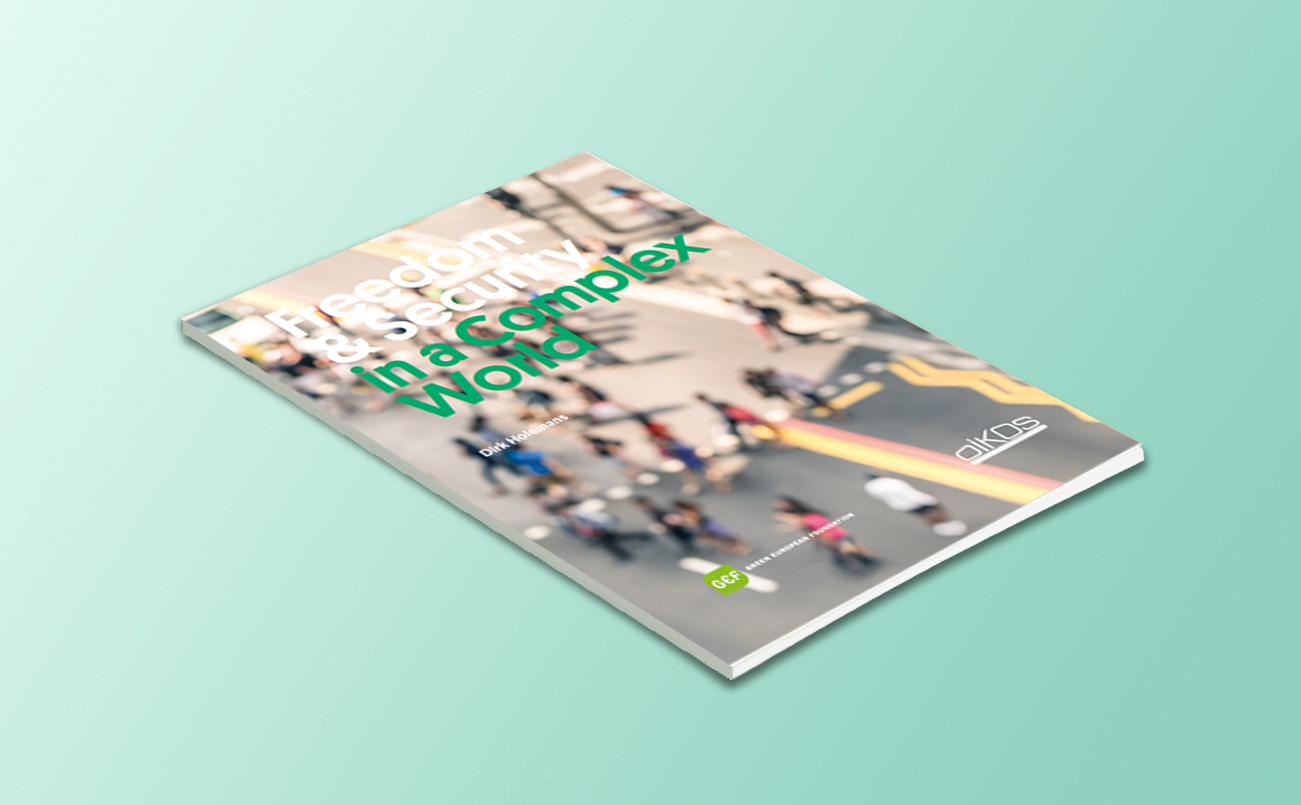
Freedom & Security in a Complex World (2017 edition)

By Uncategorized

Context

People all over the world are taking their future back into their hands. Together, they are taking initiatives in the fields of renewable energy, local food production, sharing tools, and so forth. This is the most hopeful movement of our time. Where the market and state fail, people are taking action. As free citizens, they are reinventing the collective, with open partnerships where personal development and social engagement go hand in hand. This observation seems to contradict what we experience every day. The system errors of our society model fill the newspapers: climate crisis, unstable banks, refugee flows. Accepted wisdom is that uncertainty is increasing. But both trends are happening, not by coincidence, at the same time.


Objectives

While examining the two interlinked concepts of Freedom and Security, this publication suggests that the answer needs to be the transformation into a socioecological society in the 21st century. It argues for the realisation of a societal project that strives for equal freedom for all people to flourish in security, within the boundaries of the planet, and proposes concrete steps towards it.


Download

Digital version in English is available here.

Digital version in French is available here.

Digital version in German is available here.

Digital version in Hungarian is available here.

Digitial version in Spanish is available here.


This report was part of the transnational project “A green transformation: Freedom and Security in uncertain times” . An updated version from April 2021 is available here. 

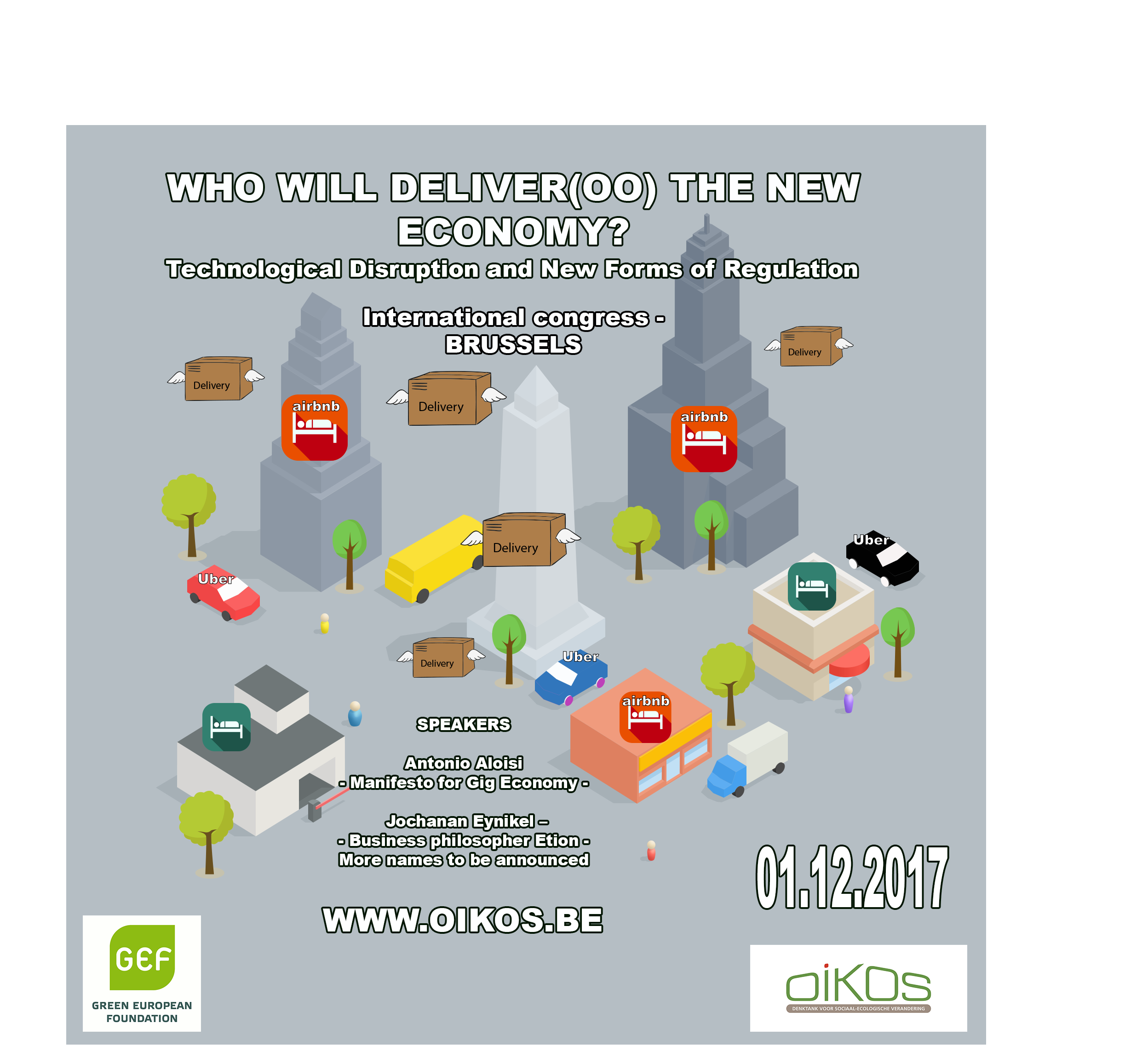
Who Will Deliver(oo) the New Economy? – Technological disruption and new forms of regulation (Brussels)

By

Context

Companies presenting themselves as mere digital platforms, such as Uber, Airbnb, Deliveroo, etc., are changing our economy in a rapid pace. These techno-economic disrupters not only change the way we produce or deliver services, but also lead to radical changes in the labour market, the availability and the organization of work. They question the existing regime of our national welfare states with a social security system build on full employment in stable and localized jobs.

The crucial question is how we will be able to re-embedded these new companies that tend to ignore legislation and deny the European social contract. This is more than an economic issue: more flexible and precarious jobs feed the growing insecurity in our society, which is a feeding ground for populists and national authoritarianism. So we need progressive answers that embrace the possibilities of digital platforms while at the same time empowering workers and their freedom and building new systems of social security.

Programme

13:00-13:10 Opening words (Aurélie Maréchal, Director Green European Foundation)

13:10-13:35 Keynote – The Need for a Green Transformation. Freedom and Security in Uncertain Times (Dirk Holemans, Director Oikos Denktank), followed by a Q&A

13:35-14:00 The Ethics of Things. Staying Human in the Robot Age (Jochanan Eynikel, Business philosopher Etion)

14:00-14:35 A Manifesto to Reform the Gig Economy (Antonio Aloisi, PhD candidate University of Milan)

14:35-15:10 Cabfair – We Can Do Better than Uber (Duncan McCann, New Economics Foundation)

15:10 coffee break

15:20-16:00 Panel debate –The European Dimension, moderated by Aurélie Maréchal

  • Philippe Lamberts (MEP Greens/EFA)
  • Frank Moreels (President European Transport Workers Federation)

16:00-16:45 Panel debate – The Future of New Economy

  • Meyrem Almaci (President Groen party)
  • Antonio Aloisi  (University Milano)
  • Duncan McCann (New Economics Foundation)

16:45 Reception & Networking

More information

The event is free of charge – to register, please fill in this form. For more updates, see the Facebook event.


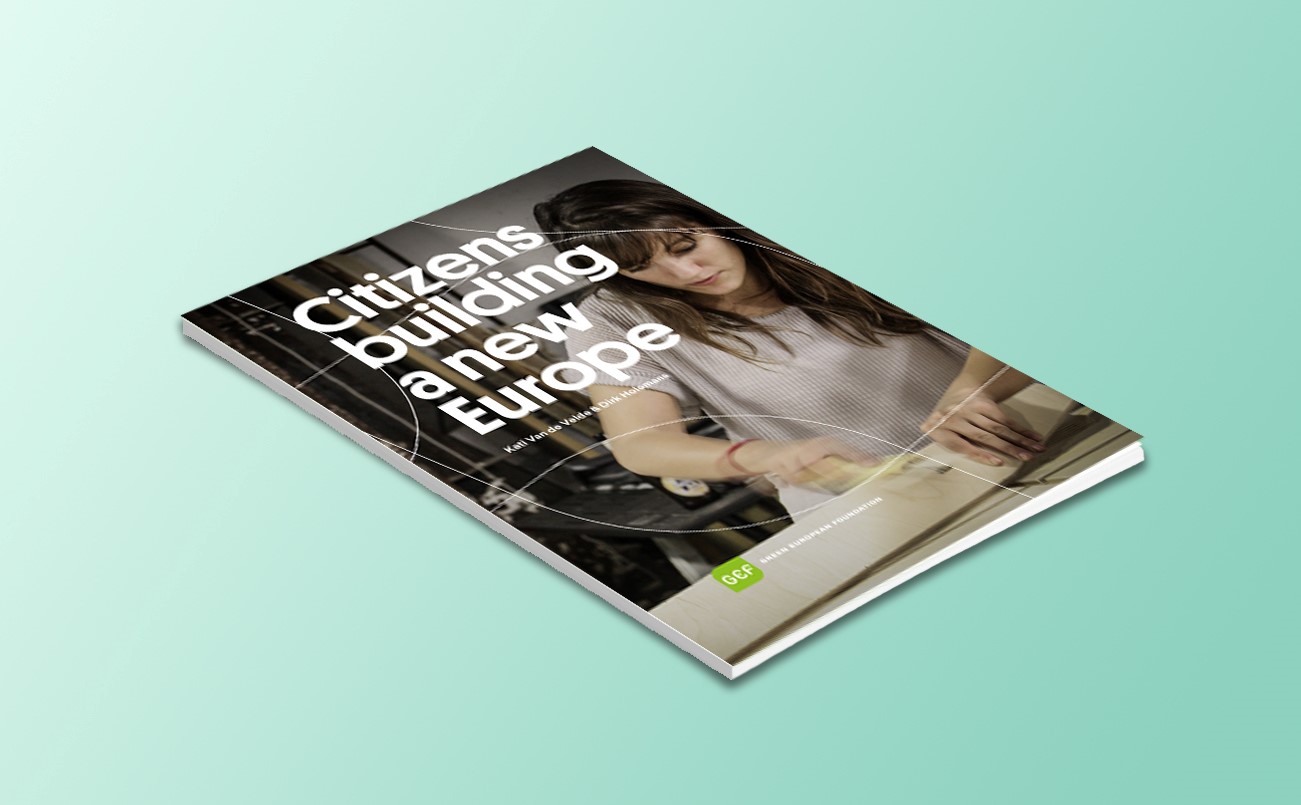
Citizens Building a New Europe

By Uncategorized

According to its citizens, immigration, terrorism, the economic situation and the state of member states’ public finances are the most important issues facing the EU. Less important, but still in the top 10, are unemployment and climate change. According to the latest Eurobarometer, a staggering 54% thinks that their voice doesn’t count in the EU. News about terror threats, refugee crises, budget cuts and corruption don’t paint a rosy picture of the reality we currently live in. Populists thrive on fear, human rights and freedoms are questioned and cynicism among citizens seems to be winning ground.

At the same time however, an ever-increasing number of citizens strike sparks in this seemingly dark tunnel, by developing social-ecological initiatives. To rebuild communities from the bottom up, to revitalize a more sustainable economy and to strengthen ties of solidarity and care, while governments struggle to manifest our common identity. Everywhere in Europe, hopeful democratic citizen initiatives emerge in fast pace. And knowingly or unknowingly, they are already making a difference, whether it be small or big, by building social and sustainable alternatives within the current neoliberal model of fear. Like swimmers against the tide, citizen movements get organised to take domains like production, finance, energy and care back in their own hands. So, join us for a walk through Europe and explore some of these exciting initiatives, because this is how citizens react to the policy of fear and austerity in our disrupted societies.

Digital version is Spanish is available to download here.

(W)E-Democracy – Will Parliament survive the digital era?

By

This event is part of our ongoing transnational project Reclaim the Commons which this year has a special focus on digital commons under the title (W)E-Democracy. More specifically, this year we foster  the understanding of the possibilities that emerge in the digital age for citizens to organise themselves in innovative ways and to generate influence and even co-create policy decisions that affect their lives.

The 21st century democracy in Europe is in dire straits. Citizens feel disconnected with politics, and a growing distrust has led to the lowest participation in European elections ever in 2014. According to the latest Eurobarometer, a staggering 54% of citizens thinks that their voice doesn’t count in the EU. Democracy seems overdue for a profound upgrade. How can we reverse the erosion?

Our digitising society forms a fertile breeding ground for citizens to get organized in innovative ways, and gain more power to influence and even co-create policy decisions that affect their lives. Digital initiatives like online knowledge centres and participation platforms are popping up all over Europe. What is the potential of these technologies to transform and rethink democracy? What are the threats? And how can local governments anticipate to this growing tendency?


#WEdemocracy

(W)E-Democracy takes a look from different angles at promising (citizen) initiatives who employ digital tools to strengthen democracy. We invited Lina Dencik from Cardiff University to talk about citizen rights in a digitised society. We then discussed two successful online platforms: CitizenLab, introduced to us by founder Wietse Van Ransbeeck and DemocracyOS France, presented by its President Caroline Corbal. Next, Xabier E. Barandiaran and Arnau Monterde from Decidim Barcelona shared their experiences with open democracy on city level. Last but not least, Imade Annouri, Green Member of Flemish Parliament, and Dóra Björt Guðjónsdóttir, Chair of the Young Pirates in Iceland, reflected on the possibilities of e-democracy for political parties.


Programme:

13:00h:  Introduction (Dirk Holemans, Coordinator of Oikos and Coordinator of the GEF transnational project Reclaim the Commons)

13:20h: Young Europeans fighting surveillance (Lea Caillere)

13:40h: Citizen rights in a digital era (Lina Dencik)

14:25h: – Digital participation: CitizenLab (Wietse Van Ransbeeck) 

– Digital commons: DemocracyOS (Caroline Corbal)

15:20h:  break

15:35h:  E-democratic cities (Arnau Monterde and Xabier E. Barandiaran)

16:05h:  Digital parties – closing panel (Dóra Björt Guðjónsdóttir and Imade Annouri)

17:00h:  closing drink

More information on the key speakers can be found on the Oikos website.


Location & Date:

THE VENUE OF THE THINKING DAY HAS BEEN CHANGED!

The event will take place at L42, Rue de la Loi 42, on Friday, the 26 May, from 13h onwards.


Registration:

The event is free of charge. Please register here.


Not able to attend the event in Brussels?

The event will be livestreamed by our partner foundations Fondation de l’Écologie Politique (Paris, France), Fundacja Strefa Zieleni (Warsaw, Poland) as well as the Cooperation and Development Network Eastern Europe (Belgrade, Serbia).


ECOPOLIS 2017: Digital Together – For a Just Society

By

The main theme of Ecopolis 2017 is the impact of the digital era on relationships between people, between people and organisations as well as between people and politics. In spite of the insecurity of the modern world, the rapid speed of advancing technologies will not slow down or go away. On the contrary, our reliance on these technologies will only increase in our daily lives. Therefore, it will be crucial to empower people to work together, share ideas, and connect with politicians in new ways.

What is Ecopolis?

Ecopolis is a full day event incorporating several key note speeches, high-level panel discussions and round table workshops, which will converge around the possibilities of digital technologies to unite people in different ways. The panels, among others, will for instance be entitled ‘Tools for democracy’, and ‘Individual autonomy and digital commons’. A core question will be how we can build political communities in the digital era and what policies can be developed on the EU level to facilitate this goal?

The aim of Ecopolis is to set up a fruitful dialogue between different sectors of society on the socio-ecological challenges, to provide a platform for exchange of innovative ideas and perspectives. The Green European Foundation will contribute to the European dimension of this event and interpretation in English, French, and Dutch will guarantee broad accessibility to the event.

Programme

The full programme of Ecopolis 2017 can be found here.

Speakers

Speakers will be Yochai Benkler (Harvard University Professor and co-director Berkman Center for Internet & Society), Ana Naomi de Sousa (Filmmaker and journalist), Kate Raworth (Economist and author), Aral Balkan (European Cyborg Rights Activist and designer and developer ), Jeroen Olyslaegers (Novelist and playwright), and many more. See the full list here.

Registration: Tickets can be purchased here.
Date: 8 October 2017
Venue: Kaaitheater, Brussels
Time: 11-19h

“Expulsions” author Saskia Sassen to participate in a debate in Brussels

By

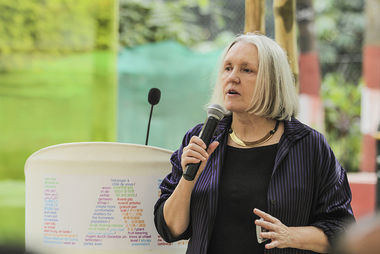
Saskia Sassen is professor of Sociology at Columbia University in New York. She is an expert on transnational migrations flows and a reference on globalisation. Her books have been translated into 12 languages and she is a member of the Club of Rome. Her criticism of growing inequality has earned her the label of the female “Piketty”.

The discussion was introduced by Gie Goris (Mo Magazine), with the participation of two special guests: Isabelle Ferreras (Sociologist at UCL, researcher at FRNRS, associate at “the labor and worklife program” of Harvard Law School) and Florent Marcellesi (Spokesperson for the Spanish Greens in the European Parliament, member of the European Parliament as of next October, and expert in international cooperation). The lecture was held in English, with translation to French and Flemish.

Sassen’s most recent book, “Expulsions: Brutality and Complexity in the Global Economy” describes how capitalism has entered a new phase that is increasingly brutal, even for those who may previously have felt shielded. The usual concepts of injustice and poverty are no longer sufficient to explain the current dislocation, both socio-economic and ecological, which is translated by a sharp rise in inequalities and unemployment, an increasing number of people in incarceration, as well as the accelerated destruction of land and water reserves. The time has come to recognise these tendencies as exclusions, or even as expulsions: from one’s livelihood, one’s home and even from the biosphere which renders life possible.

What Sassen attempted to demonstrate is the complexity generated by the combination of knowledge or technologies, used within the financial sphere as well as towards the destruction of the environment. This complexity contributes to an obscuring of the responsibilities in this situation.

Place: IHECS, Rue du Poinçon – 1000 BXL

Date: March 8th, 2016

Ecopolis 2016: Power, Politics & Chocolate

By

This year’s edition of Ecopolis was a day filled with inspiring debates, books, round tables and documentaries. The golden thread was the theme Power, Politics and Chocolate. Five different panel debates took place throughout the day:

Debate 1: Power and Europe

In this first debate, the writer Joris Luyendijk and MEP Bart Staes discussed, among others, the question of who holds real power today. The power that each citizen has in him- or herself, which can be exerted with each local, national and European election, was one of the main topics during this panel. Moreover, the power of lobbies, which lies in their financial resources, was discussed.

Debate 2: What comes after COP21 in Paris?

The cynicism about the actual effects of the climate agreement reached in Paris last November is huge. The panellists of this debate discussed on whether any change which leads towards the implementation of the agreement is visible, and argued for a positive view on the matter as transition requires time. Natalie Eggermont, member of Climate Express, and Karel Verhoeven, editor in chief of De Standaard, both stated that climate can function as a mobilising factor for many citizens. Faiza Oulahsen from Greenpeace added that citizens’ movements should continue to seek to mobilise and to remind important decision-makers to recall their ‘Paris moment’.

Debate 3: Chocolate

Since it is not easy for Ivorian chocolate farmers to be granted access to the international market, cooperative models such as Ecookim are essential for producers on the ground. Ecookim’s director, Mamadou Bamba, was part of this debate’s panel, and spoke about the challenges fair chocolate production faces in the light of economic globalisation. Isabelle Quirynen of Bittersweet emphasised the importance of close cooperation between producers and farmers, which results not only in a good quality of the chocolate, but also a more bio-ecological product. At the same time, consumers are also partly responsible for the ways in which chocolate is produced, since they can make a conscious choice for sustainable products. In addition, higher tax levels could also lead to less burdens for fair trade products. As Olivier De Schutter, international food expert, stated, decisiveness from high levels will be essential in the transition to a sustainable food system.

Debate 4: Enough

The unstoppable need for economic growth will result not only in the phenomenon of the ‘oil peak’, but also in that of the less tangible ‘happiness peak’, as we are, according to professor Niko Paech, faced with too many choices and information, resulting in increased levels of stress. In line with the degrowth scenario, we must face the truth that equal prosperity with improved technology will remain an illusion. The whole system needs to find a new balance for a structural change. Green philosopher John Thackara stated that the situation is already developing in the right direction: while several years ago only a small number of local projects could be found, now there are thousands initiatives flourishing, but the overall story arc is still missing. It is, however, not easy to avoid the trap of growth displayed by the ‘sharing economy’ (e.g. Airbnb). When driven by an economic model of growth, such initiatives can extract more value from society than their actual social benefits. As a starting point towards an era of degrowth, the panel suggested a redistribution of work, based on a 20-hour working week combined with a system of local self-sufficiency. Wannes Cappelle, author of Ont-ferm U, also emphasised that special attention must be given to those with a more precarious situation and supported the concept of a minimum income.

Debate 5: Citizens in the world

The United Nations is the only body in which all countries of the world currently sit together around one table. It is therefore an absolutely indispensable organisation, stated Warda El Kaddouri, the Belgian youth representative to the United Nations. However, it is well known that also this organisation suffers from cumbersome bureaucracy. There is a need for re-evaluation, as stated by writers David Van Reybroeck and Jeroen Olyslaegers. Bottom-up recalibration is underway through the citizens- the “we”, that is growing, carries the promise of a renewed awareness in relation to the system. Moreover, it is also necessary to have a wider that takes into consideration more than only our fellow human beings. A humanism which does not take animals and the planet into consideration is falling too short. This solidarity and humanity must be much more evident than it is today, said author Annelies Verbeke.

The recordings of the different panels in Dutch can be found here.

ECOPRO Seminar in Brussels

By

As a part of the ECOPRO project with a focus on the “Sustainable Work for All in a Post-Growth Society”, an inspiring seminar was held in Brussels, as an opportunity to engage with the different participants of the project. Three relevant speakers participated it the seminar with the presentations focusing on the central theme of the new ways of “work”, presented with a variety of perspectives.

The first speaker was Dustin Benton, head of Energy and Resources at Green Alliance, a charity and independent think tank focused on ambitious leadership for the environment. Mr. Benton gave a very interesting presentation about jobs in a circular economy. He participated in a study about the potential of new jobs in a circular economy in Italy, Poland and Germany.

The second speaker was Raimon Roda, director at the Baix Llobregat Agricultural park just outside Barcelona. He used the park as an example of the potentials for the agricultural areas near cities to foster sustainable development and evolution towards local food production.

The last speaker of the day was Anne Snick, expert on gender and social sustainable economy. Her presentation focused on the need of the current economy to serve the basic societal functions –  efficient allocation of resources to the well being of all. Her presentation also highlighted the gender implications of contemporary economic system and possible solutions for such issues.

This seminar ended with a fruitful discussion and a lot of questions from the participants after each presentation.

ECOPRO Seminar in Brussels with John Restakis

By

This event is a part of this year’s GEF transnational project ECOPRO (“Ecological Production in a Post-Growth Society”). It featured John Restakis – the director of the British Columbia Co-operative Association (Canada) and an acknowledged researcher of the role of Co-operatives worldwide, especially in relation to a new, socially fair economy, and he is the author of Humanising the Economy. Co-operatives in the Age of Capital. He is currently working together with Michael Bauwens and the P2P Foundation to create synergies between the Commons and the Co-operative movement.

During the seminar, John Restakis illustrated the advantages of co-operative enterprises in the context of this year’s ECOPRO thematic focus – sustainable work in a post-growth society.

The commons: (co)managing commonly owned resources

By Uncategorized

The term “commons” is gaining increasing currency in political debates today, as thinkers and activists look for alternatives to what appears to be the failing model of the market economy. While many people have a broad idea of what the commons are – a means of co-managing a resource for the community as a whole – what does it mean in practice? And where and when can the idea of a commons be applied?

Many of these issues were discussed at the GEF seminar earlier this year. Since the idea of the commons was reintroduced to the public debate by the likes of Elinor Ostrom, many new forms of commons have become viable. An example discussed at the seminar was the idea of genetics and DNA as a type of commons.