Towards a New Climate (Katowice)

By

Context

COP24 in Katowice will be decisive as one of its tasks is to work out and adopt decisions to ensure the implementation of the Paris Agreement. At the same time, the Polish government has stated its objective to use the opportunity of the 2018 Climate Summit Poland to demonstrate how neutrality in terms of greenhouse gas emissions, i.e. a balance between CO2 emissions and its sequestration by soils and forests, can be attained. This sends a fatal message to the broader public as it creates the impression that ever-growing CO2 emissions around the world could be absorbed naturally, which impedes debate and progress towards a zero carbon future. In this context, a clear response to the Polish government’s stance on climate change and mitigation is needed.

About the event

In early 2018, we kicked off our transnational project “Towards COP24 in Poland” to raise awareness about climate issues among the Polish population and EU citizens in general in the run up to the Climate Summit in Katowice. The project highlight will be a one-day event in the second week of COP24 in Katowice organised with the support of all project partners to challenge the current policies by EU member states, share best practices and present sustainable, fair and just approaches that respect the ecological boundaries of our planet while having a good life for all people in mind.

Topics:

1. Just transition of mining regions – organised with the support of Heinrich Böll Foundation in Warsaw and Fundacja Strefa Zieleni, Poland

2. Potential green jobs as a result of climate oriented transition – organised with the support of Green House Think Tank, UK

3. “Zero net emissions” – are carbon removals effective enough – organised with the support of Green Economics Institute, UK

4. Why nuclear energy is a false solution for a climate oriented energy transition – organised with the support of Fondation de l’Écologie Politique

Programme

09:30 – 10:00: Opening of the conference:

  • Lucile Schmid, Green European Foundation
  • Ewa Sufin-Jacquemart, Director, Fundacja Strefa Zieleni
  • Małgorzata Tracz, Co-Chair, Polish Green Party

10:00 – 10:30: Introduction

  • Bas Eickhout, Member of the European Parliament, The Greens / EFA
  • Video by GGEP on coal transition

10:30 – 12:00: Just Transition of Mining Regions

Not only in Poland, but also in various parts of some European countries, coal and lignite mining are an important part of local identity, culture and economy.

However, for economic and ecological reasons, in the coming decade(s) coal regions and communities must shift away from a coal-based economy. In this process, they need to deeply restructure their economy and find new future perspectives for their citizens.

What are the economic and social challenges in the ecological modernisation of these regions? Could the possible decarbonisation strategies be useful in different coal regions?

How to include different actors in creating a common vision of the future while building concrete development strategies? How to address a changing job market and a need to build a competitive economy while empowering people to pursue change? To what extent could renewable energy become an answer to these questions?

Panellists:

  • Annalena Baerbock, Chairwoman of Bündnis 90/Die Grünen, Germany
  • Marcin Bazylak, Mayor of Dąbrowa Górnicza, Poland (tbc)
  • Miłka Stępień,  Member of National Council, Polish Green Party, Konin, Poland
  • Andrzej Błachowicz, Managing Director, Climate Strategies, London
  • Monika Paca, Galeria Szyb Wilson, Katowice, Poland
  • Jan Bondaruk, Deputy Director for Environmental Engineering, Central Mining Institute, Katowice

Moderation:

  • Patryk Białas, Director of Innovation and Competence Centre in  EURO-CENTRUM Science and Technology Park and President of BoMiasto Association, local councillor in Katowice

12:00 – 13:30: Potential Green Jobs as a Result of Green Transition 

(in conjunction with the project partners of GEF’s transnational project Strengthening Climate Targets, Creating Local Climate Jobs)

Meeting the challenge of climate change requires structural changes to the economy so that it is no longer dependent on fossil fuels. Different consumption and production patterns will lead to a loss of traditional jobs, but a large number of new jobs will also have to be created to accomodate the changed needs of our societies.

This panel will discuss the research done by GEF throughout the past years that has led to a model to estimate the number of jobs that would be created in key sectors of the economy.

During the event, the research report will be launched that summarises estimates for three EU member states – UK, Ireland and Hungary – and shows that increasing ambition on climate targets and transitioning the economy towards zero-carbon would result in a net increase in jobs all over the country, helping to rebalance the economy.

The debate will take into account the implications the research will have on a policy level, including input from Professor Jan Popczyk from the Silesian University of Technology, who will present results of his own metrics applied to Poland. It will also complement theory with real achievements in Germany and Spain.

Panellists:

  • Peter Sims, Green House Think Tank, UK
  • Anja Siegesmund, Minister of Environment, Energy and Nature Protection of Thuringia, Gemany
  • Florent Marcellesi, MEP, The Greens/EFA in the EP
  • Professor Jan Popczyk, Silesian University of Technology, Poland

Commentary:

  • Thomas Simpson, Green Foundation, Ireland

Moderation:

  • Johnathan Essex, Green House Think Tank, UK

13:30 – 14:30: Lunch Break 

14:30 – 16:00: Zero Net Emissions – Are Carbon Removals Effective Enough?

Technological solutions (like carbon capture and storage – CCS) and environmental solutions, in particular in land use, agriculture and climate-friendly forest management, are important steps towards achieving carbon neutrality.

This debate will focus on political will, scientific evidence and results of experimenting with various solutions based on carbon sinks, as well as scientific vailidity of methods used for assessing the amount of CO2 removed from the atmosphere.

At the same time, this panel will point to structural changes our societies will have to undergo to achieve the Paris Agreement’s objective of limiting a temperature rise to 2°C or even 1.5°C: phase out of fossil fuels, change the logic inherent to our agricultural and food system, etc.

Panellists:

  • Olivier De Schutter, Former United Nations Special Rapporteur on the right to food (video)
  • Michal Wilczynski, Poland’s former National Chief Geologist, energy expert
  • Miriam Kennet, Green Economics Institute, UK
  • Claire Weill, INRA, “4 for 1000’ initiative, FR
  • Krzysztof Cibor, Greenpeace Poland
  • Nada Zaarour, Green Party of Lebanon

Moderation: 

  • Ewa Sufin-Jacquemart, Fundacja Strefa Zieleni

16:00 – 17:30: Why Nuclear Energy is a False Solution for a Climate-Oriented Energy Transition

Poland is in the process of deciding whether to build its first nuclear power station. The public is divided, but the studies of locations, technologies, partners and investors nevertheless continue.

During this panel, it will be discussed whether nuclear energy is really the answer to the decarbonisation challenge and explore more sustainable solutions. This discussion is our contribution to the debate on nuclear energy happening in Poland today.

Panellists: 

  • Yannick Jadot or Michele Rivasi, MEPs, Greens/EFA group in the EP
  • Yves Marignac, Director of Wise-Paris think tank
  • Marie Toussaint, Notre Affaire à Tous association, EELV
  • Charline Dufournet, Director of the European Scenario for the NégaWatt Initiative

Moderation:

  • Benoit Monange, Fondation de l’Ecologie Politique, France

17:30 – 18:00 Closing

Final remarks by Natalie Bennett (Board Member Green European Foundation and Green Party of England and Wales) and Evelyne Huytebroeck (European Green Party)

18:00 – 19:00 Buffet

19:00 Film Screening: 

“Human Energy” Adam Dzienis (2018, 67 min.)

Debate after the movie with Adam DzienisWeronika Bloch and Anna Krenz, moderated by Ewa Sufin-Jacquemart


Simultaneous interpretation in Polish and English will be provided.

A shuttle will be provided from in front of COP (Rozdzienskiego street) to the venue, through the central station.

Departures from COP: 9:50, 11:20, 14:00, 15:30, 16:50, 18:20.


To register for the conference, please follow this link.

Join the Facebook event. 

Stay tuned for more updates on the programme and speakers on this event page, and follow us on Twitter and Facebook!

Carbon Budgets

Fast Ratcheting Down of Personal and Global Carbon Budgets (Oxford)

By

Context of the event

To achieve the ambition of limiting the global temperature rise this century to 1.5 degrees Celsius as stated in the Paris Agreement concluded during the COP21 negotiations in Paris in late 2015, new methodologies and pathways to move faster towards stabilising the global climate need to be considered. Scientific and technological options must be re-examined.

About the event

Therefore the upcoming one-day event introduces the use of Global  and Personal Carbon Budgets, and will provide a space for experts from all over Europe, and beyond, to debate and consider different options in the run up to the coming United Nations Climate Change Conference in Katowice, the COP24.

Draft Programme

10:00 – 11:00 PANEL 1: INTRODUCTION TO THE SCIENCE United Nations Climate Process COP21-COP24 and the Paris Agreement  ‘Ambition’

11:00 – 11:30 COFFEE BREAK

11:30 – 13:00 PANEL 2: SWITCHING FROM COAL TO RENEWABLES The Context of Poland and the rapid change from Coal to Renewables

13:00 – 14:00 LUNCH BREAK

14:00 – 15:00 PANEL 3: EXAMINING THE TECHNOLOGY OPTIONS Renewables. Carbon and Distribution

15:00 – 16:00 PANEL 4: ACHIEVING A 2 TONNES OF CARBON LIFESTYLE AND ECONOMY Methodologies and prerequisites

16:00 CLOSING PANEL AND DISCUSSION


Register now by following this link and stay tuned for updates by following us on Facebook or Twitter to learn about our other activities. 

Conference ‘Dealing with extreme weather events’ (UK)

By

Context

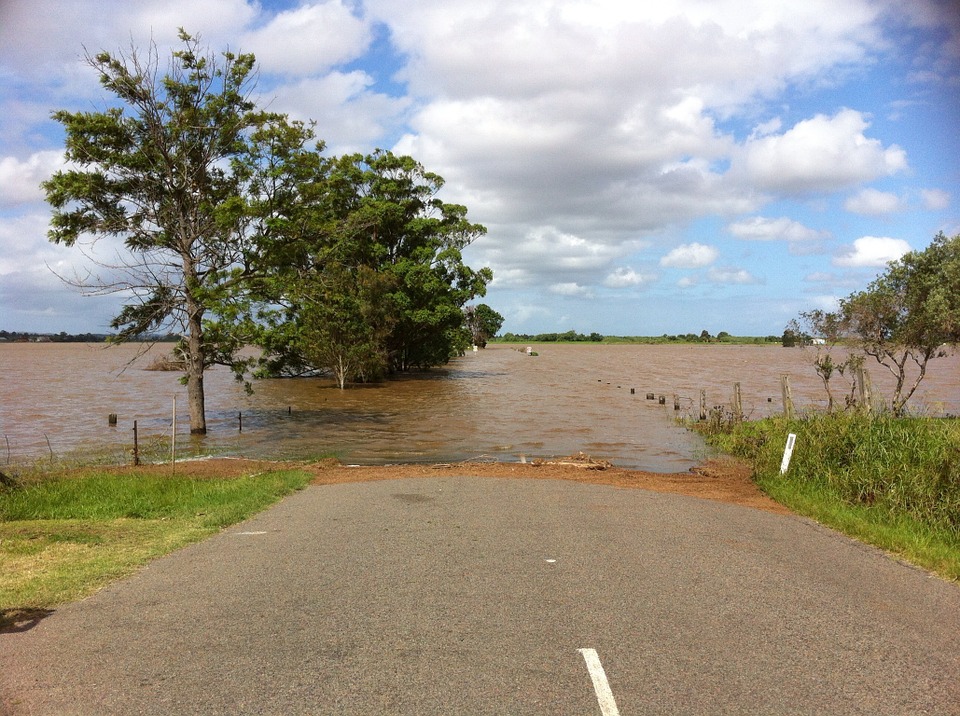
Climate change is going to increase the frequency and severity of extreme weather. Already we are seeing the impacts of this, with unprecedented flooding in the North of England in December 2015, flooding in Spain in 2016 and the heat wave in Paris in 2003. How can we learn from these events so that we are better prepared in future?

Conference

Due to climate change, extreme weather events become more likely and hence instability and uncertainty for the communities affected increases. This conference will address how the experience of extreme weather events now can help communities to be better prepared for such events in the future.

This conference, taking place in a community that experienced a major power cut caused by the floods of December 2015, will bring together people from across Europe, including speakers from Lancaster, Paris, and Barcelona, to find out what we can learn from each other.

Programme

9h45 Registrations and coffee

10h15 Welcome & Introduction – Anne Chapman (Green House Think Tank) and Natalie Bennett (Board Member Green European Foundation)

10h30 Lancaster and Storm Desmond – Caroline Jackson (Lancaster City Council)

11h05 El Prat – a Catalan Experience of Extreme Weather – Sergi Alegre Calero (Vice-Mayor, El Prat)

11h40 – 11h55 – Coffee Break

11h55 – 12h30 The 2003 Heat Wave and Its Aftermath in France – Alice Le Roy (former Policy Advisor, Paris City Council)

12.30 – Q&A and discussion

13h00 – 14h00 – Lunch

14h00 – 15h00 Parallel Sessions:
1. Living Without Electricity, Lessons from Lancaster – Roger Kemp (Lancaster University)
2. Upland Management – a Need for Change? Options for Managing our Uplands for Water, Wildlife and People – a Northern England Perspective – Peter Leeson (The Woodland Trust)

15h00 – 15h15 – Break

15h15 – 16h15 Parallel Sessions:
1. Planning for a Changing Climate – Hugh Ellis (Town and Country Planning Association)
2. Community Responses and Emergency Planning – Kerryanne Wilde (Community Emergency Response Team)and Mark Bartlett (Emergency Planning Officer, Lancaster City Council)

Film screening

Besides the conference on Saturday, there will be an opportunity to see the film ‘Pedalling and Paddling’ on Friday evening, 20h00, at Gregson Arts Centre, made by a local film maker, about a group from Lancaster setting off to cycle to the COP21 talks in Paris just as the floods hit Lancaster. (Donations at the door.)

On Saturday, at 19h30, there will be the opportunity to see the play ‘Blackout’ at the Dukes Theatre, based on local people’s experience of the power cut.

Registration and tickets

The event is free of charge. Please register here! For more information, please contact Anne Chapman, director of Green House Think Tank.

You can also get in touch with Anne to purchase tickets for the theatre play or directly buy them from the Dukes here.

Date & Venue

The conference will take place on 28 October 2017, between 9h30 – 16h15 at the Friends Meeting House in Lancaster, United Kingdom.

Results

The presentation and relevant videos from this conference are available here.

Myths of nuclear power – a guide

By Uncategorized

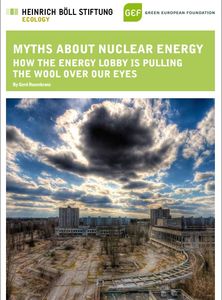
The publication highlights several common misconceptions regarding nuclear energy. One such misconception emphasises that supporting nuclear energy does not set back the development and spread of renewable energy sources, and that nuclear power plants can be a “bridge” between dirty and clean energy systems. This misconception has resulted in increased government investments throughout the world in improving and building new nuclear power plants rather than concentrating on safe, clean and not so costly renewable energy, as well as on promoting and investing in increased energy efficiency.

The publications below examine these issues in a forthright manner, and outline the reasons why atomic energy does not constitute a real solution to our energy problems.

The Green European Foundation has translated one of the studies, “Systems for change: Nuclear Power vs Energy Efficiency and Renewables” into Italian to facilitate the debate on the topic in more parts of Europe.


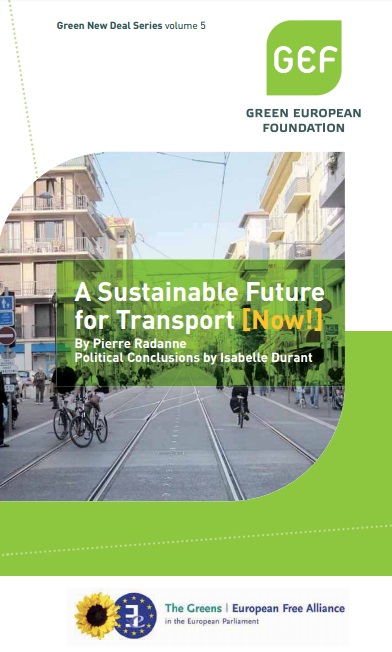
A Sustainable Future for Transport – Now

By Uncategorized

With the major contribution that the transport sector makes to CO2, there is a need for major reductions in its emissions to ensure Europe meets its necessary targets of an overall reduction of 20% by 2020. This publication sets out the urgent action that needs to be taken in order to achieve these targets, along with the benefits that such actions can bring to the economy and the quality of life for Europe’s citizens.

Authored by transport expert Pierre Radanne, the publication examines not just the short term changes that are required, but also discusses a longer term vision for what a sustainable transport system would be like for Europe.

Icon

Commission White Paper 133.10 KB 71 downloads

...

Women and Climate Change

By Uncategorized

The published essays are very diverse, but they all concur on one point: gender equality and the fight against climate change are two challenges that have to be tackled simultaneously and urgently. Adaptation to climate change seems to be the realm of women in countries across Africa, Asia and South America. They are often the ones working the land and getting water to feed their families, while they do not have control over the land they work on or the major decisions about where and how to live. Many contributions from developing countries are included in the publication, which reveal that the level of awareness of this topic in developing countries is much greater than in Europe. Gender, as often, is the blind spot of the academic and political debate on climate change. It is high time that more attention is paid to the women’s hardships as well as their inspiring solutions.

27 National Energy Action Plans = 1 European Energy Policy?

By Uncategorized

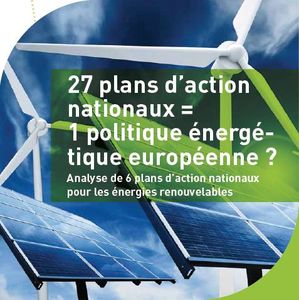
The EU Renewables Directive, for the first time, set a legally binding renewable energy target for the EU: a 20% share of renewables in final energy consumption by 2020. Each Member State was apportioned an individual 2020 target by the Commission for renewable energy as a proportion of final energy consumption. They were also directed to produce a National Renewable Energy Action Plan (NREAP) offering detailed information on their concrete polices for reaching these targets.

Given that investment made today in the energy sector will have huge implications for the coming decades, if we are to make the fundamental changes required to tackle climate change, the policy decisions we make over the next 10 years will be key. In addition to this, many experts are of the opinion that in order for the EU to make the transition to a low carbon economy, it will have to make far greater use of the potential benefits from European cooperation.

This publication therefore undertakes a rigorous analysis the NREAPs with two key questions in mind: do the Member States take into consideration the long term goal of 100% electricity from renewables, and do they expect to make use of European cooperation methods? The analysis demonstrates the great variety that exists between Member States on renewable energy policy, both in terms of ambition, method, and the likelihood of achieving the legally binding targets.

The publication is part of GEF’s continuous efforts to promote the creation of a European Community for Renewable Energy that would foster further and greater development of alternative energy sources in Europe and beyond.

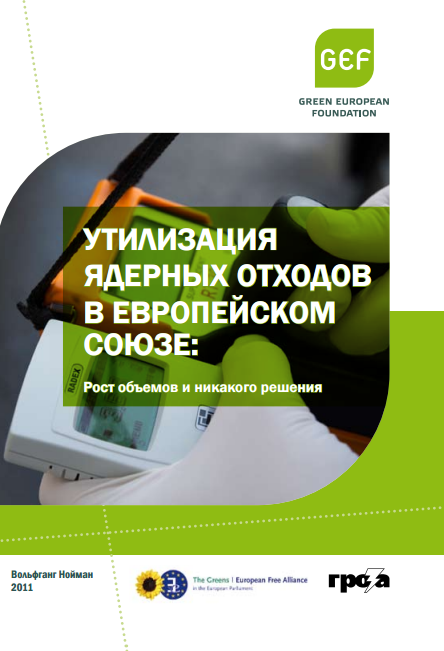
Nuclear Waste management in the EU: Growing volumes and no solution

By Uncategorized

The Green European Foundation, with support of the Russian NGO Groza, has produced the study into Russian, in order to make it more accessible and easy to use for Russian-speaking communities inside and around Europe. The publication was also presented in a big conference organised in Vilnius in December 2011. The English version of the study can be accessed on the website of the nuclear waste campaign of the Greens/EFA group, here.

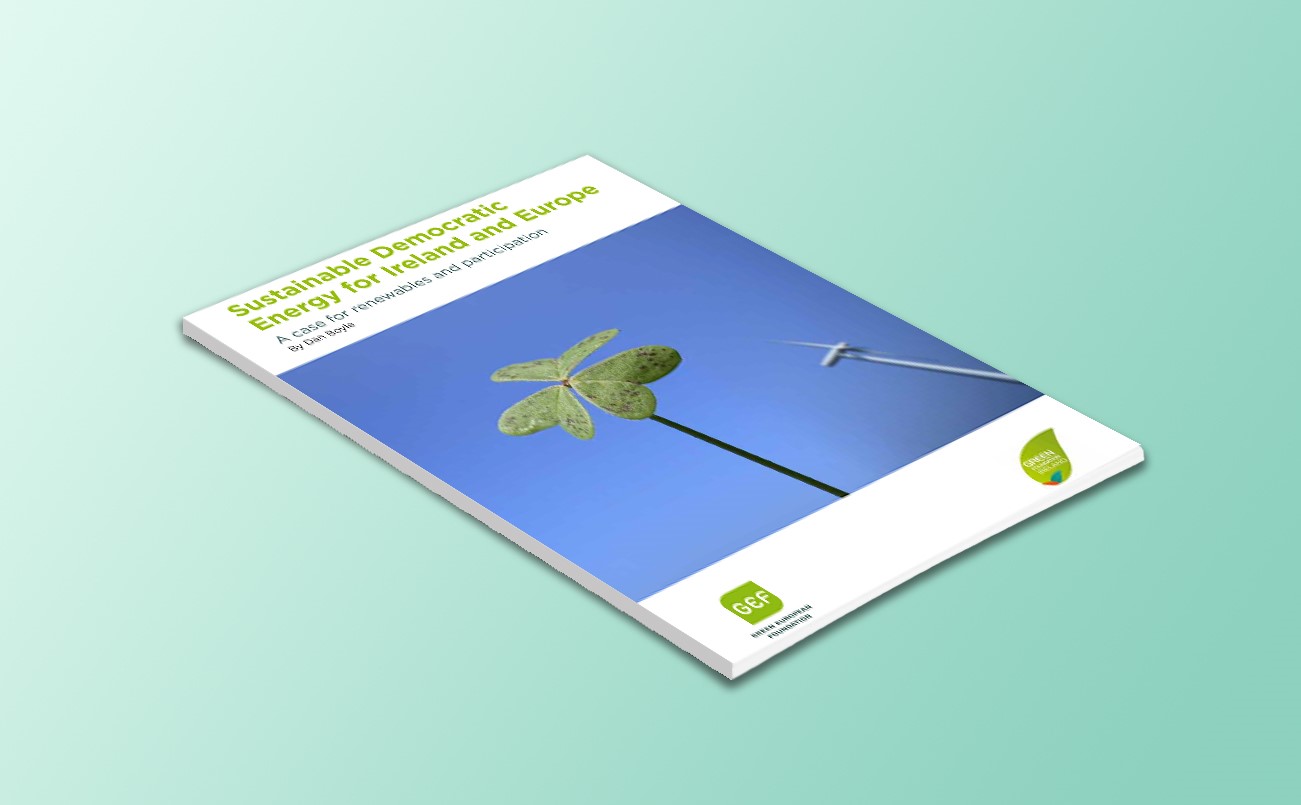
Sustainable Democratic Energy for Ireland and Europe

By Uncategorized

The European Union is committed to reducing greenhouse gas emissions to 80 – 95% below 1990 levels by 2050. Given the many reasons for public concern about the technological and infrastructural developments required to achieve this ambitious target — threats to landscapes and habitats, public safety fears, etc. — citizens themselves must be informed and engaged in the decision-making process.

Using case studies from citizen’s initiatives and renewable energy projects specifically in Ireland, and contrasting them with similar experiences in Denmark and Germany, Dan Boyle makes the case for the desirability of participative renewable energy projects across Europe as a whole. He also provides an overview of some of the key democratic models for effective public participation, examining key lessons learnt from environmental campaigns which have questioned and opposed renewable energy projects on the basis of the potential environmental damage caused by the infrastructure.

Ireland has had one of the highest levels of fossil fuel dependence in the European Union but, with relatively abundant wind and water power opportunities, combined with the entrance into government of the Irish Green Party for the first time in 2007, Ireland is racing towards its renewable energy targets. In 2012, for example, its target of 40% renewable energy generation was achieved 103 days early. According to Boyle, part of the reason for the comparatively swift development of renewables in Ireland was the level of public participation and buy-in — concepts which are explored in depth in this report.

The UK, France, Poland and the future of EU energy policy

By Uncategorized

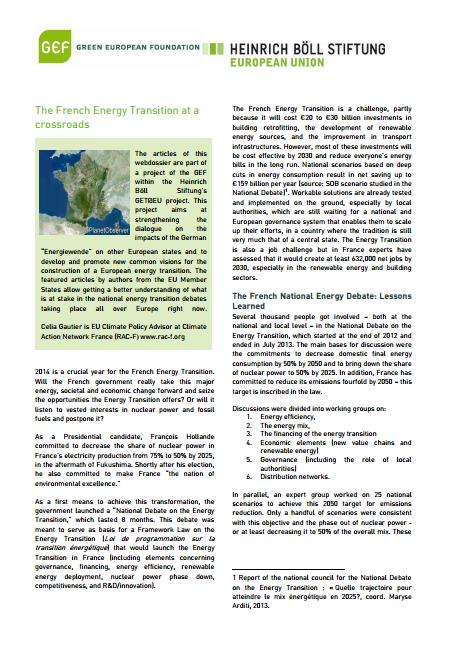
The French government is currently working on plans to reduce France’s reliance on nuclear energy and adopt ambitious CO2 reduction goals. The roadmap for this will be presented in an ambitious energy law, expected to be published later this year. Celia Gautier from Reseau Action Climate France outlines the current debate and highlights some of the challenges faced.

The UK, meanwhile, is facing an uncertain energy future, with efforts by some to impose uncertain CCS (carbon capture and storage) and risky fracking for shale gas in to the country’s energy mix. But what does this mean for its future investment in renewables? Mark Johnson from the European Policy Centre gives an overview of the situation.

Poland is a country in need of a major energy transition, yet the concept of widespread use of green energy is yet to take root. What concrete steps can be taken to change this? Andrzej Kassenberg, co-founder and president of the Institute for Sustainable Development Poland, provides some ideas.

The articles of this web dossier are part of a project of GEF within the Heinrich Böll Stiftung’s GET@EU project. This project aims at strengthening the dialogue on the impacts of the German “Energiewende” on other European states and to develop and promote new common visions for the construction of a European energy transition. Events as part of this project took place in LondonParisBrussels and Warsaw.

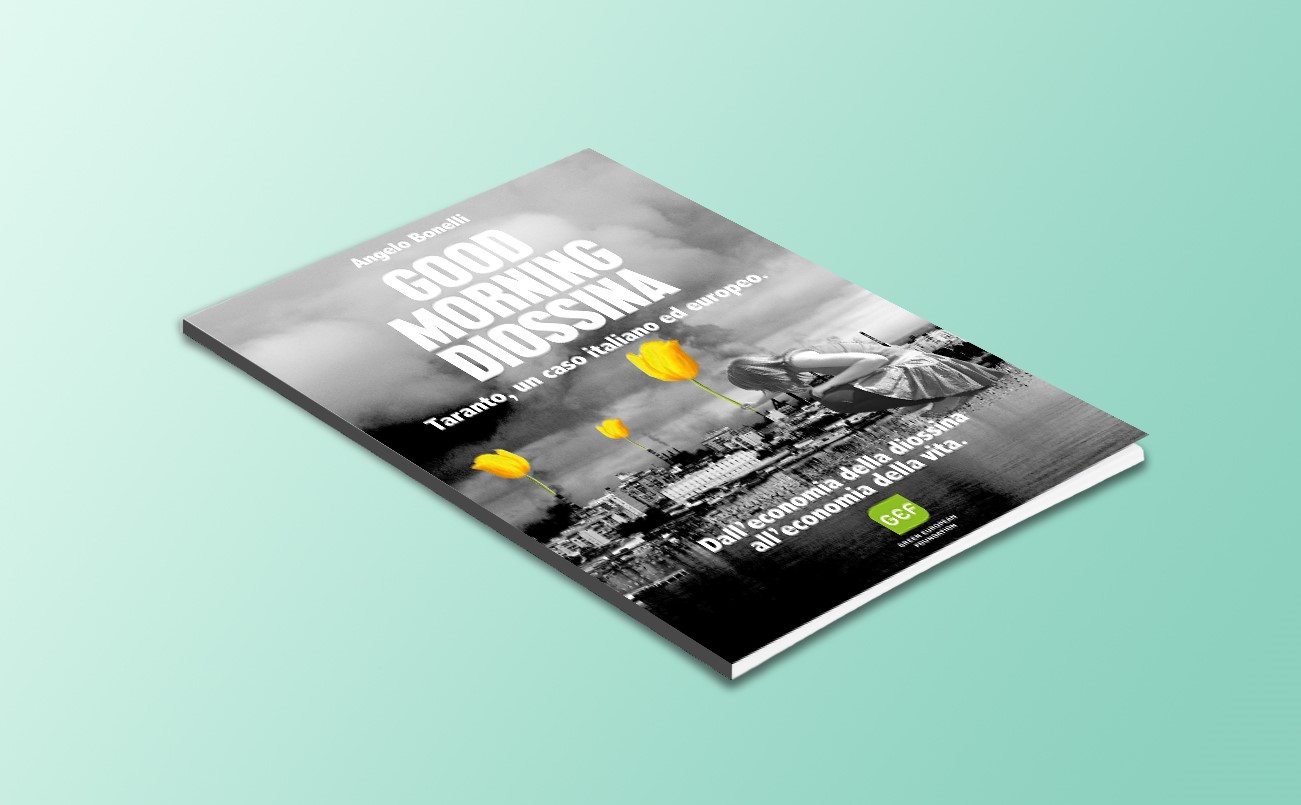
Good morning Diossina. Taranto: the toxic economy

By Uncategorized

Taranto is a city in the south of Italy where the presence of highly polluting industries, such as the Ilva steel plant, has been responsible, since the 1960s, for the highest mortality rate in Italy. The latest epidemiological study by the Italian National Institute of Health shows a terrifying +54% above-average tumor incidence rate and +21% mortality rate among children (0-14 years old).

According to data by the Italian National Institute of Emissions (INES), in recent years, Taranto accounted for 93% of all the dioxin and 67% of all the lead released in the country’s atmosphere. The level of environmental pollution is so extreme that the health authorities were forced to outlaw pasture within a 20-km radius from the plant and to order in 2009 the cull of over 3,000 animals due to dioxin contamination.

Though not an isolated case, Taranto is a perfect example of how the absence of environmental controls in Italy or the “capture” of these by special interests in the name of profit maximisation has severely compromised and “sold” the health of citizens. There’s a reason that the investigation by the Taranto prosecutor’s office was codenamed “Sold Environment”.

In this book, we will tell the story of a city brought to its knees by poisonous fumes and torn apart by the sorrow of the victims’ families. Moreover, we will focus on the economic and industrial aspect of the problem: how can the highly polluting dioxin-based industrial model – of which Taranto is the epitome – become the subject of a radical economic and industrial conversion, capable of generating new, clean jobs and social welfare? Taranto’s economy currently revolves entirely around the Ilva plant and this has irreversibly damaged other crucial economic sectors, such as agriculture, stock rearing and mussel farming. Taranto’s mussels used to be famous all over Europe, but in recent years, the health authorities have ordered the destruction of tons of mussels from the Mar Piccolo due to PCB contamination. Around 1,000 jobs were lost among breeders and farmers. The trade, service and tourist industries have also been strongly affected by the pollution and the progressive reduction of Taranto’s population.

We have successful examples of similar industrial conversions both here in Europe (Bilbao and the Ruhr carbon sink), as well as on the side of Atlantic (most notably Pittsburgh, the United States’ former steel capital). We will also show how such economic and industrial conversions have reduced social strife and boosted employment and growth rates, thus debunking the intolerable notion that one must choose between well-being and employment; how favourable tax systems can contribute to the birth of major business- and employment-creating scientific and research centres based around technological innovation (such as biotechnologies); and how urban and social fabric can be regenerated to favour both economic and environmental recovery.

We will also look at the administrative, legislative and economic tools best fit to bring about Taranto’s industrial conversion. The book’s urgency stems from the need to move from mere protest to concrete proposals, thus hailing a new phase in Italy’s environmental movement, capable of offering practical solutions to the six million Italians who still live in highly polluted areas – forgotten citizens, to which we want to say that change is possible.

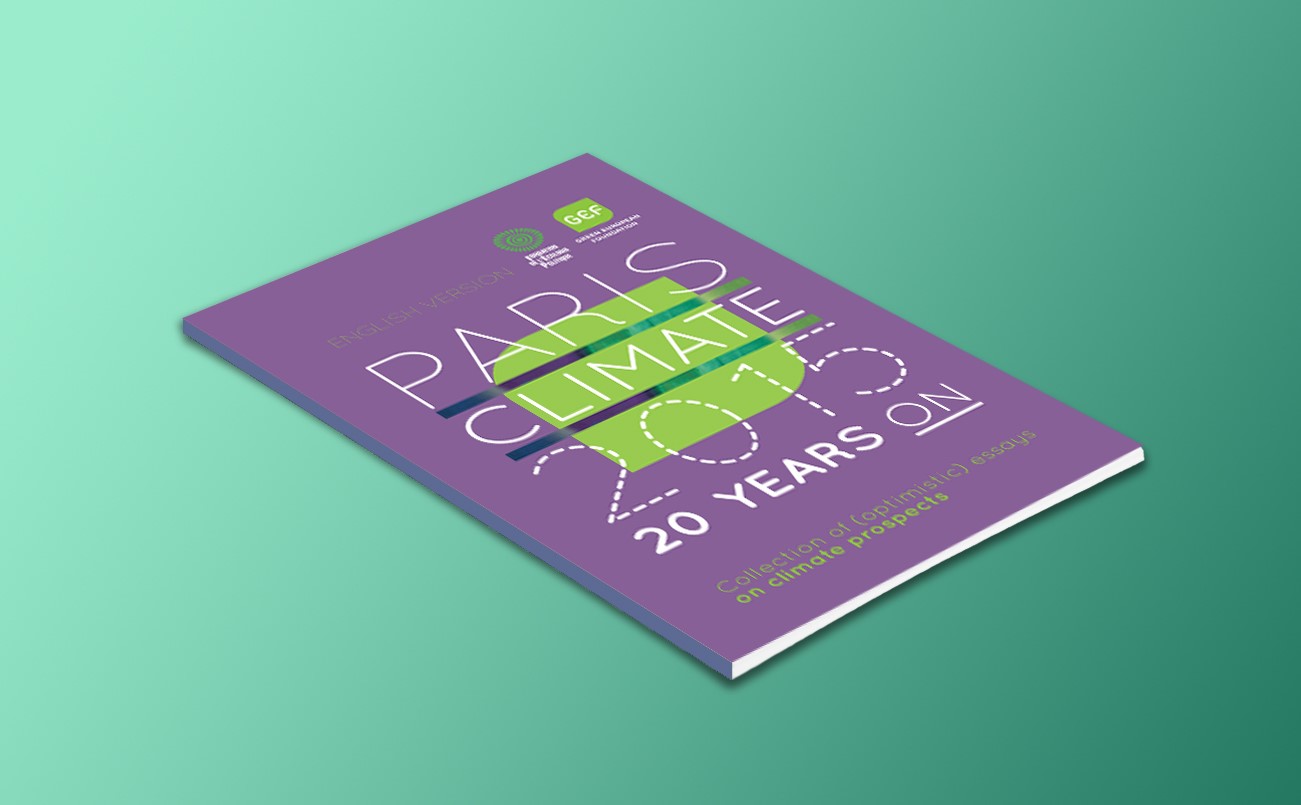
Paris Climate 2015 – 20 years on

By Uncategorized

At the end of 2015, France will be hosting the 21st Conference of the Parties to the Climate Agreement (COP21). It is hoped that the international negotiations, which take place in Le Bourget for a fortnight under the patronage of the UNO, will result in an ambitious, universal and binding agreement by the international community, enabling greenhouse gas emissions to be reduced and global warming to be limited to + 2°C.

To take a truly idealistic approach: supposing that the 2015 Paris Conference was a success, and 2015 – and the years thereafter – saw a spectacular turnaround in international political decisions, what might the world look like in 2035?

To paint the portrait of such a post-transitional ecological world, a diverse group of writers recognised in their fields have produced the texts which make up this publication concerning the various questions which are key factors in the expected scenarios: world governance and new territorial, agricultural, social, economic, legal and political models. They are pieces in an as-yet incomplete jigsaw puzzle depicting a new world, imagined a quarter of a century after the Paris Conference.

The contributions by the authors of  “Paris Climate 2015: 20 years on” collection and the illustrations accompanying them convey a society in which ecological transition has enabled us to reweave our social links and change our methods of government, making them fairer, and rethink our relations with nature and the production of value in the long term.

In the near future, citizens’ action, a new economic logic and their reflection in terms of collective expectations, will lead to a renewed political dynamism, both locally and internationally, in response to the challenge of climate change. A better world, not “the best of all possible worlds”, but one which is multifaceted, open to the diversity of the possible, giving ample room for individual and collective initiative and, therefore, for discussions on the solutions, is to be envisaged.

Can imagination make it easier to understand the risks that climate change bears? That is the question at the heart of this collection of “climate prospects”, imagined as an original and creative debating tool for use at the 2015 Paris Climate Conference.

You can download the publication below in English or French, or visit the dedicated site of the FEP here.

Icon

Paris 20 Years On EN 1.39 MB 53 downloads

...
Icon

Paris 20 Years On FR 4.42 MB 118 downloads

...

Building up for Paris: COP21

By Uncategorized

2015 is a crucial year for climate negotiations. The current agreement – the Kyoto Protocol – is in its final commitment period (2013-2020) and this year marks the deadline for world leaders to reach a new agreement. As the United Nations Framework Convention on Climate Change (UNFCCC) states, this agreement could be in the form of “a protocol, another legal instrument or an agreed outcome with legal force under the Convention applicable to all Parties”, which will enter into force post-2020 in order to keep global warming below 2°C.

Over the year, the Parties met at different sessions. The most recent one took place in Bonn in June and there will another session in the beginning September. These events all pave the way towards the 21st Conference of the Parties (COP) that will be held in Paris in December, where the negotiations will peak.

The chapters in the report are structured as follows: chapter two provides a summary of the history of COPs since the UNFCCC was created by the Parties following the Earth Summit in 1992. The third chapter assesses what is at stake in Paris. In the fourth chapter, we discuss the legal nature that a Paris deal could adopt.

The fifth chapter provides a deeper analysis on a core principle guiding the negotiations: common but differentiated responsibilities. The sixth and the seventh chapters give an insight on the broader concepts of mitigation and adaptation in the context of the UNFCCC negotiations.

The eighth chapter focuses on the CBDR principle and the notion that the implementation of the Convention worldwide needs financial mechanisms. This chapter is followed by a critical perspective on market mechanism, before moving on to discuss land-use, land-use change and forestry in the tenth chapter – giving an insight on the broader topic of agriculture within the UNFCCC.

To follow, the eleventh chapter deals with another part of the Convention, essential for its implementation but often forgotten: education. The twelfth chapter focuses on the blockers in the UNFCCC process, divided in two parts: the countries analysed through their group position (Umbrella and EU); and the business and industry networks. Finally, the publication concludes with the elaboration of possible scenarios for the COP in Paris.

Green News – Climate Edition

By Uncategorized

With articles in English, French and Polish, this e-book includes, among others, an examination of climate change as a moral challenge, an economic deconstruction of climate change as a ‘neoliberal illusion’, and a social perspective on climate change as a threat to the public goods that belong to all citizens.

A wide array of authors have contributed to the publication, including NGO representatives, political figures, scientists, and even an award-winning documentary-maker from several European countries. The e-book also contains case studies on how climate change is impacting specific areas such as the Arctic, the Amazon and Indonesia, as well as how the fight against climate change is manifested in areas such as resistance to TTIP, and how to spur further action and maintain the momentum of the campaign, now that COP21 is behind us.