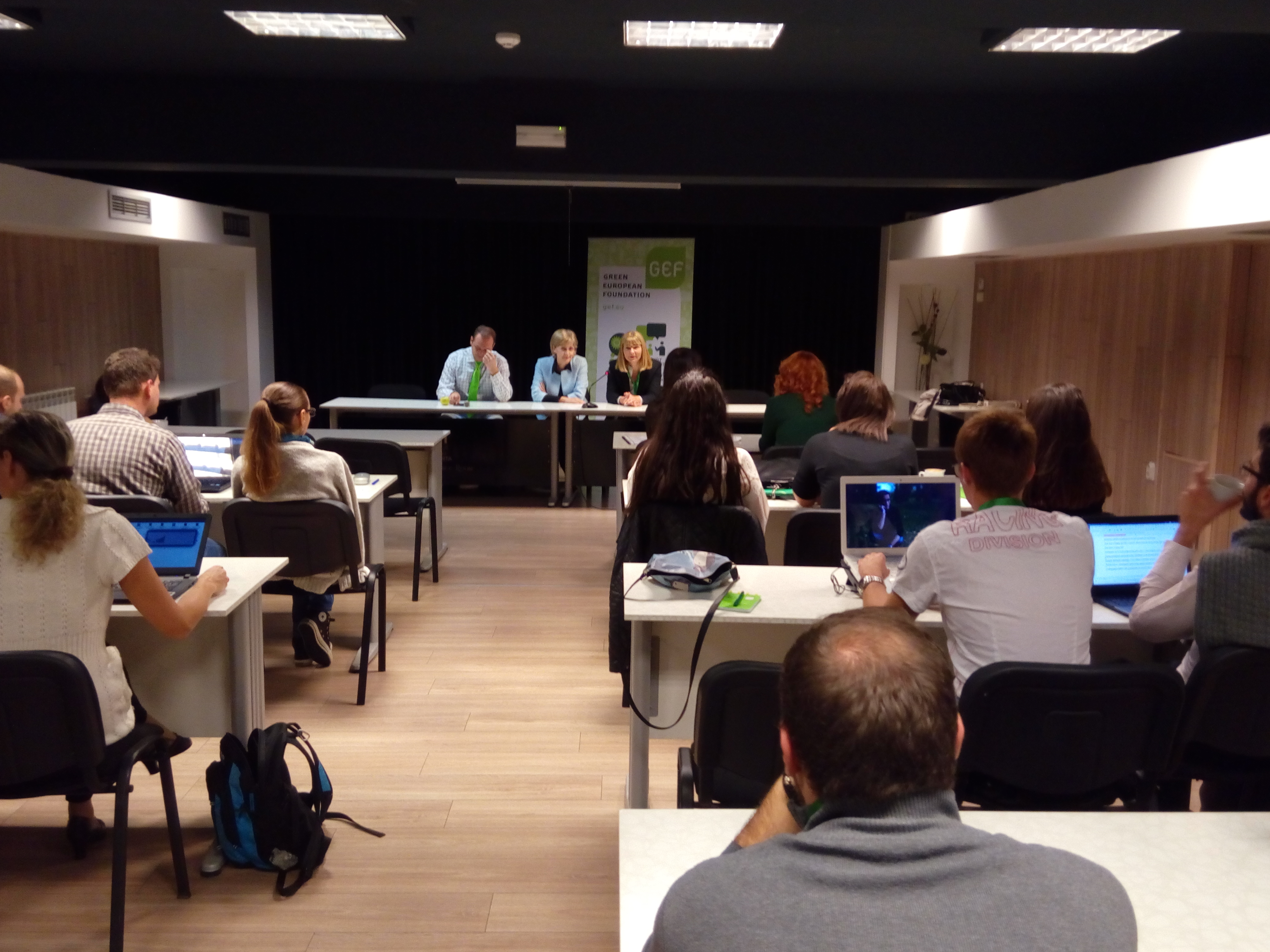
Shaping the Energy Sector in Europe (Athens)

By

CONTEXT

This conference is part of the Green European Foundation Energy Democracy transnational project, which aims to explore the potential of an energy transition for Europe and how to shape this process in a democratic, participatory way.

Europe has to change its energy system into a fully renewable one to transition to a sustainable economy and to establish a real climate policy. This is a major challenge for every Member State of the European Union, but will only succeed if the states work to together.

European citizens are already playing an active role, together with governments at different levels, as they are organising themselves in national energy cooperatives and also the European Federation REScoop.

Studies show that by 2050, around 45% of all EU households could be producing their own renewable energy, and more than a third could come through renewable energy cooperatives. This constitutes a huge opportunity for regional economic development, as locally-owned renewable energy projects deliver eight times the value of projects that are owned by private companies not from the area.

The reality in the different Member States is however extremely diverse. While the contribution of citizens’ Energy co-ops and local communities is well recognized in Western Europe, the situation in Eastern Europe is quite the opposite.

PROGRAMME

10:30 – 11:00: Arrival of attendees

11:00 – 11:05: Opening statement from the panel

11:05 – 12:00: Welcome and opening addresses:

  • Kostas Diakos, Green Institute President
  • Socratis Famellos, Vice-Minister Energy and Environment
  • Mimis Dimitriadis, MP SYRIZA, Chair of Parliamentarian Committee on Economy and Development
  • Manolis Vemis, Coordinator of the Executive Secretariat – Greek Green Party (Οικολογοι Πρασινοι)
  • Political parties representatives (tbc)

12:00 – 14:00: First round of speakers:

Legislative Framework of Energy Co-ops:

  • Michalis Verroiopoulos, Secretary of Energy Ministry of Environment and Energy

Change of Energy Production and Consumption Model as a Prerequisite for a Sustainable and Democratic Future:

  • Giorgos Dimaras, Deputy Minister Energy and Environment, MP SYRIZA Greek Green Party

Application of Energy Co-ops in Sustainable Agriculture:

  • Giannis Tsironis, former Alternate Minister of Agriculture, MP SYRIZA Greek Green Party

Lessons from Community Energy in the UK:

  • Anne Chapman, Director of Green House UK Think Tank, Director of Morecambe Bay Community Renewables

There will also be opportunities for Q&As from the audience.

14:00 – 14:40: Buffet Lunch

14:30 – 17:00: Second round of speakers:

The Transformation to Energy Democracy:

  • Merlijn De Rijcke, OIKOS Think Tank Belgium

Presentation of the Energy Cooperative Project of Sifnos Island:

  • Giannis Ghillis, engineer

Presentation of the Energy Cooperative Project of Tilos Island:

  • Giannis Kaldelis, engineer

Applying Energy Efficiency Principles – Possibilities for the Greek City:

  • Nikos Samaras, architect MSC, lecturer at the Thessaly Technological Institute

Recycling and Energy Democracy:

  • Christina Efthimiatou, chemical engineer, board member of the Hellenic Recycle Agency EOAN, co-spokesperson of the Greek Green Party (Οικολόγοι Πράσινοι)

There will also be opportunities for Q&As from the audience.

17:30 – 18:00: Closing statements from international guests & panellists 


This event is open to all who would like to attend. For more information, please contact the organiser Dimitris on dimitrispashalis@yahoo.com

For updates on this event and other upcoming ones of this GEF transnational project, follow us on Twitter and Facebook.
Shaping the Energy Sector in Europe (Skopje)

By

Context

This conference is part of the Green European Foundation Energy Democracy transnational project, which aims to explore the potential of an energy transition for Europe and how to shape this process in a democratic, participatory way.

Europe has to change its energy system into a fully renewable one to transition to a sustainable economy and to establish a real climate policy. This is a major challenge for every Member State of the European Union, but will only succeed if the states work to together.

European citizens are already playing an active role, together with governments at different levels, as they are organising themselves in national energy cooperatives and also the European Federation REScoop.

Studies show that by 2050, around 45% of all EU households could be producing their own renewable energy, more than a third could come through renewable energy cooperatives. This constitutes a huge opportunity for regional economic development, as locally-owned renewable energy projects deliver eight times the value of projects that are owned by private companies not from the area. The reality in the different Member States is however extremely diverse. While the contribution of citizens’ Energy co-ops and local communities is well recognized in Western Europe, the situation in Eastern Europe is quite the opposite.

About the event

The conference will bring together contributors from GEF partners, energy cooperatives and energy sectors to discuss renewable energy potential on both a Europe and local level.

Programme

09:30 – 10:30:  Arrival of participants and speakers

10:30 – 11:00:  Registration and welcome coffee

11:00 – 11:15: Opening:

  • Short presentation of the 2018 project
  • Aleksandar Gjorgjievski, national coordinator
  • ASSED Sunrise, Skopje  

11:15 – 12:00: Presentation:  The Transformation to Energy Democracy

  • Dirk Holemans, transnational coordinator Oikos, Belgium

12:00 – 12:30: Coffee break

12:30 – 13:10: Energy Cooperatives in Europe

  • Quest from ReScoop

13:10 – 13:40: Energy Sector in Macedonia and the Region – Current & Future Perspective 

  • Ervin Redjepagikj

13:40 – 14:00: Renewable Energy

  • Aleksandar Hristu Kanevce

14:00 – 15:00: Discussion on Energy Democracy – with the speakers 

15:00 – 16:00:   Lunch 


Registration

To register for this event, please contact Aleksandar Gjorgjievski aleksgo@gmail.com.

Revision of the Economies in the Balkans (Skopje)

By

CONTEXT 

This research report was produced as part of a project of the Green European Foundation in 2017 with the joint effort of the research teams in three Balkan countries:
BlueLink Foundation – Bulgaria 
The Association for Sustainable Social and Economic Development SUNRISE – Macedonia
Networked – Serbia.  

The research report highlights which political conditions are necessary to move towards a green economy in the three countries, and compares their prospects in terms of social factors and legal and policy frameworks.

This event is invitation only. The full research publication is available for free at GEF website. 

PROGRAMME 

21st September 2018 

16:00 – 16:30   Registration and welcome coffee 

16:30 – 16:50   Opening and Introduction of the research and cooperation with GEF  

Aleksandar Gjorgjievski – Transnational coordinator ASSED Sunrise – Skopje 

16:50 – 17:30   Hristina Odzaklievska – National researcher in Macedonia 

 Presentation of research and methodology 

17:30 – 18:00   Coffee break 

18:00 – 18:30   Ervin Regjepagic – Energy sector in Macedonia  

18:30 – 19:00   Jasmina Pakaski – Sustainable development

19:00 – 19:30   Bojan Petrovski – Green economy and Green policy 

19:30 – 20:00   Aleksandar Gjorgjievski – President of ASSED Sunrise – Macedonia  

Presentation of the GEF project Green Economy: Cooperative Society and Announcement of the International conference on 6th October 2018 

20:00 – 21:00   Dinner and closing of the promotion event 

Climate Jobs – Towards a Zero-Carbon Economy (Bristol)

By

Context

With the consequences of climate change being evermore perceptible through extreme weather events (both worldwide and in European countries), verifiable research is urgently needed to set targets and policies that reduce greenhouse gas emissions by the amount necessary to secure a livable environment. At the same time, policies to reduce greenhouse emissions are often attacked for threatening existing jobs.

GEF’s transnational project “Strengthening Climate Targets, Creating Local Climate Jobs” sets out to explore what greenhouse emissions reductions would mean in practical terms for our job markets and economies, and whether jobs could be created in rural areas across Europe. Can both a safe and just economically sound life for all be achieved? To this end, our project undertook research on the potential to create more climate jobs in three EU countries with diverse historic and economic prerequisites: United Kingdom, Ireland and Hungary.

About the event

This upcoming side event at the Autumn Conference of the Green Party of England and Wales will offer an introduction to the GEF transnational project. In particular, it will present the results of modelling to estimate the net number of jobs that could be created in each local authority area of the United Kingdom, via the transition to a zero carbon economy, in the key sectors of energy, transport, waste management, buildings and food, farming, and forestry.

During the event, the overall GEF project as well as the research findings and resulting policy recommendations for the United Kingdom will be presented by:

Jonathan Essex, Green House Think Tank

Anne Chapman, Green House Think Tank

Chaired by: Natalie Bennett, Board Member Green European Foundation and former Leader of the Green Party of England and Wales


For more information on this workshop and the Autumn Conference of the Green Party of England and Wales from 5 to 7 October in Bristol, you can find the programme here.

For updates and other upcoming events of this GEF transnational project, follow us on Twitter and Facebook.
Change of Climate in the World of Jobs? (Budapest)

By

Context

With a changing climate, many traditional jobs will be lost all over Europe, as a just transition to less carbon emission intensive industries and a green economy is inevitable. Innovative policy proposals will be necessary to create new jobs that do not threaten the emission reduction targets as they have been agreed in the Paris Climate Agreement from 2015.

About the event

As part of the transnational project “Strengthening Climate Targets, Creating Local Climate Jobs”,  this conference will feature a first presentation of the local job creation potential in Hungary in a zero carbon society that has been estimated as part of this year’s project research. Together with the data gathered on the United Kingdom and Ireland, this estimation will be a first step towards quantifying and publicising the EU-wide potential of greening local economies to create new climate jobs, and better address climate change, in the run-up to COP24.

Programme

17:00 – 17:20 PRESENTATION OF THE GEF TRANSNATIONAL PROJECT AND RESEARCH RESULTS – Jonathan Essex, Green House Think Tank United Kingdom

17:20 – 17:40 4th INDUSTRIAL REVOLUTION: REDUCE OR INCREASE EMISSIONS? – Miklós Kis, Journalist

17:40 – 18:00 CLIMATE CHANGE AND SOCIAL JUSTICE – Sándor Fülöp Phd, Co-chair of Ökopolisz

18:00 – 18:15 COFFEE BREAK

18:15 – 19:30 Q & A, DISCUSSION

Registration

To register for the event, please click here.


Stay tuned for updates on the programme here and via our Twitter and Facebook channels.

Climate change

Facing up to Climate Reality (Norwich)

By

Context

With the consequences of climate change being more and more perceptible, also in European countries, through extreme weather events, verifiable research is urgently needed to set targets and policies that reduce greenhouse gas emissions by the amount required to secure a livable environment.

What would those reductions mean in practical terms, for instance for our economies? Can we create jobs in rural areas across Europe and not only secure a safe but also a just, economically sound life for all?

GEF’s transnational project “Strengthening Climate Targets, Creating Local Climate Jobs” explores those questions and aims to explore the potential to create more climate jobs in three EU countries with diverse history and economic prerequisites: United Kingdom, Ireland and Hungary.

About the event

Our upcoming one-day conference, organised with the support of Green House Think Tank, will consider these questions, as well as what we can learn from past extreme weather events in Europe for how we might cope in the future. It will be one stepping stone towards our upcoming research publication on the potential of local jobs creation in the three mentioned countries and will serve as an opportunity to discuss first findings for the United Kingdom more in-depth.

Programme

9:30 -10:00 REGISTRATION

10:00 -10:10 WELCOME AND INTRODUCTIONS – Rupert Read

10:10 – 11:30 FACING UP TO CLIMATE REALITY – chaired by Catherine Rowett, with Brian Heatley and Asher Minns

11:30 -11:45 BREAK

11:45 – 13:00 CLIMATE JOBS – chaired by Anne Chapman, with Jonathan Essex and Peter Sims

13:45 – 14:45 FUTURE OF AGRICULTURE AND RURAL ECONOMIES – chaired by Rupert Read, with Simon Fairlie and Helen Baczkovska

14:45 – 15:00 BREAK

15:00 – 15:30 DEALING WITH EXTREME WEATHER – chaired by Rupert Read, with Anne Chapman

15:30 – 16:00 FINAL DISCUSSION

Speaker Biographies

Rupert Read is chair of Green House think tank and Reader in Philosophy at the University of East Anglia.
Catherine Rowett is professor of philosophy at the University of East Anglia.  She was the Green Party parliamentary candidate for South Norfolk in the 2015 and 2017 General Elections.
Brian Heatley is a founder member of Green House think tank.  He is a former senior civil servant and former policy co-ordinator for the Green Party.
Asher Minns is executive director of the Tyndall Centre at the University of East Anglia.  He is a science communicator who specialises in knowledge transfer of climate change research to audiences that are outside of academia.
Jonathan Essex is a member of Green House and an associate of Bioregional where he advises on new project development and policy.  He previously worked for bioregional on sustainable construction and material reuse.  He is a Green Party district and county councillor for Redhill, Surrey.  He has led the work done by Green House on ‘Climate Jobs’.
Peter Sims is an Electronic Engineer who specialises in systems engineering and in particular the overlap and interfaces between human and non-human systems.  He has carried out the modelling to estimate the number of jobs that could be created by the transition to a low carbon economy in Green House’s work on ‘Climate Jobs’.
Simon Fairlie is one of the editors of The Land, an occasional magazine about land rights, and author of Meat, a Benign Extravagance (Permanent Publications, 2010).  He runs Chapter 7, which provides planning advice to smallholders and other low income people in the countryside. He has also had much practical experience of small scale farming in the UK and France.
Helen Baczkovska is an ecologist and writer based in rural Norfolk.  She works as a conservation officer at Norfolk Wildlife Trust.
Anne Chapman is a member of Green House think tank.  In 2017 she organised a conference in Lancaster (where she lives) on dealing with extreme weather.


Stay tuned for updates on the programme here and via our Twitter and Facebook channels.

The conference is free of charge but secure your place now by registering via this link. For further information, get in touch with info@greenhousethinktank.org.

Crossing Borders (Janów Podlaski)

By

Context

The title of this year’s GEF Green Summer Academy in Poland is ‘Crossing Borders’, a phrase charged with meaning and symbolism, considering the fact that the event will be taking place near the borders of Poland with Belarus and Ukraine, as well as within a region with diverse cultures, dialects, languages, and religions.

About the event

The event includes several major themes, such as:

  • The future of Europe in the context of changing geopolitics and the upcoming European Parliamentary elections
  • Climate change and preparing for the COP24 Climate Change Conference in Katowice
  • Green visions for farming, nutrition, and rural development
  • Green visions for local governance, with particular emphasis on regional assemblies, and transition cities in alignment with the ideals of the Commons and urban movements

Through several workshops, round tables and expert debates, the event will feature discussions on fighting pollution, cities of equal chances, preventing corruption and the role of art and artists in citizens-led activism and the political transformation of Poland in a European context. The participants will also engage with the local community and local activists and learn about new green transborder initiatives and opportunities.

Through its diverse programme, the Green Summer Academy in Poland connects the dots between politics and society at local, regional, national, European and global levels.

Programme

Thursday July 12

16:00 – 19:00 Local expeditions in small groups

17:00 – 19:00 Meeting with local active inhabitants on projects of local development opportunities in a transborder context

Friday July 13

9:30 – 10:00 Opening speeches

10:00 – 12:00 What future for the Eastern Europe in EU?  (Debate)

Speakers: Rebecca Harms (Member of the Greens/EFA group in the European Parliament), Paweł Kowal (College of Europe, Natolin), Małgorzata Tracz (Partia Zieloni, Poland), Michał Sutowski (Krytyka Polityczna), Moderator: Bartłomiej Kozek (GEJ), Adam Ostolski  (GEJ, Krytyka Polityczna, Partia Zieloni)

12:00 – 13:45 Creating Socio-Ecological Societies through Urban Commons Transition. Lecture ‘Cities in transition’

Lecture: Dirk Holemans (Green European Foundation Board Member and Director of the Flemish Green Think Tank Oikos

Cities in transition 

Speakers: Dirk Holemans (Ghent in transition with Michel Bauwens), Sergi Alegre (El Prat and Barcelona),  Hanna Gill-Piątek (innovative revitalisation in Łódź), Marcin Gerwin (citizens’ panels in Gdansk and Lublin), Roger Manser (London Great Parc), Moderator: Dagmara Misztela (Partia Zieloni, Poland)

14:45 – 15:45 Artists as change makers (Debate)

Speakers: Ela Hołoweńko, Cecylia Malik, Michał Kasprzak, Joanna Kessler. Moderator: Gert Roehrborn

15:45 – 17:45 Panel debate 

  • Food and farming past revolution and its consequences (Key note), Thomas Waitz, MEP, EGP Committee 
  • The CAP today and tomorrow, the Green perspective (Key note), Andrzej Nowakowski (GGEP) 
  • From industrial agriculture to agroecology and food sovereignty? (Debate), Andrzej Nowakowski (Advisor on Agriculture and Rural Development in the Greens/EFA group in the European Parliament), dr Katarzyna Bańkowska (IRWiR PAN), Izabela Mier (Cooperative Dobrze), Ben Lazar (Nyeleni Polska/permaculture), Dorota Metera (expert in certification), Maria Staniszewska (ecological NGO), Adrian Sulikowski (conventional farmer/Green Party), Katarzyna Jagiełło (Greenpeace), Justyna Zwolińska (SGGW, Poland). Moderator: Ewa Jakubowska-Lorenz, (HBS Warszawa)

18:00 – 19:45 Parallel programme in Janów Podlaski and Biała Podlaska

21:00 – 22:00 ‘No Problem!’ by Yasmin Kidwai, documentary projection

Saturday July 14

9:00 – 11:00 Parallel Sessions I 

  • Future of work (Adam Ostolski, Bartlomiej Kozek)
  • Economy and climate change (Roger Manser, Przemek Stępień)
  • Rivers exchange of knowledge part I (Alesia Basharymava, Volha Kasevitch, Uladzimir Zuyeu, Petro Hrystiszyn, Heorhiy Veremiychyk, Oleksandr Husiev, Sascha Maier, Mikhail Durkin, and members of the Save the Rivers Coalition, moderators:  Ewa Leś, Sascha Maier)

11:30 – 13:00 Parallel Sessions II

  • Seminar ‘Green farming: Campaigning against GMO, why and how’ (Ewa Sufin-Jacquemart (Strefa Zieleni), Juliette Leroux (Greens/EFA)
  • City of Open Chances (Hanna Gill-Piątek, Aleksandra Kołeczek)
  • Rivers exchange of knowledge part II (Iza Zygmunt, Maria Staniszewska)

14:00 – 16:00 Parallel Sessions III 

  • Green media for the climate (Beata Nowak, Bartek Kozek, Jamie Kendrick (GEJ), Annabelle Dawson (GEJ), Monika Matus (Democratic Action), Wojciech Szymalski (Institute for Sustainable Development), Ilona Jędrasik (Client Earth Lawyers for Earth), Hanna Schudy (EKO-UNIA), Monika Sadkowska (RT-ON), Marcin Harembski (SMA/CAN + Climate Coalition) and others, Moderator: Katarzyna Ugryn)
  • Green regional program: clean air, green jobs, integrated public transport and enthralled hunting (Małgorzata Tracz and Paweł Pomian)
  • Rivers working groups E30 and E40 coalitions (Ewa Leś, Sascha Maier, Maria Staniszewska, Petro Hrystiszyn)

16:30 – 18:30 Parallel Sessions IV

  • Towards COP 24 (Roger Manser (urbanist), Beata Nowak (Zielone Wiadomości), Monika Matus (Democratic Action), Wojciech Szymalski (Institute for Sustainable Development),  Ilona Jędrasik (Client Earth Lawyers for Earth), Hanna Schudy (EKO-UNIA), Monika Sadkowska (RT-ON), Marcin Haremski (SMA), Patryk Białas (Skype), Maciej Smykowski (Partia Zieloni), Katarzyna Ugryn (HBS), moderators: Ewa Sufin-Jacquemart (Strefa Zieleni), Artur Wieczorek
  • Seminar ‘Green farming: How organic farming can be developed in Poland and EU’ (Monika Styczek- Kuryluk, Andrzej Nowakowski, Dorota Metera, Dr. Katarzyna Bańkowska, Ben Lazar, Rober Kuryluk, and others. Moderators: Iza Mier, Julia Rokicka)
  • Rivers plan of action (Izabela Zygmunt, Ewa Leś)

18:45 – 19:30 Summary and closing

Sunday July 15

7:00 – 9:00 Local expeditions in small groups


Participation fee:

The full fee of 500 PLN (570 PLN with transfer) should be paid by bank transfer to the account of Fundacja Strefa Zieleni:

66 1020 1097 0000 7602 0237 0450, title: ‘Green Summer Academy participation fee’

(from abroad: IBAN: PL66 1020 1097 0000 7602 0237 0450, Swift/BIC: BPKOPLPW)

The lower participation fee is possible when registering before June 25

Registration/more information:

Ewa Sufin-Jacquemart +48-664673700 ewa.sufin@strefazieleni.org

Urszula Sadlowska +32 (0)2 234 65 73 urszula.sadlowska@gef.eu


The Green Summer Academy “Crossing borders” is organised by the Green European Foundation with the support of Fundacja Strefa Zieleni and with the financial support of the European Parliament to the Green European Foundation.

The debate on transitioning cities towards the Commons is organised as a part of the international project “Creating Socio-Ecological Societies through Urban Commons Transition” by the Green European Foundation with the support of Fundacja Strefa Zieleni and with the financial support of the European Parliament to the Green European Foundation.

Jobs in a Changing Climate (Dublin)

By

Context

With a changing climate, many traditional jobs will be lost all over Europe, as a just transition to less carbon emission intensive industries is inevitable. It will be vital for all stakeholders, such as policy makers, trade union representatives, civil society organisations, think tanks and businesses to establish a dialogue and to come up with new solutions to those challenges – and the Green movement can spearhead this process.

About the event

As part of the transnational project “Strengthening Climate Targets, Creating Local Climate Jobs”,  this conference will contribute to the discussion within the Irish society and among the key stakeholders on how to ensure a just transition to Zero Carbon and create local climate jobs across the country.

The event will also feature results of the ongoing research of the Green European Foundation and its partners to draft and launch strategies for local investment to create more climate jobs in Ireland.

One of the practical examples that will be discussed is the proposed closure of three peat burning power stations in the Midlands and the effect on the livelihoods of 400 workers. Studies have been carried out on how the transition to a low carbon society in the UK will create sustainable jobs in Sheffield and Isle of Wight. Also we will look at the Lucas Plan, where workers devised viable alternatives to redundancies, using their skills to develop socially useful products and services. The implementation of the Circular Economy will also affect jobs, positively and negatively, and mitigate greenhouse gas emissions.

Speakers

Duncan Stewart, Environmentalist, Broadcaster, and Chair, Green Foundation Ireland

Tommy Simpson, Project Coordinator Green Foundation Ireland and former President Dublin Council of Trade Unions

Jonathan Essex, Project Coordinator, Greenhouse Think Tank United Kingdom

Peter Simms, Researcher,Greenhouse Think Tank United Kingdom

Adrian Kane, Public Administration and Community Division Organiser, SIPTU

Sinead Mercier, Researcher, Just Transition

Yvonne O’Callaghan, Strategic Organiser, SIPTU Trade Union Ireland

Joseph Curtin, Senior Fellow, Institute of International and European Affairs

The input by the speakers will be each followed by Q&A sessions to allow for full participation in the event of those attending.


The event is free of charge but registration is required. To secure your spot follow this link.

Registration for the event on the day starts at 9:30.

For more  information on  the conference, please contact info@greenfoundationireland.ie

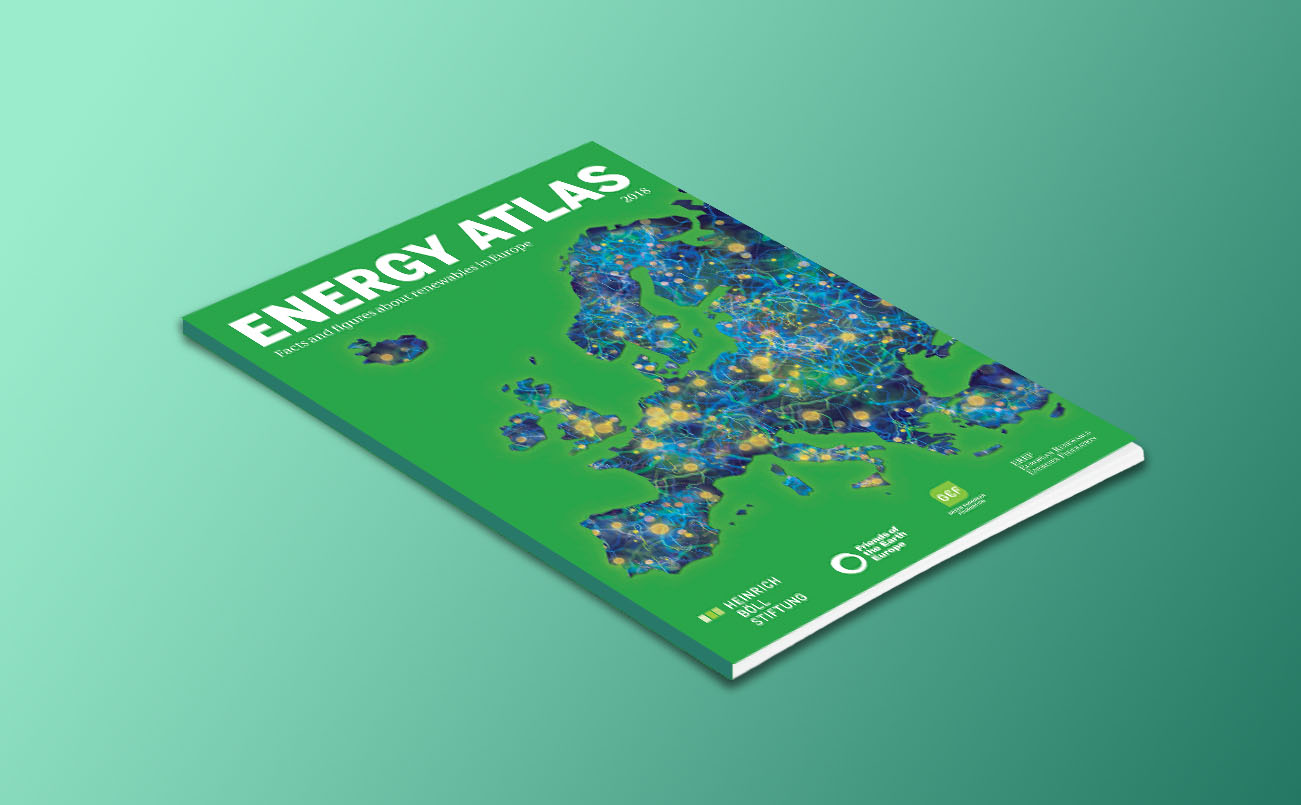
Energy Atlas 2018 – Facts and Figures about Renewables in Europe

By Uncategorized

The energy transition is already well underway. However, it is happening at different speeds across the continent. For the past 100 years, geopolitical strength has depended on access to fossil fuel resources. With the support schemes for renewable energy and the rise of citizen energy, the energy system is taking a new course towards greater democratization and decentralization.

With the Paris climate agreement, Europe is facing the global responsibility to keep global warming within 1.5°C. Renewable capacity in the EU has increased by 71 percent between 2005 and 2015, contributing to sustainable development and more local jobs. In the most advanced countries and regions in Europe it is often the local government and citizens who are driving the transition. At the time of publication of this Atlas, the EU’s next generation of energy legislation is in the process of being finalised. The targets and regulations agreed to take effect by 2030 will shape Europe’s energy system for the next decade – one of the last critical chances to take sufficient action to avoid catastrophic climate change.

Cooperation on the European level is key to ensuring the right conditions for switching to renewables. Back in 2010, several countries in the Union were already on their way towards integrating large amounts of renewable energies into their systems. They also pushed for stable and reliable frameworks at EU level, as well as ambitious binding targets.

We can already tell that the EU’s 2030 ‘Clean Energy package’ sets out roughly the right direction for the path towards renewables, but it fails to ensure the speed and depth of the transition. The proposed renewable energy and energy efficiency targets are far too modest, particularly given the falling technology costs and availability of new renewables technologies, thus jeopardising the progress achieved in previous years. The EU energy framework needs to be better aligned with its long-term climate commitments.

The next big challenges in Europe’s energy transition are the heating and transport sectors. So far, renewable technologies have not penetrated the transport, heating and cooling systems as much as they have the electricity system. In transport, we are beginning to see a shift to electrified transport and electric vehicles – driven by fast-advancing storage and battery technology and decreasing cost.

Bringing the heating, cooling and transport sectors together with the power sector – connecting sectors that are currently isolated from one another – will allow Europe to reach a 100 percent renewable system with technology that is already available today. This will enable us to overcome the longstanding renewable energy challenge – that of variable supply. When electrified, the heating, cooling and transport sectors will become large sources of flexible storage that back up the electricity sector. When wind and solar energy is plentiful these sectors can flexibly be used by heating systems and the batteries of electric vehicles, making ‘backup’ nuclear or fossil fuel capacities redundant.

The advantages of renewable energy are clear, especially when they are owned and controlled by communities: cleaner air, warmer homes, industrial benefits. Furthermore, money stays local, more jobs are created, energy poverty is reduced, and most importantly, renewable energy contributes to saving the planet.

With this Atlas, we aim to contribute to an open and facts-based discussion on the European energy transition, whilst advancing this ambitious European project that unites European citizens.

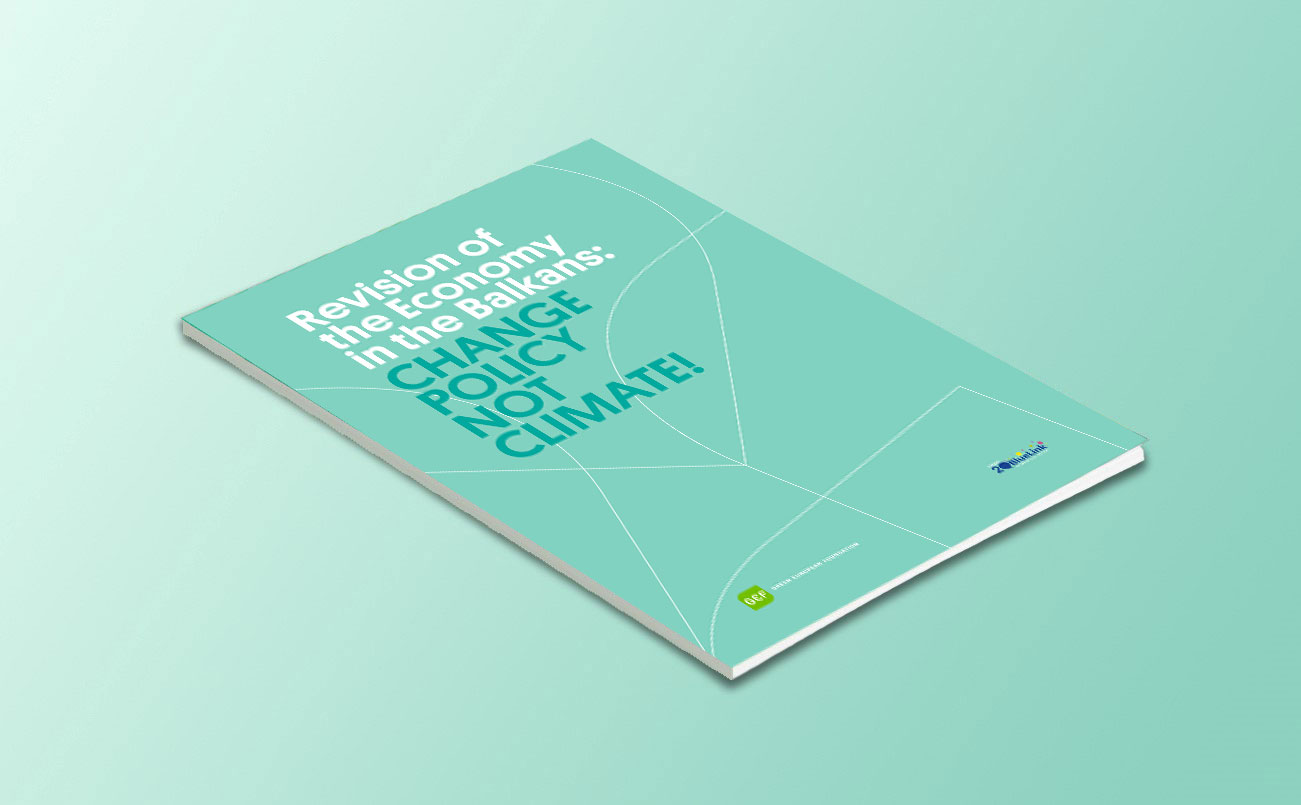
Revision of the Economy in the Balkans: CHANGE POLICY NOT CLIMATE!

By Uncategorized

This project had the aim to to raise awareness among stakeholders, politicians and the general public for the economic potential of a Green Economy, to stimulate changes in consumption and production patterns, and promote a participatory approach to policy making. The report and other project activities respond and contribute to one of the priorities for Bulgaria’s presidency of the EU in 2018: eco-innovation as a driver for economic progress.

Research goals

The purpose of the research was to accomplish the following goals set by the project:

  1. To gather best practices from the three participating countries – Serbia, Macedonia and Bulgaria – for a green economy;
  2. To showcase and promote the transformation of the economy towards environmental, low-carbon and energy-efficient production along with increasing prosperity and equity in society;
  3. To provide useful facts and arguments for Green politicians and activists to raise awareness among stakeholders, politicians and the general public about the economic potential of the green economy, to stimulate changes in consumption and production patterns, and to promote a participatory approach to policy-making.

A Democratic and Inclusive Green Economy

The research report highlights which political conditions have to be fulfilled to move towards a green economy in those three countries and compares the prospects of Serbia, Bulgaria and Macedonia in terms of social factors, legal framework and the policy framework.

Download

Digital version in English is available here

Digitial version in Bulgarian is available here

Digital version in Macedonian is available here

Digital version in Serbian is available here

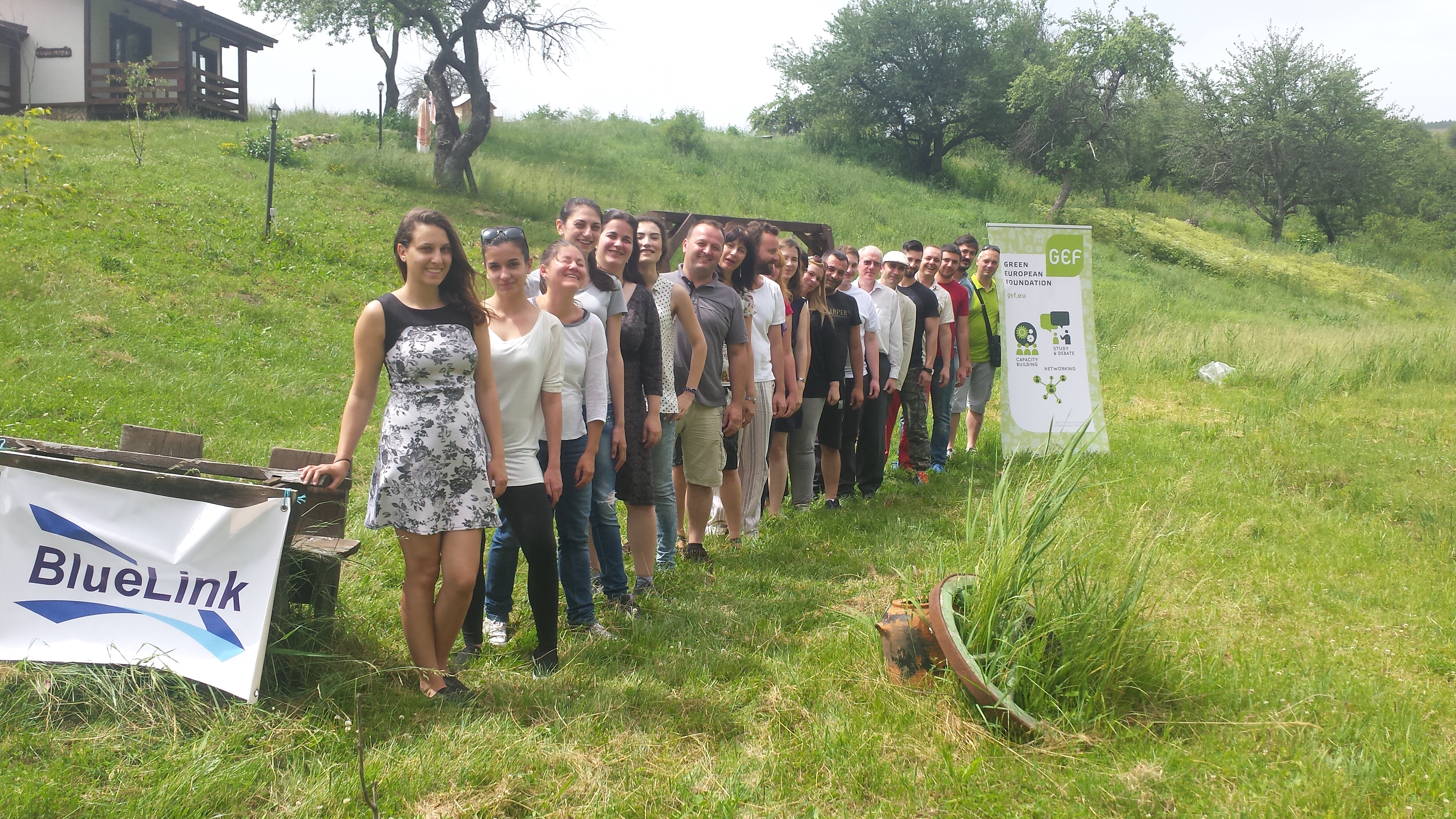
“Balkan Watchdogs: Cross border Environmental Reporting” Workshop in Bulgaria

By

The workshop’s aim was to support young and active journalists from Bulgaria, Serbia and Macedonia, who have an interest in the practice of watchdog journalism, telling stories of environmental dangers and exploring new sustainable solutions offered by the Green economy. This event is a part of the Journalists and Policy Makers Boost Green Economy project, organised by the Green European Foundation, with the support of the BlueLink Foundation (Bulgaria), the Association for Sustainable Social-Economic Development Sunrise (Macedonia) and Drugi Novi Centar Association (Serbia).

The training represented a great opportunity for the young journalists and professionals with an interest in the practice of watchdog journalism in the public interest. It provided the participants with important insights in the cross-border environmental issues in the Balkans and the Green policies as the alternative solutions. This experience served as a platform for knowledge exchange and a chance to enhance the professional skills of the participants. The training was implemented in English.

The workshop was facilitated by: Dr. Pavel Antonov, Chief Editor at the Evromegdan.bg virtual newsroom of the BlueLink foundation; Paul Brown, Editor, Climate News Network; Zlatko Simonovski, researcher and journalist and Beatrice White, Deputy Editor at Green European Journal.


Purpose of the Workshop

With rule of law and democratic mechanisms failing to protect nature and public interest, ethical professional watchdog journalism is essential for raising awareness and promoting Green policy solutions in South Eastern European societies. Success stories of environmental and social change, environmental justice and Green policies advanced by new politicians, policy-makers and activists fail to effectively reach – and inspire – the general public.

Therefore, the workshop aimed to:

  • Build on the professional skills and integrity of young and active journalists;
  • Engage them creatively and professionally in a virtual newsroom to facilitate authoritative and well-written creative feature articles of environmental change;
  • Guide them while they publish and popularise journalistic articles (in text and image) in English and their native languages;
  • Allow new policy-makers, Green politicians, academic and civil society experts to foster journalists’ understanding of available success cases, technological and policy solutions.

Workshop for New Politicians and Activists

By

After the successful implementation of a transboundary workshop for young journalists in Tran, Bulgaria last June, this event took place in Skopje, Macedonia from the 15th to the 17th of October and broached the issue of implementing policies to develop a Green Economy in the region.

The workshop’s aim was to support new politicians and activists from Bulgaria, Serbia and Macedonia, who have an interest in environmental issues and in exploring new sustainable solutions offered by the Green Economy. This event was part of the Green European Foundation’s transnational project Journalists and Policy Makers Boost Green Economy, organised with the support of the BlueLink Foundation (Bulgaria), the Association for Sustainable Social and Economic Development Sunrise (Macedonia) and Drugi Novi Centar Association (Serbia).

The workshop provided the participants with important insights into cross-border environmental issues in the Balkans and explore Green policies as alternative solutions. This event served as a platform for knowledge exchange and a chance to enhance the professional skills of the participants. The training was implemented in English.

If you would like to find out more about the workshop, please contact aleksandar@izgrejsonce.mk or borislav.sandov@zelenite.bg.

This workshop was organised with the financial support of the European Parliament to the Green European Foundation.

Myths of nuclear power – a guide

By Uncategorized

The publication highlights several common misconceptions regarding nuclear energy. One such misconception emphasises that supporting nuclear energy does not set back the development and spread of renewable energy sources, and that nuclear power plants can be a “bridge” between dirty and clean energy systems. This misconception has resulted in increased government investments throughout the world in improving and building new nuclear power plants rather than concentrating on safe, clean and not so costly renewable energy, as well as on promoting and investing in increased energy efficiency.

The publications below examine these issues in a forthright manner, and outline the reasons why atomic energy does not constitute a real solution to our energy problems.

The Green European Foundation has translated one of the studies, “Systems for change: Nuclear Power vs Energy Efficiency and Renewables” into Italian to facilitate the debate on the topic in more parts of Europe.


A Sustainable Future for Transport – Now

By Uncategorized

With the major contribution that the transport sector makes to CO2, there is a need for major reductions in its emissions to ensure Europe meets its necessary targets of an overall reduction of 20% by 2020. This publication sets out the urgent action that needs to be taken in order to achieve these targets, along with the benefits that such actions can bring to the economy and the quality of life for Europe’s citizens.

Authored by transport expert Pierre Radanne, the publication examines not just the short term changes that are required, but also discusses a longer term vision for what a sustainable transport system would be like for Europe.

Icon

Commission White Paper 133.10 KB 78 downloads

...

Women and Climate Change

By Uncategorized

The published essays are very diverse, but they all concur on one point: gender equality and the fight against climate change are two challenges that have to be tackled simultaneously and urgently. Adaptation to climate change seems to be the realm of women in countries across Africa, Asia and South America. They are often the ones working the land and getting water to feed their families, while they do not have control over the land they work on or the major decisions about where and how to live. Many contributions from developing countries are included in the publication, which reveal that the level of awareness of this topic in developing countries is much greater than in Europe. Gender, as often, is the blind spot of the academic and political debate on climate change. It is high time that more attention is paid to the women’s hardships as well as their inspiring solutions.

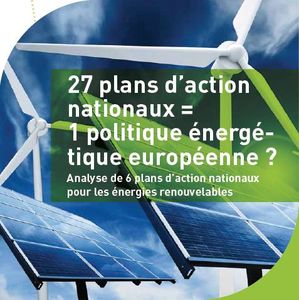
27 National Energy Action Plans = 1 European Energy Policy?

By Uncategorized

The EU Renewables Directive, for the first time, set a legally binding renewable energy target for the EU: a 20% share of renewables in final energy consumption by 2020. Each Member State was apportioned an individual 2020 target by the Commission for renewable energy as a proportion of final energy consumption. They were also directed to produce a National Renewable Energy Action Plan (NREAP) offering detailed information on their concrete polices for reaching these targets.

Given that investment made today in the energy sector will have huge implications for the coming decades, if we are to make the fundamental changes required to tackle climate change, the policy decisions we make over the next 10 years will be key. In addition to this, many experts are of the opinion that in order for the EU to make the transition to a low carbon economy, it will have to make far greater use of the potential benefits from European cooperation.

This publication therefore undertakes a rigorous analysis the NREAPs with two key questions in mind: do the Member States take into consideration the long term goal of 100% electricity from renewables, and do they expect to make use of European cooperation methods? The analysis demonstrates the great variety that exists between Member States on renewable energy policy, both in terms of ambition, method, and the likelihood of achieving the legally binding targets.

The publication is part of GEF’s continuous efforts to promote the creation of a European Community for Renewable Energy that would foster further and greater development of alternative energy sources in Europe and beyond.

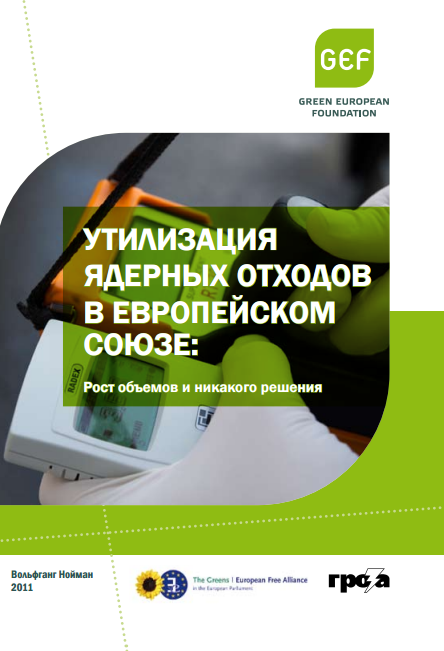
Nuclear Waste management in the EU: Growing volumes and no solution

By Uncategorized

The Green European Foundation, with support of the Russian NGO Groza, has produced the study into Russian, in order to make it more accessible and easy to use for Russian-speaking communities inside and around Europe. The publication was also presented in a big conference organised in Vilnius in December 2011. The English version of the study can be accessed on the website of the nuclear waste campaign of the Greens/EFA group, here.

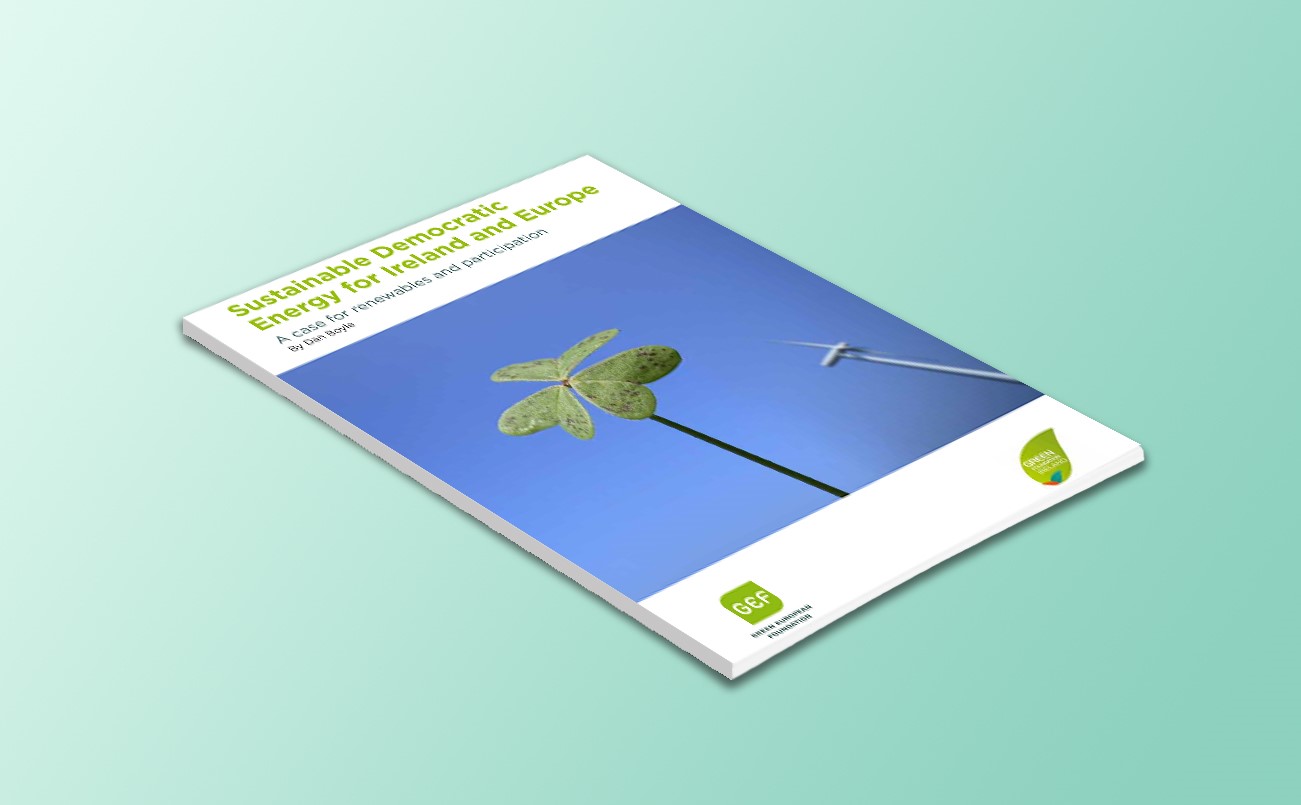
Sustainable Democratic Energy for Ireland and Europe

By Uncategorized

The European Union is committed to reducing greenhouse gas emissions to 80 – 95% below 1990 levels by 2050. Given the many reasons for public concern about the technological and infrastructural developments required to achieve this ambitious target — threats to landscapes and habitats, public safety fears, etc. — citizens themselves must be informed and engaged in the decision-making process.

Using case studies from citizen’s initiatives and renewable energy projects specifically in Ireland, and contrasting them with similar experiences in Denmark and Germany, Dan Boyle makes the case for the desirability of participative renewable energy projects across Europe as a whole. He also provides an overview of some of the key democratic models for effective public participation, examining key lessons learnt from environmental campaigns which have questioned and opposed renewable energy projects on the basis of the potential environmental damage caused by the infrastructure.

Ireland has had one of the highest levels of fossil fuel dependence in the European Union but, with relatively abundant wind and water power opportunities, combined with the entrance into government of the Irish Green Party for the first time in 2007, Ireland is racing towards its renewable energy targets. In 2012, for example, its target of 40% renewable energy generation was achieved 103 days early. According to Boyle, part of the reason for the comparatively swift development of renewables in Ireland was the level of public participation and buy-in — concepts which are explored in depth in this report.

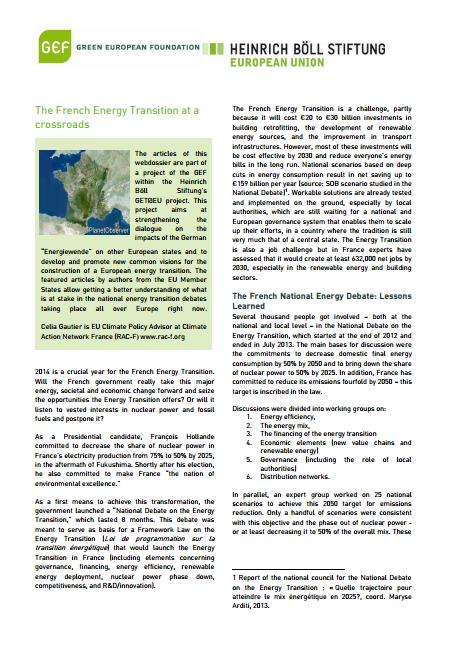
The UK, France, Poland and the future of EU energy policy

By Uncategorized

The French government is currently working on plans to reduce France’s reliance on nuclear energy and adopt ambitious CO2 reduction goals. The roadmap for this will be presented in an ambitious energy law, expected to be published later this year. Celia Gautier from Reseau Action Climate France outlines the current debate and highlights some of the challenges faced.

The UK, meanwhile, is facing an uncertain energy future, with efforts by some to impose uncertain CCS (carbon capture and storage) and risky fracking for shale gas in to the country’s energy mix. But what does this mean for its future investment in renewables? Mark Johnson from the European Policy Centre gives an overview of the situation.

Poland is a country in need of a major energy transition, yet the concept of widespread use of green energy is yet to take root. What concrete steps can be taken to change this? Andrzej Kassenberg, co-founder and president of the Institute for Sustainable Development Poland, provides some ideas.

The articles of this web dossier are part of a project of GEF within the Heinrich Böll Stiftung’s GET@EU project. This project aims at strengthening the dialogue on the impacts of the German “Energiewende” on other European states and to develop and promote new common visions for the construction of a European energy transition. Events as part of this project took place in LondonParisBrussels and Warsaw.

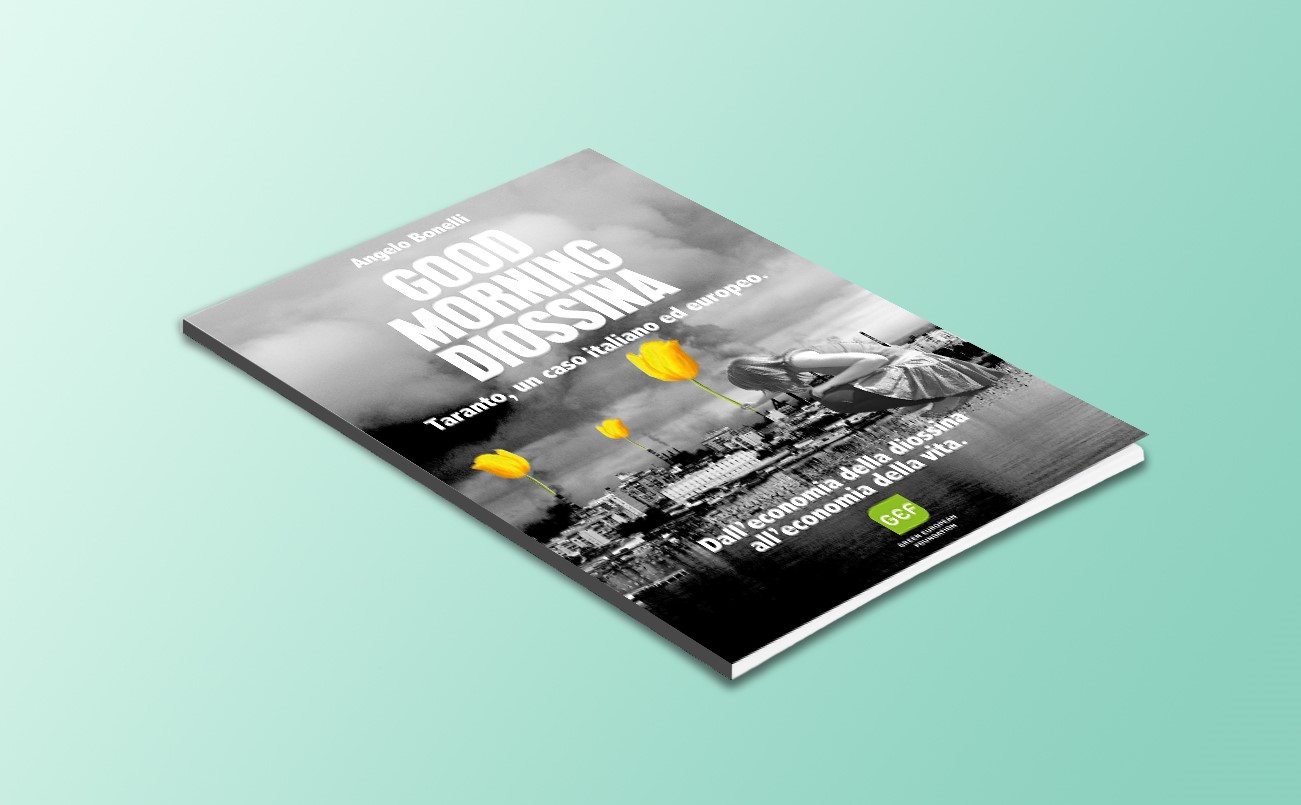
Good morning Diossina. Taranto: the toxic economy

By Uncategorized

Taranto is a city in the south of Italy where the presence of highly polluting industries, such as the Ilva steel plant, has been responsible, since the 1960s, for the highest mortality rate in Italy. The latest epidemiological study by the Italian National Institute of Health shows a terrifying +54% above-average tumor incidence rate and +21% mortality rate among children (0-14 years old).

According to data by the Italian National Institute of Emissions (INES), in recent years, Taranto accounted for 93% of all the dioxin and 67% of all the lead released in the country’s atmosphere. The level of environmental pollution is so extreme that the health authorities were forced to outlaw pasture within a 20-km radius from the plant and to order in 2009 the cull of over 3,000 animals due to dioxin contamination.

Though not an isolated case, Taranto is a perfect example of how the absence of environmental controls in Italy or the “capture” of these by special interests in the name of profit maximisation has severely compromised and “sold” the health of citizens. There’s a reason that the investigation by the Taranto prosecutor’s office was codenamed “Sold Environment”.

In this book, we will tell the story of a city brought to its knees by poisonous fumes and torn apart by the sorrow of the victims’ families. Moreover, we will focus on the economic and industrial aspect of the problem: how can the highly polluting dioxin-based industrial model – of which Taranto is the epitome – become the subject of a radical economic and industrial conversion, capable of generating new, clean jobs and social welfare? Taranto’s economy currently revolves entirely around the Ilva plant and this has irreversibly damaged other crucial economic sectors, such as agriculture, stock rearing and mussel farming. Taranto’s mussels used to be famous all over Europe, but in recent years, the health authorities have ordered the destruction of tons of mussels from the Mar Piccolo due to PCB contamination. Around 1,000 jobs were lost among breeders and farmers. The trade, service and tourist industries have also been strongly affected by the pollution and the progressive reduction of Taranto’s population.

We have successful examples of similar industrial conversions both here in Europe (Bilbao and the Ruhr carbon sink), as well as on the side of Atlantic (most notably Pittsburgh, the United States’ former steel capital). We will also show how such economic and industrial conversions have reduced social strife and boosted employment and growth rates, thus debunking the intolerable notion that one must choose between well-being and employment; how favourable tax systems can contribute to the birth of major business- and employment-creating scientific and research centres based around technological innovation (such as biotechnologies); and how urban and social fabric can be regenerated to favour both economic and environmental recovery.

We will also look at the administrative, legislative and economic tools best fit to bring about Taranto’s industrial conversion. The book’s urgency stems from the need to move from mere protest to concrete proposals, thus hailing a new phase in Italy’s environmental movement, capable of offering practical solutions to the six million Italians who still live in highly polluted areas – forgotten citizens, to which we want to say that change is possible.