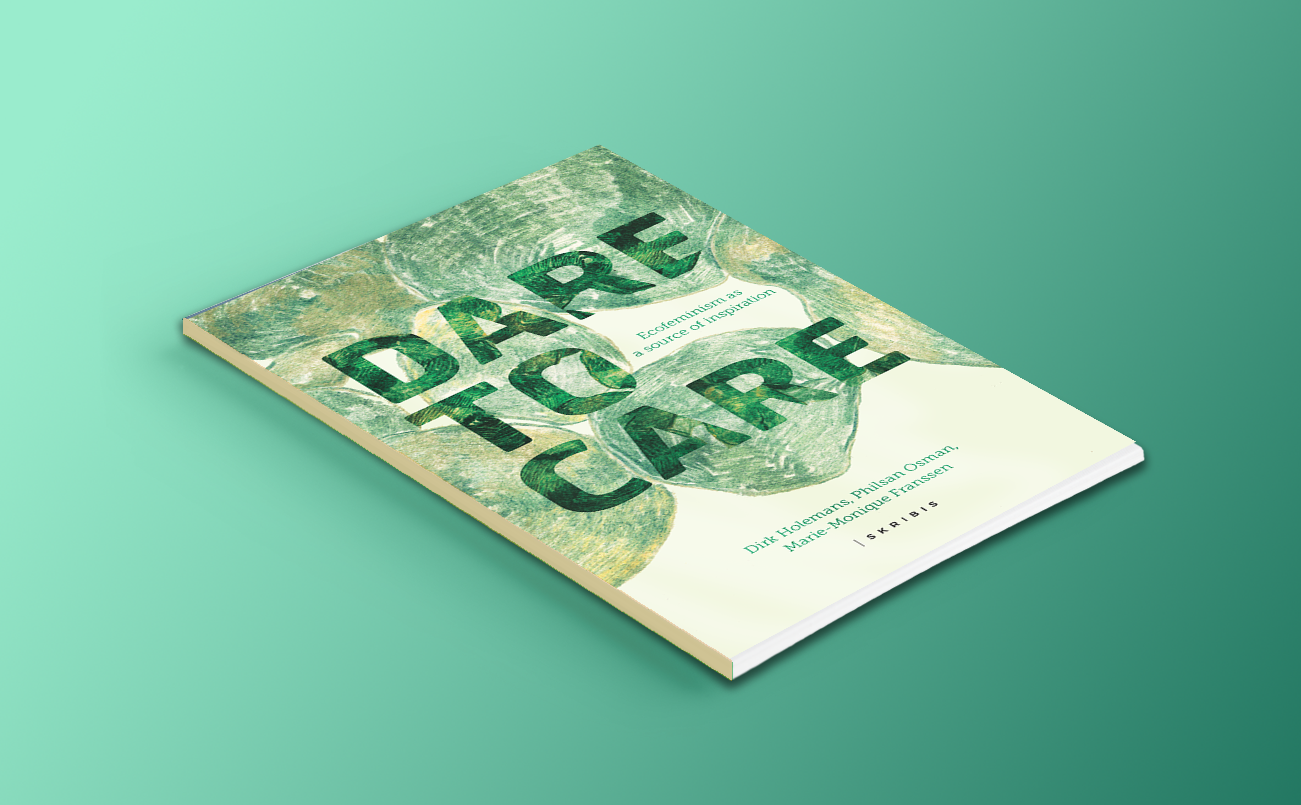
Dare to Care: Ecofeminism as a source of inspiration

By Uncategorized

Context

The concept of care has become increasingly important as COVID-19 continues to make its way through populations worldwide. However, care extends beyond the strictly medical: it encompasses everything we do to preserve and restore our planet. The erosion of the welfare state, the continued plundering of the Global South, the lack of solidarity, and the persistent crossing of planetary boundaries is alarming to say the least. We can only turn the tide if we leave the instrumental view of nature and humans behind and radically care for all earthlings.

Can care offer us a fresh start based on interconnectedness, and generosity? How can care, as an emancipatory principle, underpin politics and the economy?


Objectives

In this booklet, we offer you a crash course in ecofeminism and invite you to get inspired by different people and movements across the world. Ultimately, these lessons, which relate to the many challenges we face today, aim to encourage us all to question ourselves about what truly means to build an “economy of care” in Europe and beyond.


Translations

Available in Polish.

Available in Turkish.

Available in Greek.

Available in Serbian.

Available in E-Reader format or to order in German.


About the authors

Dirk Holemans is the coordinator of Oikos think tank and co-president of the Green European Foundation (GEF). He is a researcher, lecturer and the author of Freedom & Security (EPO, 2016).

Philsan Osman studies African languages and cultures at the University of Ghent, Belgium and is a writer, activist and community builder.

Marie-Monique Franssen is staff member of Oikos think tank and co-author of The Ecological Compass (EPO, 2020). She has a master’s degree in cultural anthropology.


These translations have been realised with the support of Oikos, FREDA, and Strefa Zieleni and the financial support of the European Parliament to the Green European Foundation. The European Parliament is not responsible for the content of this publication.

Greening Hydrogen- Big issues around a small molecule

By Uncategorized

Context

Europe is heading towards the Green Age, an era defined by climate neutrality and the circular economy. There is broad agreement on the need for this transition, reflected by the global Paris Agreement, the European Green Deal, or COP26. The EU aims to be carbon-neutral by 2050. Decarbonising the production of an element like hydrogen is key to achieve such climate goals as this element is currently responsible for over 2% of total global CO2 emissions.

“ Europe should lead the way into the Green Age, but must take care that no one is left behind…”


About the project:

This report is part of a project led by the Green European Foundation exploring what a climate emergency economy would look like through a rethinking of trade, industry and infrastructure investment. The project is supported by Green House Think Tank in the UK alongside green foundations in the Netherlands, Ireland, Bulgaria, Poland and Finland. It is organised with the financial support of the European Parliament to the Green European Foundation.


Objectives

Introducing hydrogen to our energy and materials systems clearly raises several pressing questions that are of relevance to the work of Green parties in Europe. This report aims to give a brief overview of the most controversial issues surrounding hydrogen from a green perspective in order to facilitate debate on this matter.


Download

Available in Spanish


This publication has been realised with the support of the Wetenschappelijk Bureau GroenLinks, and the financial support of the European Parliament to the Green European Foundation. The European Parliament is not responsible for the content of this publication.
European Mobility Atlas

By Uncategorized

Context

Europe is the continent where multiple forms of transportation have been invented or brought to technological maturity. The free movement of persons has made Europe grow together and led to an ever-stronger sense of cohesion. Cross-border mobility is a prerequisite for a united EU and the experience of inter-connectedness on all levels. However, the Covid-19 pandemic has limited the freedom of movement extensively and shows the vulnerability of Europe as a place of constant movement. While air traffic decreased and the use of bicycles increased, there has also been a strong negative shift from shared transport to individual transport. If this change prevails, a great deal of earlier efforts to reduce GHG emissions in the transport sector will be nullified. If one thing is clear is that recovery packages to overcome the effects of the Covid-19 pandemic must be accompanied by a commitment to a sustainable transformation that avoids further carbon lock-in with a transport sector still largely powered by fossil fuels.

Objectives

Our European Mobility Atlas seeks to contribute to the efforts towards sustainable and just mobility in Europe. Thus, it covers a multitude of transport-related aspects relying on evidence-based research and highlighting concrete, tangible mobility solutions from across our continent. GEF is working together with Heinrich Böll Stiftung to Europeanise the debate on sustainable mobility on our continent. We are doing this by translating the English language version of the European Mobility Atlas to Spanish and Italian, as well as providing a series of infosheets on the mobility context in Spain.

With more and more people being mobile, Europe is a continent that needs to remain innovative in order to achieve the relevant climate goals. We need new technologies to align our mobility infrastructure and behaviour with the pressing challenges of the upcoming years. To save our climate, the European Green Deal has to be Europe’s first priority.

Download

Digital version in Spanish is available here.

Digital version in Italian is available here.

Digital version in Portuguese available here.

Complementary resources

Present and Future of Mobility in Spain (ES): available here.


These publications have been realised by the Green European Foundation in cooperation with Heinrich Böll Stiftung, and the financial support of the European Parliament to the Green European Foundation. The European Parliament is not responsible for the content of this publication

Global Public Investment Requirements for Zero Carbon

By Uncategorized

Context

Sufficient and appropriately directed global public investment is critical to shift our economies to zero carbon. Currently such investment is inadequate, and still funds additional fossil fuel dependent transport infrastructure. This report explores UK and EU global public investment in transport.

This  publication strengthens the calls for climate finance agreed at COP26 to be sufficient to address the climate emergency. Global fossil fuel subsidies of $450 billion dwarfed additional international climate finance of $43 billion in 2020. Arbitrary funding targets, dubious accounting and outdated ideas about how funding should be spent perpetuate the status quo. European governments must lead in ensuring public investment in zero carbon is provided internationally on the same basis as domestically.

About the project:

This report is part of a project led by the Green European Foundation exploring what a climate emergency economy would look like through a rethinking of trade, industry and infrastructure investment. The project is supported by Green House Think Tank in the UK alongside green foundations in the Netherlands, Ireland, Bulgaria, Poland and Finland. It is organised with the financial support of the European Parliament to the Green European Foundation.


Objectives

Global Public Investment Requirements for Zero Carbon examines how international aid, loans from development banks and export finance all continue to fund fossil fuel-dependent developments. This is particularly true in the transport sector, which soaked up around 20% of global official development assistance from 2014-2019. And rather than zero carbon transport systems to serve local populations, much of this aid is funding new roads, airports, ports and rail projects that support export-orientated economic growth.

The report sets out three clear recommendations the following:

  1. Climate finance must be additional to the meeting of existing 0.7% target for aid;
  2. All countries must stop financing infrastructure that locks in fossil fuel use and align aid and public expenditure to tackling the climate and ecological emergency;
  3. Global public investment must be more accountable, equitable and effective.


“As we approach COP26, all countries must commit to stop double-counting climate finance with pre-existing official development assistance commitments, and ensure both are sufficient and fully aligned with the Paris Commitment to avoid dangerous climate change. That means that financing of infrastructure that accelerates must end now, both at home and abroad.”


Audiovisual material


This publication has been realised with the support of the Green House Think Tank, and the financial support of the European Parliament to the Green European Foundation. The European Parliament is not responsible for the content of this publication.

Metals for a Green and Digital Europe- An Agenda for Action

By Uncategorized

Context

The climate crisis leaves us no choice but to make a swift transition from fossil fuels to renewable energies. However, while energy from renewable sources such as solar and wind is nearly infinite, the resources we need to capture it are not. Solar panels, wind turbines, batteries, and power cables all contain metals. Their various properties, including toughness and conductivity, make metals uniquely suitable for renewable energy technologies. But first they must be extracted from ores that are dug up from the ground. Because of its decentralised nature, a renewable energy system requires far larger quantities of metals than a fossil energy system.


The more energy we harvest from the skies above our heads, the deeper we will have to dig for the metals beneath our feet.


Objectives

Both the energy transition and the digital transition require large quantities of metals, such as lithium, cobalt, and rare earth. As a result, Europe must face up to various types of scarcity. This Agenda for Action sets out how we can achieve the sparing, circular use of metals and the responsible sourcing of the virgin metals that we really need.


Download

Available in Dutch

Available in Spanish

Available in Czech 

Available in French

Available in Polish

Available in Swedish

Available in Serbian

Available in Portuguese


This publication is part of the Metals for a Green and Digital Europe project. The project is led by Wetenschappelijk Bureau GroenLinks and supported by Fundacja Strefa Zieleni, Institut Aktivního Občanství, the Green Economics Institute, Etopia, Visio, and Transición Verde, with Cogito from Sweden providing additional expertise.

European Green Perspectives on Basic Income

By Uncategorized

Context

Since 2017, the Green European Foundation has shaped the discussion of advancing universal basic income in Europe and, if possible, worldwide.

“European Green Perspectives on Basic Income” is the second volume of a collection of articles tackling different facets and perspectives on basic income (BI) 1.

Because of the Covid-19 pandemic, the debate about basic income has gained a lot of traction. In Europe, and around the world, we’ve seen efforts to ease the economic crisis across all levels of government.

A considerable amount of aid programs that were approved included a partial basic income. For the first time, many people realised we can all suddenly find ourselves in an economically challenging situation through no fault of our own.

An unconditional basic income may help us focus our energies on finding a way out of this crisis. The Covid-19 pandemic further highlighted and aggravated social injustice and economic inequalities as much as it raised questions on the social responsibility of individuals and solidarity at all levels of society.

Objectives

Our aim is to support initiatives to foster a debate within and outside Green circles to learn from each other and to allow an exchange of alternative social policies. Following the suggestion of the “European Green network of basic income supporters”, we have updated and expanded the Green European Foundation’s publication, European Green Perspectives on Basic Income, from 2019 to create this present publication. Similar to the first edition, this second volume aims to provide insights into the discussions about BI in various European countries,–both within the Green movement as well as in the broader public–and contextualises those in historic and cultural prerequisites.

“From a degrowth perspective, UBI should be implemented as a tool to reinforce democracy by reconnecting people by creating solidarities and by questioning basic needs and how to fulfil them in a sustainable way.”


Download

Available  in Greek

Available in Albanian

Available in Croatian

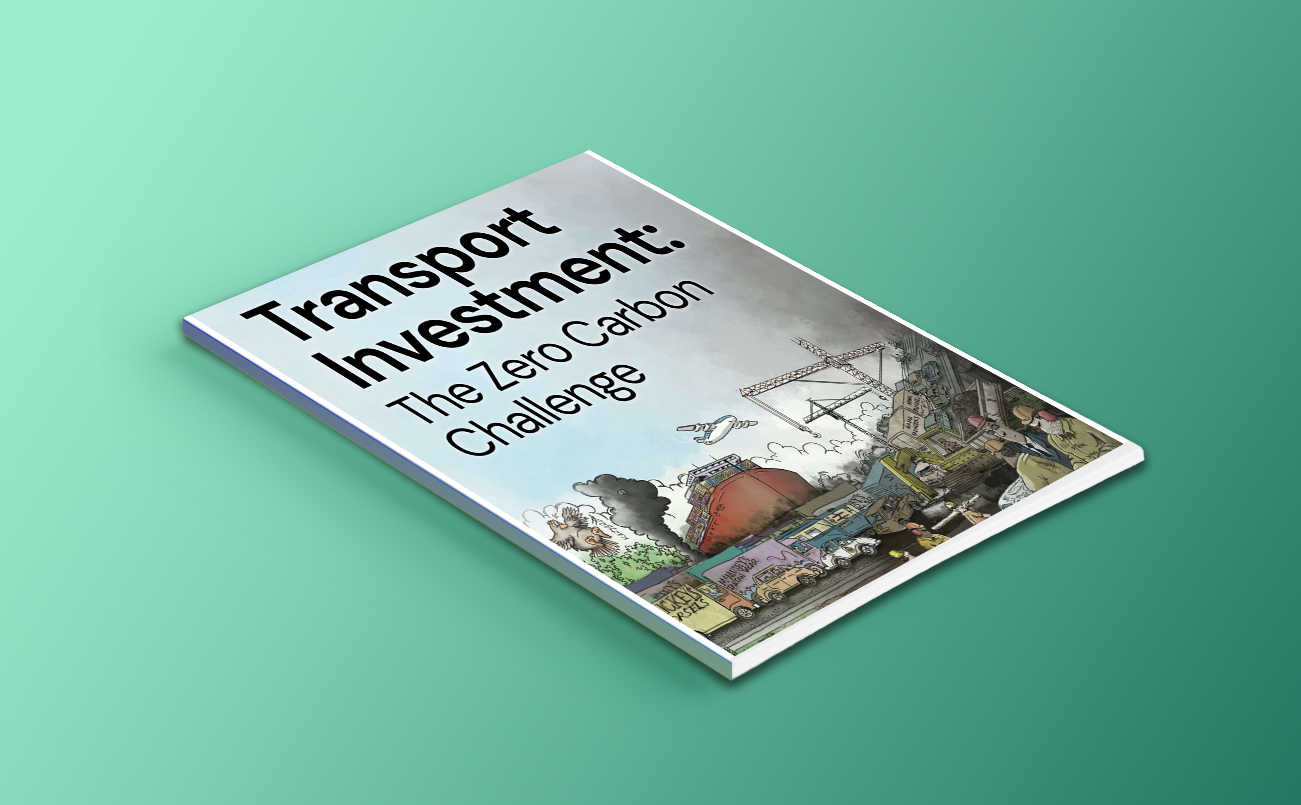
Transport Investment: The Zero Carbon Challenge

By Uncategorized

Context

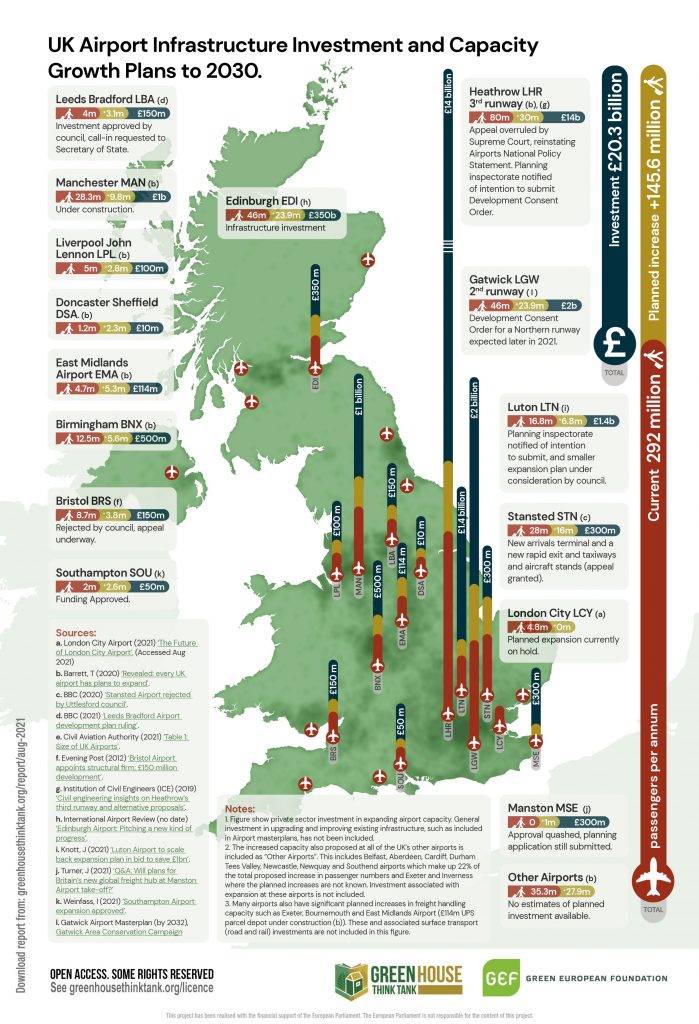
“Transport Investment: The Zero Carbon Challenge” is part of a project led by the Green European Foundation exploring what a climate emergency economy would look like through a rethinking of trade, industry and infrastructure investment. The report exposes the uncomfortable truth that a major shift in transport infrastructure investment is needed. It quantifies the massive scale of transport infrastructure investment plans across the UK and EU and how this fails to align to existing climate targets. This highlights that whilst heavy goods transport, shipping and aviation are some of the hardest to decarbonise, demand for these transport modes are not being managed or constrained in line with climate commitments.

Objectives

The report calls on transport to have far stronger carbon targets so that it is able to help drive down carbon emissions across the rest of the economy, rather than holding back the transition to zero carbon. A radical overhaul of transport infrastructure spending plans is needed so that funding is redirected from expanding capacity, to decarbonising existing transport. The report is framed ,using the Zero Carbon Policy Toolkit introduced in GEF and Green House’s August 2020 report, Trade and Investment Requirements for Zero Carbon.


Facing up to climate reality requires governments to stop driving transport growth. It is just as irresponsible to expand transport – which leads to burning of more petrol, diesel, kerosene and heavy fuel oil – as to dig a new coal mine in Cumbria. In both cases new infrastructure stands in the way of phasing out the burning of fossil fuels. Governments must ensure investment is redirected from expanding transport to decarbonising what we have already. Continued transport capacity growth should also be classed as Ecocide.” 


Download

Available in Spanish


Visual material


This publication has been realised by the Green European Foundation and Green House Think Tank with the financial support of the European Parliament. The European Parliament is not responsible for the content of this publication.


The Social and Environmental Requirements of a Climate Emergency Economy

By Uncategorized
The Social and Environmental Requirements of a Climate Emergency Economy argues that we need to dramatically reduce demand for resources, particularly in the transport, steel and construction sectors, and invest in jobs and livelihoods rather than infrastructure and material goods.
It also asserts that the transition to low-carbon must be built on consent and be equitable.
The report contains Recommendations, using the policy toolkit introduced in the Green House and GEF report, Trade and Investment Requirements for Zero Carbon.


Download

Available in Czech.


This work forms part of a wider project exploring what a ‘climate emergency economy’ would look like through a rethinking of trade, industry and infrastructure investment. The project involves Greenhouse Think Tank in the UK alongside Wetenshappelijk Bureau Groenlinks in the Netherlands and Green Foundation Ireland, and the Bulgarian Foundation of Environment and Agriculture.

Freedom and Security in a Complex World (2021 edition)

By Uncategorized

Context

People all over the world are taking their future back into their hands. Together, they are taking initiatives in the fields of renewable energy, local food production, sharing tools, and so forth. This is the most hopeful movement of our time. Where the market and state fail, people are taking action. As free citizens, they are reinventing the collective, with open partnerships where personal development and social engagement go hand in hand. This observation seems to contradict what we experience every day. The system errors of our society model fill the newspapers: climate crisis, unstable banks, refugee flows. Accepted wisdom is that uncertainty is increasing. But both trends are happening, not by coincidence, at the same time.


Objectives

While examining the two interlinked concepts of Freedom and Security, this publication suggests that the answer needs to be the transformation into a socioecological society in the 21st century. It argues for the realisation of a societal project that strives for equal freedom for all people to flourish in security, within the boundaries of the planet, and proposes concrete steps towards it.


Download

Available in English here.

Available in French here.

Available in German here.

Available in Hungarian here.

Available in Spanish here.

Available in Macedonian here.

Available in Greek here.


This report presents a new and updated take on the 2017 version (Please see the English, French, German, Hungarian and Spanish editions from that year, which were part of the transnational project “A green transformation: Freedom and Security in uncertain times” ).

The 2021 report was developed in partnership with Oikos and with financial support from the European Parliament to the European Green Foundation. 

The Transformative Doughnut Economics Model

By Uncategorized

The doughnut economics model is increasingly presented as an alternative human development measure, meeting needs and crossing the boundaries of environmental degradation. In the last ten years, the model has been further developed, and more and more, cities are giving up measuring their development through GDP and deciding to switch to the doughnut model, which should ensure that human needs are met in accordance with natural boundaries.

Read more about it and how cities can be a fertile testing ground for the model in EnglishSerbian and Greek.

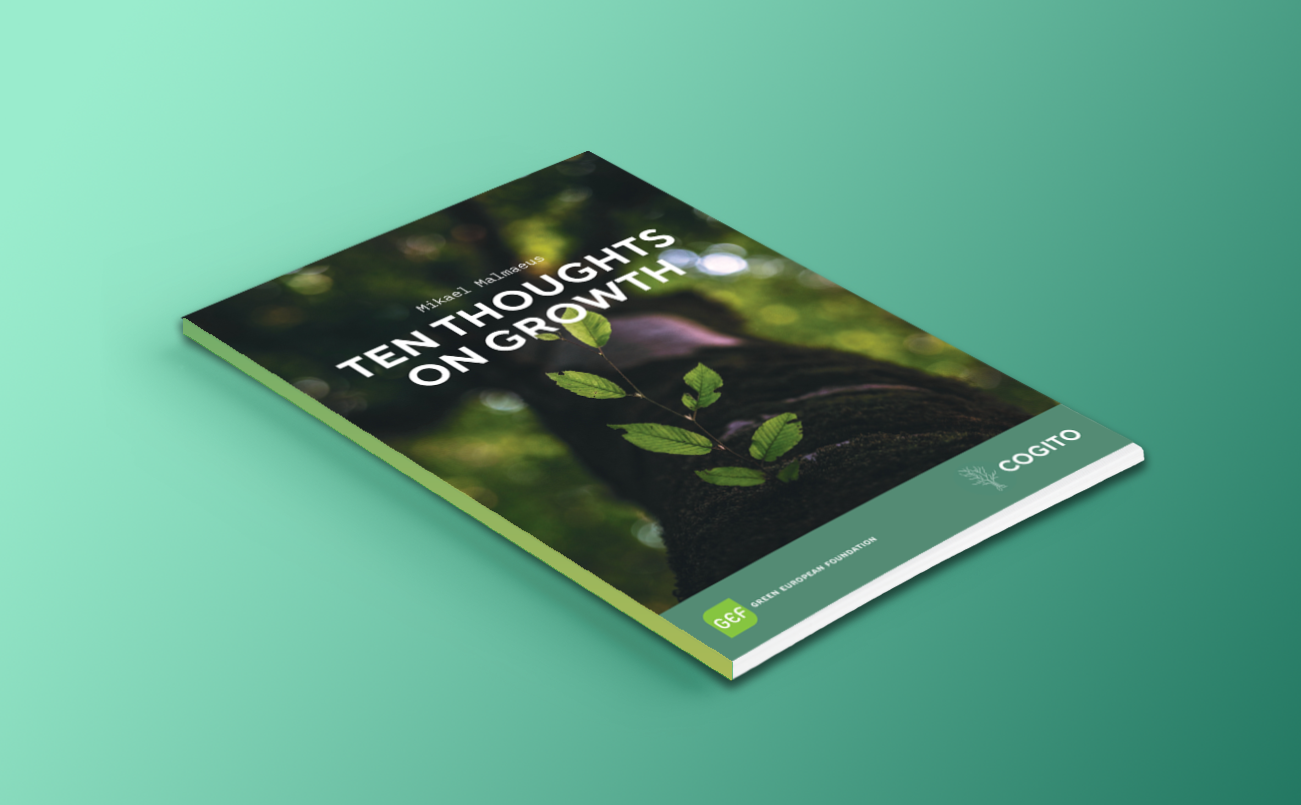
Ten Thoughts on Growth

By Uncategorized

With the ongoing Covid-crisis, it has become clear that “business as usual” is no longer an option, as the effects will be felt for years to come. Yet still, governments remain obsessed with growth based on GDP.

In this report, Mikael Malmaeus (board member in Cogito and researcher at The Swedish Environmental Research Institute) uncovers and clarifies the concepts of growth, their meaning and impact with the purpose to enable a meaningful, forward looking and insightful discussion on preferred futures and where to start to get there. With this collaboration, GEF and Cogito hope to contribute to a clear and comprehensive discussion on growth today and tomorrow, and to inspire actionable insight.

Download

Available in Polish

Available in Czech

Available in Albanian

Available in Turkish

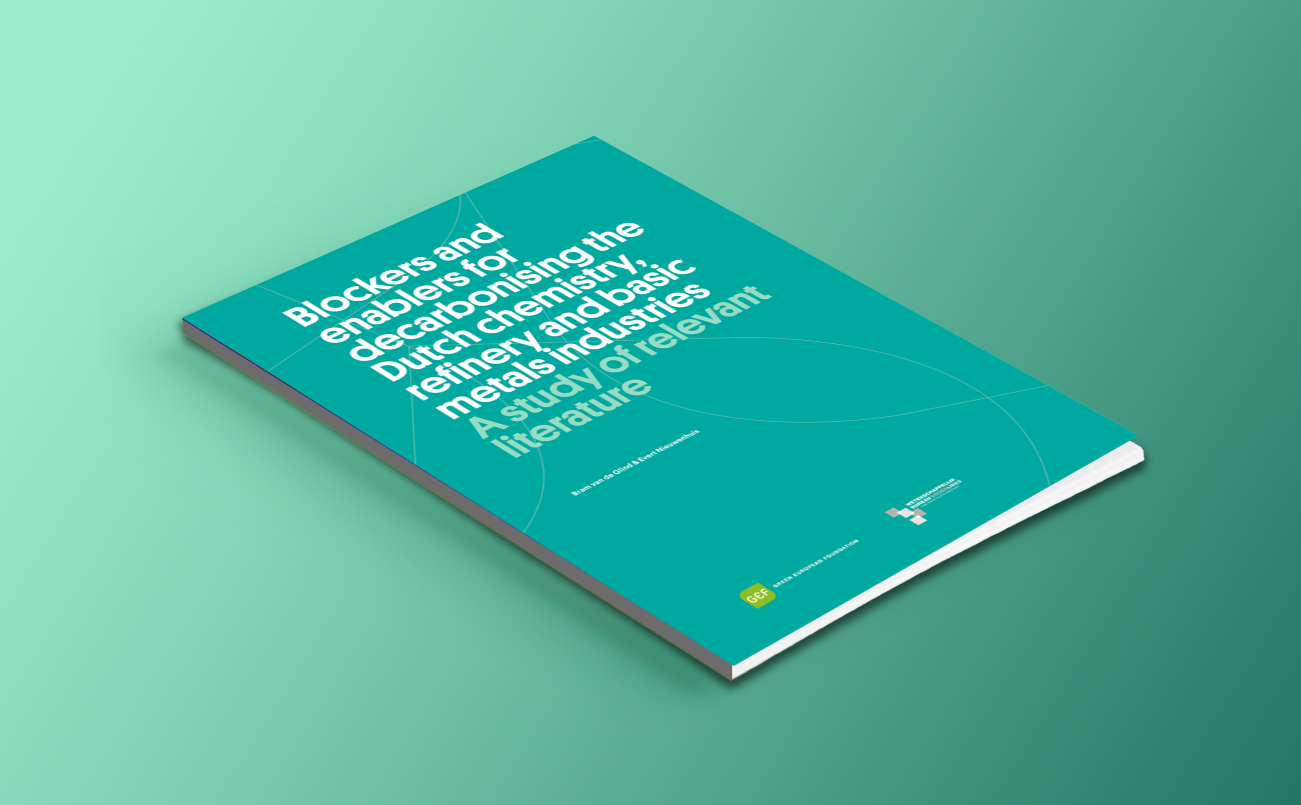
Blockers and Enablers for Decarbonising the Dutch Chemistry, Refinery and Basic Metals Industries

By Uncategorized

This report is part of the Green European Foundation’s Transnational Climate Emergency Economy project. The project explores the challenge of decarbonising ‘harder to abate’ sectors, such as the chemistry, basic metals and refinery industries and international trade. Wetenschappelijk Bureau GroenLinks, Green House Think Tank and Green Foundation Ireland each focus on a specific part of a climate emergency economy. This particular report was written by WBGL and focuses on Dutch energy-intensive industries.

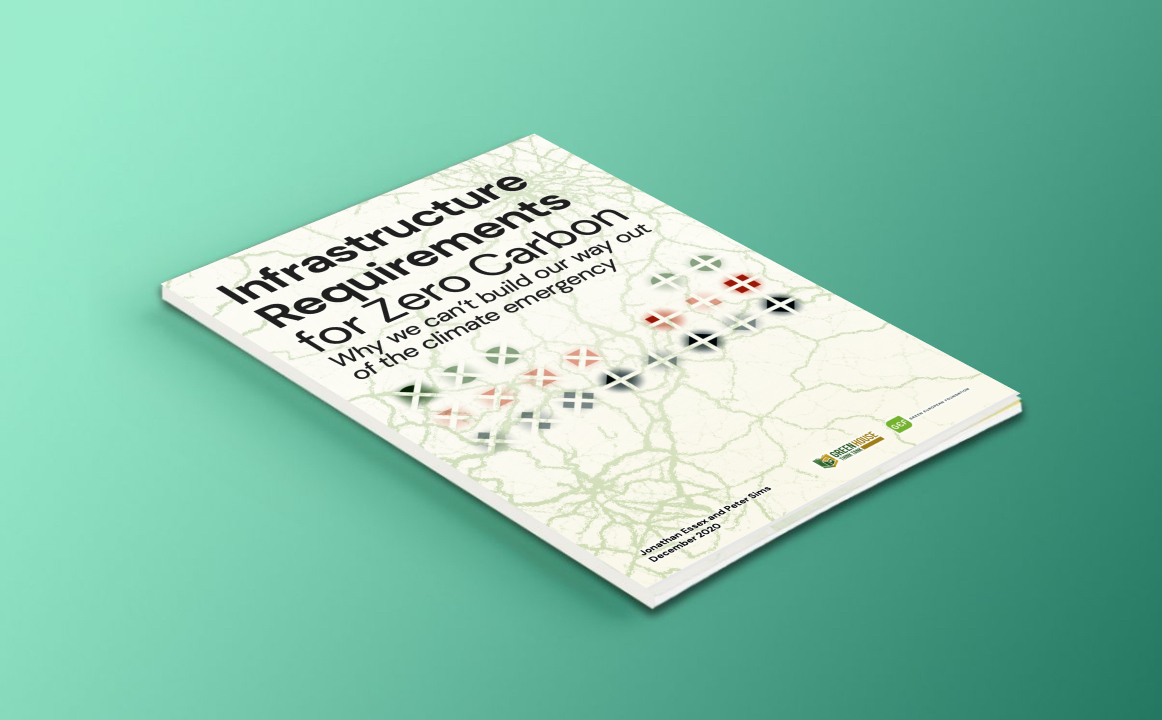
Infrastructure Requirements for Zero Carbon

By Uncategorized

About the report

This report explores how incompatible our society’s current and planned infrastructure is with the rapid decarbonisation of the UK economy needed to deliver on the climate emergency. It focuses on three key sectors: freight transport, aviation and steel, and considers what changes are required to bring these into line with zero carbon goals, using the ‘blockers and enablers’ toolkit introduced in Green House’s August 2020 report, Trade and Investment Requirements for Zero Carbon.​
Jonathan Essex, one of the report’s authors, said:

Much of our existing industrial infrastructure, such as fossil fuel power stations and steel blast furnaces, is incompatible with zero carbon. Similarly, planned new transport infrastructure is still taking our economy in the wrong direction. The climate emergency means we must make different infrastructure choices. We need to manage down demand for energy and materials, and install renewable energy infrastructure faster. And we must reverse out investment in expanding road networks, ports and airports and make better use of what we already have. A climate-proof infrastructure investment strategy will be one that drives a change to smaller, circular economies that fit within environmental limits […].


This report is part of a wider project led by the Green European Foundation exploring what a ‘climate emergency economy’ would look like through a rethinking of trade, industry and infrastructure investment. The project involves Greenhouse Think Tank in the UK alongside Groenlinks in the Netherlands and Green Foundation Ireland.


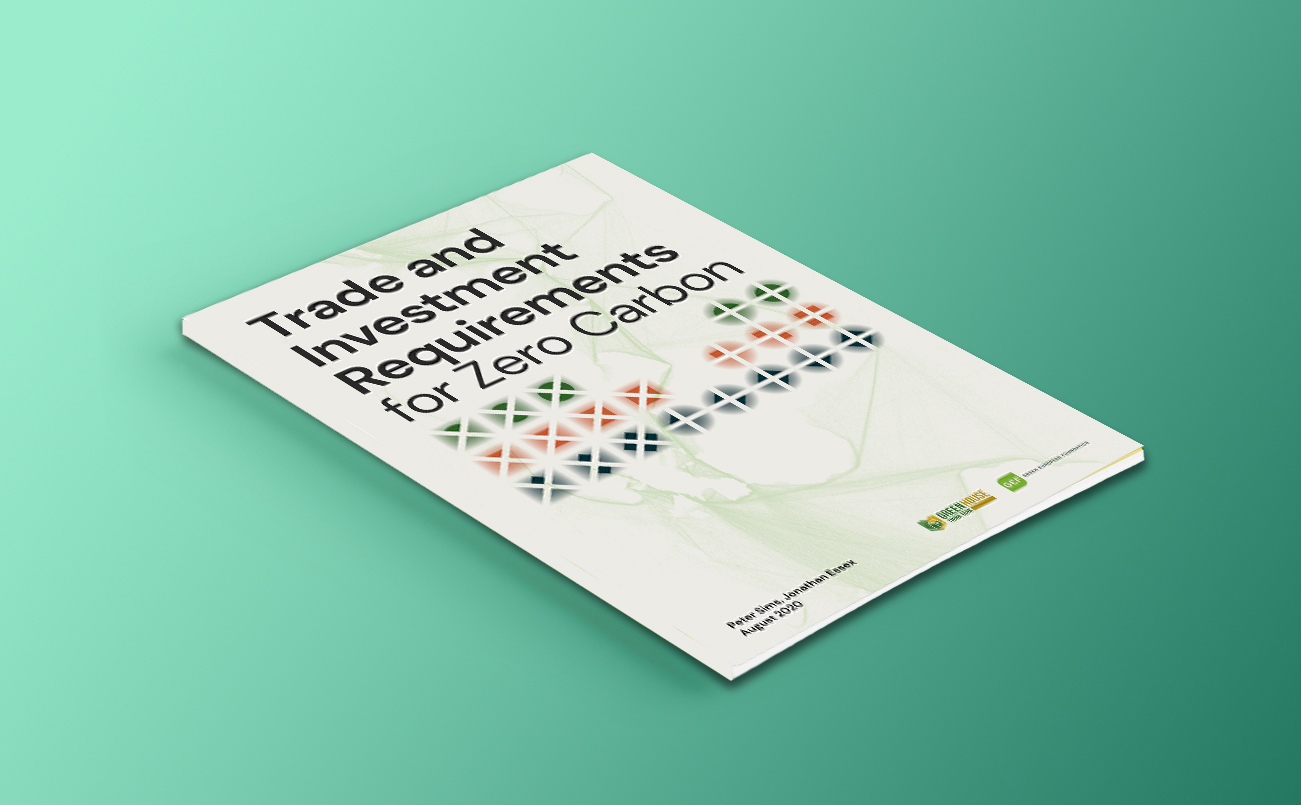
Trade and Investment Requirements for Zero Carbon

By Uncategorized

As moves are being made to introduce a Climate & Ecological Emergency Bill in the UK, and a new Trade Bill is progressing through parliament post-Brexit, it’s an important time to be considering the implications of zero carbon for global trade and investment decisions. This report proposes a much-needed toolkit to help policy makers face up to climate reality and address the wider environmental impacts and the imbalances of power and wealth that underlie our global trade.

Download the technical annex here.

social security

Basic Social Security 2030

By Uncategorized

This GEF report uses the case of Finland to investigate challenges in current social security models, and provides a reform roadmap to a new basic social security system, with basic income as a central element.

This report is an edited version of the Finnish Green Think Tank Visio’s report ‘Perusturva 2030,’ published for international readers. The report looks at the challenges faced by the Finnish system as well as the principles for solving these challenges, and offers proposals for action for the parliamentary term 2019-2023 and further into the 2020s. While the focus is on Finland, the principles for a better social security system are applicable to any so-called developed country, and the concrete stepping stones and microsimulations work as examples on how to find solutions regardless of the current system in a given country.

This translation was realised by the Green European Foundation as part of its transnational project on Basic Income, a topic that will be further explored in the 2020 project Change of Mindset – Civil Society dialogue around UBI, Social Justice and Climate Impact.

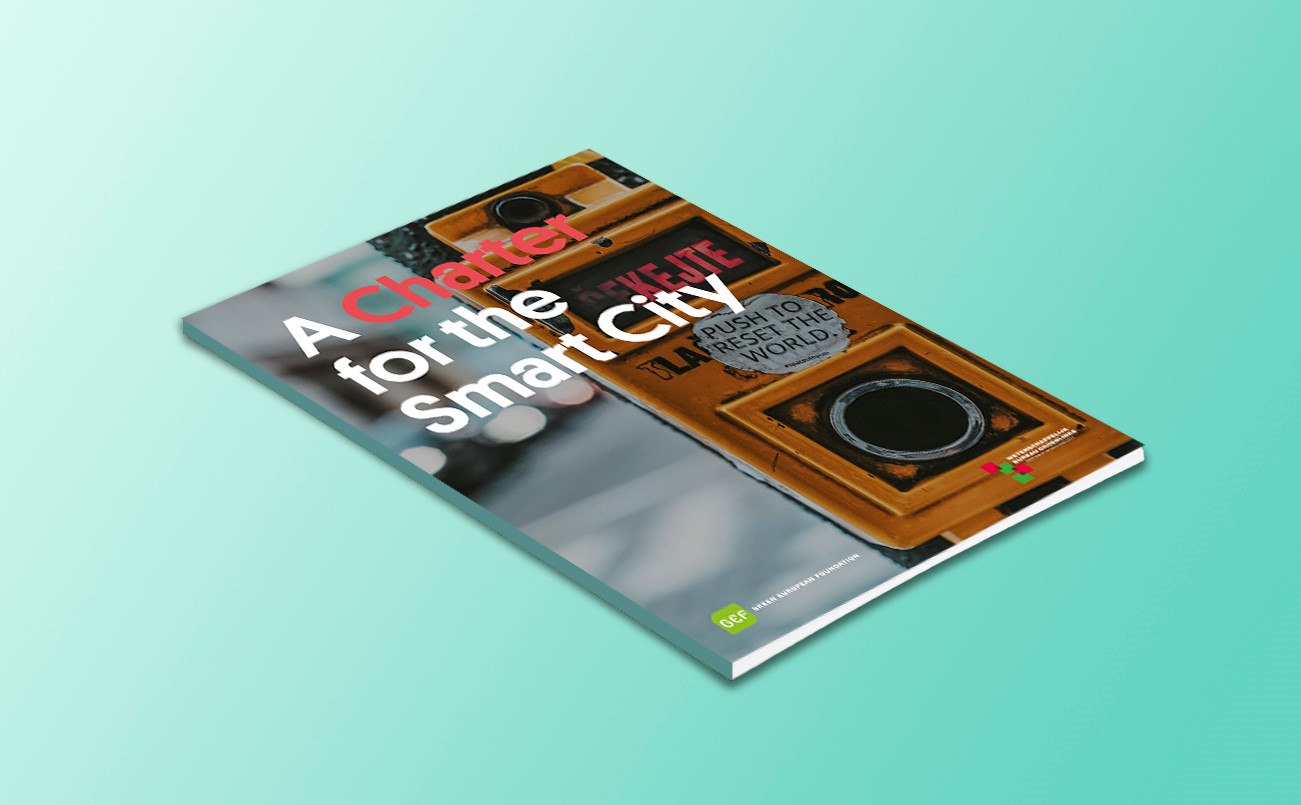
A Charter for the Smart City

By Uncategorized

People make technology, but technology in turn influences our lives, our societies and even our ethics. The development of new technologies therefore cannot be left to engineers and managers; it requires public debate and democratic control.

This Charter for the Smart City was produced as part of the project of the same name, and puts the values of democracy, connectedness, human dignity, privacy,  sustainability, and equality at the heart of smart cities. Local politicians and active citizens who share these values may use the principles in this Charter as starting points for democratic debate and informed moral judgment on technological innovations in their communities.

The Charter was developed through a series of roundtable discussions that took place in cities across Europe, as well as from online consultation, involving over 100 experts, (local) politicians and activists who shared their ideas.


Please find the Dutch version of this publication available to read here

Please find the French version of this publication available to read here

Please find the German version of this publication available to read here

Please find the Czech version of this publication available to read here

Fair and Healthy Food

By Uncategorized

This discussion paper, written by Kati Van de Velde & Dirk Holemans from GEF partner Oikos, has been published as part of the GEF transnational project Fair and Healthy Food.

The paper explores the failings of the current agricultural and food system, and the possibilities for a transition to a sustainable and fair system, one which revaluates food as a human right, a public good and a commons.

Download the publication in Turkish and Serbian.

Creating Socio-Ecological Societies Through Urban Commons Transitions

By Uncategorized

This framing paper is the closing publication of the Green European Foundation’s transnational project Creating Socio-Ecological Societies Through Urban Commons Transitionswhich focused on urban spaces as a driving force towards socio-ecological societies and as a hub of transformative policies.

Written by Dirk Holemans & Kati Van de Velde from GEF partner Oikos, this paper explores the new roles of cities in our society and their potential for collaboration as urban commons.

The work of GEF on Urban Commons will continue with the 2019 transnational project Cities as Places of Hope in the European Union.

Citizens Energy: Making Energy Democracy Happen

By Uncategorized

This publication has been produced as part of the GEF transnational project Energy Democracy: Changing the Energy System.  

In this project, Green foundations from the United Kingdom, Greece, Macedonia and Belgium share their experiences and ideas and develop policy proposals to enable a transition to a renewable and democratic energy system.

The publication, written by Dirk Holemans and Kati Van de Velde from Flemish think tank Oikos explores the concepts of a democratic energy regime, drawing from examples in Germany and Denmark, and cooperation between citizens and local governments, focusing on case studies in the UK and Belgium.

Download your copy here. 

This publication is also available in Serbian, Portuguese, Spanish, Macedonian & Turkish.


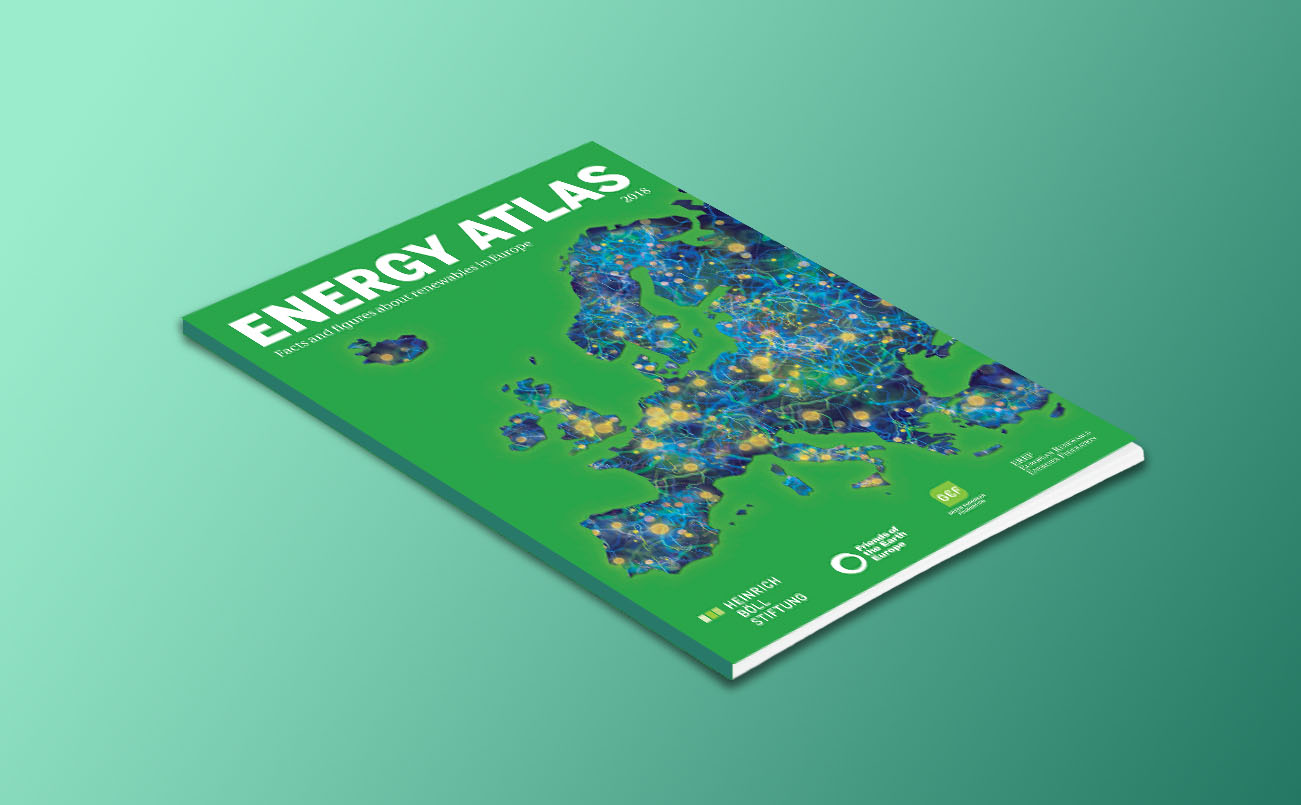
Energy Atlas 2018 – Facts and Figures about Renewables in Europe

By Uncategorized

The energy transition is already well underway. However, it is happening at different speeds across the continent. For the past 100 years, geopolitical strength has depended on access to fossil fuel resources. With the support schemes for renewable energy and the rise of citizen energy, the energy system is taking a new course towards greater democratization and decentralization.

With the Paris climate agreement, Europe is facing the global responsibility to keep global warming within 1.5°C. Renewable capacity in the EU has increased by 71 percent between 2005 and 2015, contributing to sustainable development and more local jobs. In the most advanced countries and regions in Europe it is often the local government and citizens who are driving the transition. At the time of publication of this Atlas, the EU’s next generation of energy legislation is in the process of being finalised. The targets and regulations agreed to take effect by 2030 will shape Europe’s energy system for the next decade – one of the last critical chances to take sufficient action to avoid catastrophic climate change.

Cooperation on the European level is key to ensuring the right conditions for switching to renewables. Back in 2010, several countries in the Union were already on their way towards integrating large amounts of renewable energies into their systems. They also pushed for stable and reliable frameworks at EU level, as well as ambitious binding targets.

We can already tell that the EU’s 2030 ‘Clean Energy package’ sets out roughly the right direction for the path towards renewables, but it fails to ensure the speed and depth of the transition. The proposed renewable energy and energy efficiency targets are far too modest, particularly given the falling technology costs and availability of new renewables technologies, thus jeopardising the progress achieved in previous years. The EU energy framework needs to be better aligned with its long-term climate commitments.

The next big challenges in Europe’s energy transition are the heating and transport sectors. So far, renewable technologies have not penetrated the transport, heating and cooling systems as much as they have the electricity system. In transport, we are beginning to see a shift to electrified transport and electric vehicles – driven by fast-advancing storage and battery technology and decreasing cost.

Bringing the heating, cooling and transport sectors together with the power sector – connecting sectors that are currently isolated from one another – will allow Europe to reach a 100 percent renewable system with technology that is already available today. This will enable us to overcome the longstanding renewable energy challenge – that of variable supply. When electrified, the heating, cooling and transport sectors will become large sources of flexible storage that back up the electricity sector. When wind and solar energy is plentiful these sectors can flexibly be used by heating systems and the batteries of electric vehicles, making ‘backup’ nuclear or fossil fuel capacities redundant.

The advantages of renewable energy are clear, especially when they are owned and controlled by communities: cleaner air, warmer homes, industrial benefits. Furthermore, money stays local, more jobs are created, energy poverty is reduced, and most importantly, renewable energy contributes to saving the planet.

With this Atlas, we aim to contribute to an open and facts-based discussion on the European energy transition, whilst advancing this ambitious European project that unites European citizens.