The Good Story – Green Narratives from the Balkans

By Uncategorized

Context

The Good Story gathers contributions from experts and activists who participated in the GEF Green Horizons Academy in Serbia. The publication explores the different approaches to how green narratives can reach a broader audience, in Serbian and English language

If there ever was an actor who could contest peripheral neoliberal capitalism and nationalism effectively in the past 30 years, this is the green actor. This is not because green politics is superior to other ones, but because no one expected it to occur and especially not at this level of organization and public support.


Objectives

What makes a good story? A compelling narrative, a powerful beginning, an interesting hook? The convincing and trustworthy messenger?

This text zooms in on eco-politic struggles faced in Serbia in the last few years. Serbia has been the field site of an unprecedented environmental mobilization. It explores Serbian activist movements, green populism and reflects on wider tensions at the heart of the Balkans’ ecopolitics and potential solutions for the future.


Download

Available in Greek


This report has been published by the Green Europe Foundation with the support of Polekol and with the financial support of the European Parliament to the Green European Foundation. The European Parliament is not responsible for the content of this report.
A guide to engaging aviation workers and trade unions

By Uncategorized

Context

Climate campaigners are coalescing around an agenda of no expansion of airports and the need for a long-term reduction of aviation. However, not all of these campaigns have incorporated worker perspectives to better understand the impact on jobs and changes to local and national economies.

We don’t just want to get the industry back to where it was in 2018, but decarbonised. Because that wasn’t a good industry for workers. Transport had become too cheap, it was market driven. There is a need to embark on a huge transformation of the industry.

Objectives

This short guide explores how campaigns can connect better with aviation workers and the trade unions that represent them – to build mutual support, win those campaigns and advance a rapid and just transition for workers in the sector.

About the project

This publication is part of the project “Just Transition in the Aviation Sector” that explores how the concept of a just transition could look like when applied to the aviation sector in the UK. It focuses on the loss of jobs in the context of the COVID-19 pandemic as well as the potential of the green job creation. In this context, a case study of the Gatwick airport was conducted.  

Just Transition in the Aviation Sector explored the topic of the Aviation sector adaptation through several formats, including the development of infographics, events with an inclusive European dimension. As a part of the project, GEF implemented an online event called Green jobs and airport expansion campaigns, gathering experts and politicians to debate the topic in a panel format.  

The initial research and debates within the project scope culminated in this report.  

Download

Available in Spanish


This publication has been realized with the support of Green House Think Tank and the financial support of the European Parliament. The European Parliament is not responsible for the content of this publication. 

Albanian Green Academy Report

By Uncategorized

Context and Objectives

This report was prepared based on the trainings, workshops and lectures organized at the Albanian Green Academy in 2021. The overarching themes of the events focused on the European Green Deal and Climate Justice at local, national and European levels. The aim of the report is to promote green thinking in political, social and environmental aspects in Albania and the region.

About the Albanian Green Academy:

The Albanian Green Academy 2021 was held on 10-12thSeptember and 1-3rdOctober. It was divided in two phases. The main theme and focus of this first phase of the academy was “European Green Deal”. The main theme and focus of this second phase of the acade my was “Climate Change. In this series of 6-day training the topics of European Green Deal and Climate Change were addressed in the context of national and European conditions. Avery important objective of this project was to bring together, equip with information and build cooperation between different groups to achieve an environmental society.

Climate change is already happening: temperatures are rising, droughts and wildfires are starting to happen more often, rainfall patterns are changing, glaciers and snow are melting and the average global sea level is rising. To mitigate climate change, we must reduce or prevent emissions related to human activities.

Download

Digital version in Albanian is available here


This report has been published by the Green Europe Foundation with the support ofthe Albanian Green Institute and with the financial support of the EuropeanParliament to the Green European Foundation. The European Parliament is notresponsible for the content of this report.

European Mobility Atlas

By Uncategorized

Context

Europe is the continent where multiple forms of transportation have been invented or brought to technological maturity. The free movement of persons has made Europe grow together and led to an ever-stronger sense of cohesion. Cross-border mobility is a prerequisite for a united EU and the experience of inter-connectedness on all levels. However, the Covid-19 pandemic has limited the freedom of movement extensively and shows the vulnerability of Europe as a place of constant movement. While air traffic decreased and the use of bicycles increased, there has also been a strong negative shift from shared transport to individual transport. If this change prevails, a great deal of earlier efforts to reduce GHG emissions in the transport sector will be nullified. If one thing is clear is that recovery packages to overcome the effects of the Covid-19 pandemic must be accompanied by a commitment to a sustainable transformation that avoids further carbon lock-in with a transport sector still largely powered by fossil fuels.

Objectives

Our European Mobility Atlas seeks to contribute to the efforts towards sustainable and just mobility in Europe. Thus, it covers a multitude of transport-related aspects relying on evidence-based research and highlighting concrete, tangible mobility solutions from across our continent. GEF is working together with Heinrich Böll Stiftung to Europeanise the debate on sustainable mobility on our continent. We are doing this by translating the English language version of the European Mobility Atlas to Spanish and Italian, as well as providing a series of infosheets on the mobility context in Spain.

With more and more people being mobile, Europe is a continent that needs to remain innovative in order to achieve the relevant climate goals. We need new technologies to align our mobility infrastructure and behaviour with the pressing challenges of the upcoming years. To save our climate, the European Green Deal has to be Europe’s first priority.

Download

Digital version in Spanish is available here.

Digital version in Italian is available here.

Digital version in Portuguese available here.

Complementary resources

Present and Future of Mobility in Spain (ES): available here.


These publications have been realised by the Green European Foundation in cooperation with Heinrich Böll Stiftung, and the financial support of the European Parliament to the Green European Foundation. The European Parliament is not responsible for the content of this publication

Food Sovereignty, Climate action and Local Resilience

By Uncategorized

Context

This pamphlet on Food Sovereignty, Climate Action and Local Resilience follows on from A Question of Scale: “Imagining a cooperative, community-led approach to regional resilience”. A framing paper in which we explored the potential of the Social and Solidarity Economy, Doughnut Economics, Just Transition, The Commons, Community Wealth Building, Federated co-ops as approaches to help us address the climate and ecological emergency.

The co-creation of this pamphlet began with a first draft distributed to local food, community and cooperative advocates. Then, they attended a webinar to discuss identify the blockers and enablers of this regenerative and community-led approach. Finally, we added the harvest of the session, along with links to initiatives in the field, and an infographic.

Challenging the global trade regime and the bilateral trade agreements which en-trench trade relations and which negatively affect peasant farmers on both sides is a vital part of the picture of Food Sovereignty and the global conversation that needs to be had about how to protect, encourage and support biodiverse, agroecological and small scale production not just in our backyard, but across the world.


This publication was produced as part of GEF’s Climate Emergency Economy project, exploring the challenge of such a climate emergency economy by focusing on “hard-to-decarbonise” sectors like transport, trade, industry, or agriculture.


Download

Also available in Polish.


This publication has been realised with the support of the Green Foundation Ireland, Cultivate and the financial support of the European Parliament to the Green European Foundation. The European Parliament is not responsible for the content of this publication.

Steps Towards Universal Basic Income? The Effect of the Covid-19 Crisis on Welfare Policies and Support for UBI in the European Union

By Uncategorized

Context

When the Covid-19 pandemic hit Europe, it put an enormous strain on the lives and livelihoods of millions. Amid lockdowns and quarantines, many countries responded by (temporarily) broadening their social security policies and providing additional support to those at risk of falling through the cracks. Yet as we slowly emerge from this crisis, there are already others looming. Society will continue to feel the effects of COVID-19 for a decade or more without an urgent public policy overhaul. We need to re-examine our social security approaches and implement bold measures to make societies more resilient to change and crisis. One such proposal is the Universal Basic Income.

There is no place for narrow views or short-sighted policies aimed at continuing to patch up a wound that is gradually – although more and more rapidly – bleeding us dry. Nor is there any point in trying to face the challenges of the 21st century with policies from the last century that have already proved to be unsuccessful.

Objectives

This report examines the social policy reactions to the Covid-19 crisis in a dozen different European countries. Drawing on survey and qualitative data, we explore how these expanded support measures relate to the vision of Universal Basic Income. To what extent do they represent a step towards UBI, despite government hesitancy? And what do they say about the (in)ability of our existing social security systems to deal with crises? The report also investigates the popularity of UBI among Europe’s citizens. Has the pandemic made an impact on the way people talk and think of UBI?

Experts and stakeholders across Europe contributed data for this publication, and shared their insights and reflections as part of our project “Change of Mindset–Civil Society Dialogue around UBI, Social Justice, and Climate Impact.” As the debate continues, we too would be interested in expanding our analysis to include new information and additional countries.

If you wish to:

  • Submit a survey response;
  • Provide details or resources on countries not featured in this analysis;
  • Send us your feedback;

Please get in touch! GEF’s work on UBI continues–read more here.


This publication has been realised with the support of Visio and Fundació Nous Horitzons and the financial support of the European Parliament to the Green European Foundation. The European Parliament is not responsible for the content of this publication.

Metals for a Green and Digital Europe- An Agenda for Action

By Uncategorized

Context

The climate crisis leaves us no choice but to make a swift transition from fossil fuels to renewable energies. However, while energy from renewable sources such as solar and wind is nearly infinite, the resources we need to capture it are not. Solar panels, wind turbines, batteries, and power cables all contain metals. Their various properties, including toughness and conductivity, make metals uniquely suitable for renewable energy technologies. But first they must be extracted from ores that are dug up from the ground. Because of its decentralised nature, a renewable energy system requires far larger quantities of metals than a fossil energy system.


The more energy we harvest from the skies above our heads, the deeper we will have to dig for the metals beneath our feet.


Objectives

Both the energy transition and the digital transition require large quantities of metals, such as lithium, cobalt, and rare earth. As a result, Europe must face up to various types of scarcity. This Agenda for Action sets out how we can achieve the sparing, circular use of metals and the responsible sourcing of the virgin metals that we really need.


Download

Available in Dutch

Available in Spanish

Available in Czech 

Available in French

Available in Polish

Available in Swedish

Available in Serbian

Available in Portuguese


This publication is part of the Metals for a Green and Digital Europe project. The project is led by Wetenschappelijk Bureau GroenLinks and supported by Fundacja Strefa Zieleni, Institut Aktivního Občanství, the Green Economics Institute, Etopia, Visio, and Transición Verde, with Cogito from Sweden providing additional expertise.

European Green Perspectives on Basic Income

By Uncategorized

Context

Since 2017, the Green European Foundation has shaped the discussion of advancing universal basic income in Europe and, if possible, worldwide.

“European Green Perspectives on Basic Income” is the second volume of a collection of articles tackling different facets and perspectives on basic income (BI) 1.

Because of the Covid-19 pandemic, the debate about basic income has gained a lot of traction. In Europe, and around the world, we’ve seen efforts to ease the economic crisis across all levels of government.

A considerable amount of aid programs that were approved included a partial basic income. For the first time, many people realised we can all suddenly find ourselves in an economically challenging situation through no fault of our own.

An unconditional basic income may help us focus our energies on finding a way out of this crisis. The Covid-19 pandemic further highlighted and aggravated social injustice and economic inequalities as much as it raised questions on the social responsibility of individuals and solidarity at all levels of society.

Objectives

Our aim is to support initiatives to foster a debate within and outside Green circles to learn from each other and to allow an exchange of alternative social policies. Following the suggestion of the “European Green network of basic income supporters”, we have updated and expanded the Green European Foundation’s publication, European Green Perspectives on Basic Income, from 2019 to create this present publication. Similar to the first edition, this second volume aims to provide insights into the discussions about BI in various European countries,–both within the Green movement as well as in the broader public–and contextualises those in historic and cultural prerequisites.

“From a degrowth perspective, UBI should be implemented as a tool to reinforce democracy by reconnecting people by creating solidarities and by questioning basic needs and how to fulfil them in a sustainable way.”


Download

Available  in Greek

Available in Albanian

Available in Croatian

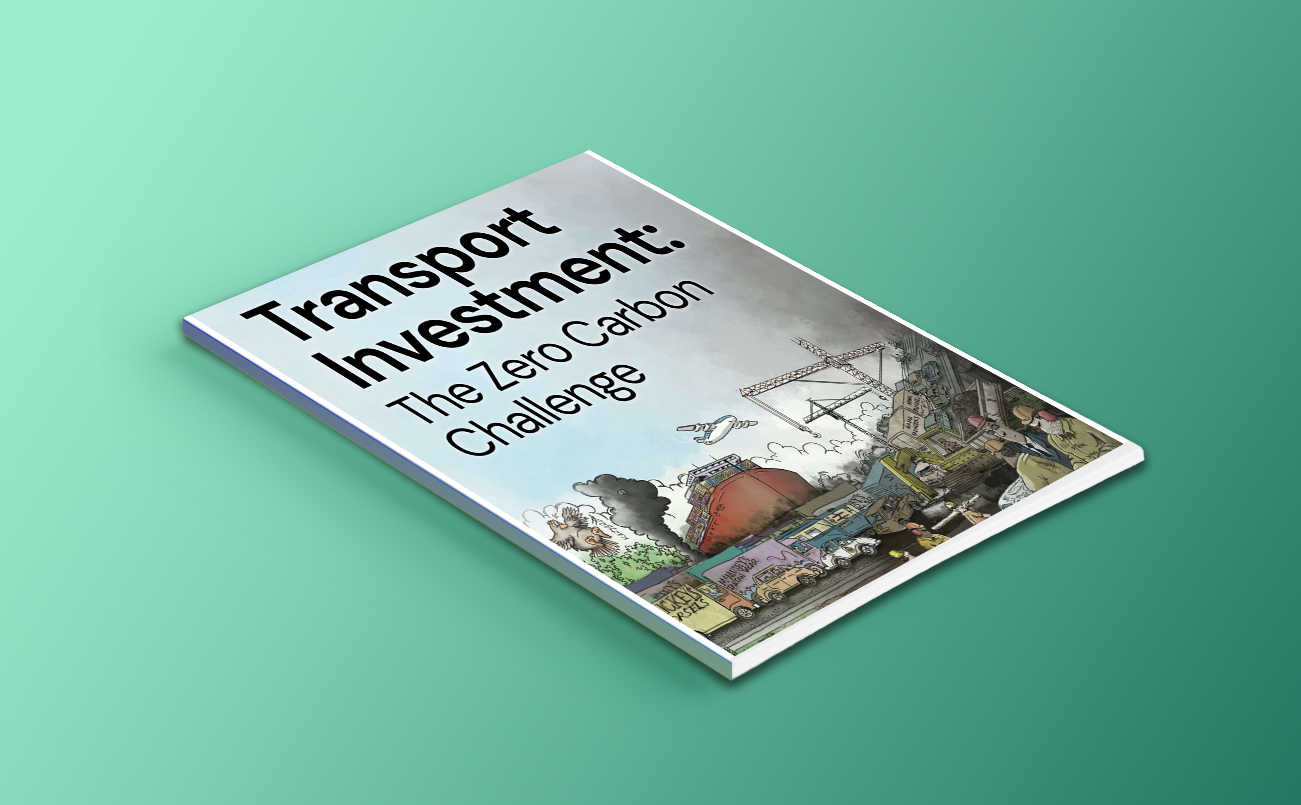
Transport Investment: The Zero Carbon Challenge

By Uncategorized

Context

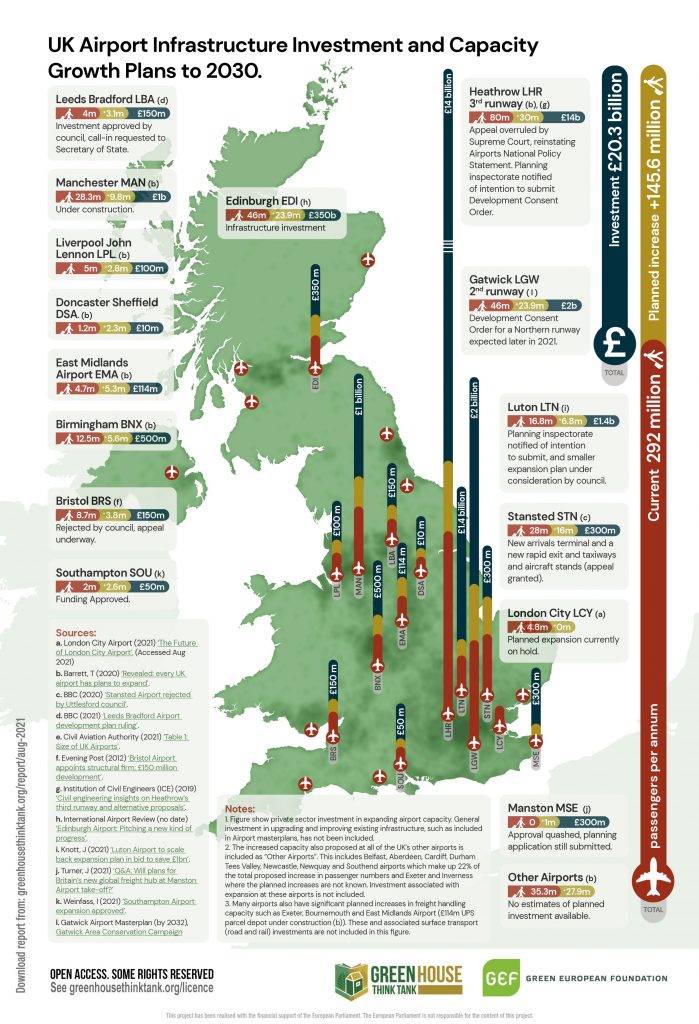
“Transport Investment: The Zero Carbon Challenge” is part of a project led by the Green European Foundation exploring what a climate emergency economy would look like through a rethinking of trade, industry and infrastructure investment. The report exposes the uncomfortable truth that a major shift in transport infrastructure investment is needed. It quantifies the massive scale of transport infrastructure investment plans across the UK and EU and how this fails to align to existing climate targets. This highlights that whilst heavy goods transport, shipping and aviation are some of the hardest to decarbonise, demand for these transport modes are not being managed or constrained in line with climate commitments.

Objectives

The report calls on transport to have far stronger carbon targets so that it is able to help drive down carbon emissions across the rest of the economy, rather than holding back the transition to zero carbon. A radical overhaul of transport infrastructure spending plans is needed so that funding is redirected from expanding capacity, to decarbonising existing transport. The report is framed ,using the Zero Carbon Policy Toolkit introduced in GEF and Green House’s August 2020 report, Trade and Investment Requirements for Zero Carbon.


Facing up to climate reality requires governments to stop driving transport growth. It is just as irresponsible to expand transport – which leads to burning of more petrol, diesel, kerosene and heavy fuel oil – as to dig a new coal mine in Cumbria. In both cases new infrastructure stands in the way of phasing out the burning of fossil fuels. Governments must ensure investment is redirected from expanding transport to decarbonising what we have already. Continued transport capacity growth should also be classed as Ecocide.” 


Download

Available in Spanish


Visual material


This publication has been realised by the Green European Foundation and Green House Think Tank with the financial support of the European Parliament. The European Parliament is not responsible for the content of this publication.


Freedom and Security in a Complex World (2021 edition)

By Uncategorized

Context

People all over the world are taking their future back into their hands. Together, they are taking initiatives in the fields of renewable energy, local food production, sharing tools, and so forth. This is the most hopeful movement of our time. Where the market and state fail, people are taking action. As free citizens, they are reinventing the collective, with open partnerships where personal development and social engagement go hand in hand. This observation seems to contradict what we experience every day. The system errors of our society model fill the newspapers: climate crisis, unstable banks, refugee flows. Accepted wisdom is that uncertainty is increasing. But both trends are happening, not by coincidence, at the same time.


Objectives

While examining the two interlinked concepts of Freedom and Security, this publication suggests that the answer needs to be the transformation into a socioecological society in the 21st century. It argues for the realisation of a societal project that strives for equal freedom for all people to flourish in security, within the boundaries of the planet, and proposes concrete steps towards it.


Download

Available in English here.

Available in French here.

Available in German here.

Available in Hungarian here.

Available in Spanish here.

Available in Macedonian here.

Available in Greek here.


This report presents a new and updated take on the 2017 version (Please see the English, French, German, Hungarian and Spanish editions from that year, which were part of the transnational project “A green transformation: Freedom and Security in uncertain times” ).

The 2021 report was developed in partnership with Oikos and with financial support from the European Parliament to the European Green Foundation. 

The Transformative Doughnut Economics Model

By Uncategorized

The doughnut economics model is increasingly presented as an alternative human development measure, meeting needs and crossing the boundaries of environmental degradation. In the last ten years, the model has been further developed, and more and more, cities are giving up measuring their development through GDP and deciding to switch to the doughnut model, which should ensure that human needs are met in accordance with natural boundaries.

Read more about it and how cities can be a fertile testing ground for the model in EnglishSerbian and Greek.

Organise! Object! Outsmart the Paradigm!

By Uncategorized

Read this publication and use it to learn about smart cities with an added Eastern European perspective, have some fun along the way and feel empowered enough to promote the critical solutions for smart city implementation in your city!

The Charter for the Smart City was produced as part of the project of the same name, and puts the values of democracy, connectedness, human dignity, privacy,  sustainability, and equality at the heart of smart cities. Local politicians and active citizens who share these values may use the principles in the Charter as starting points for democratic debate and informed moral judgment on technological innovations in their communities.


Also available in Albanian, Croatian, Russian and Turkish.


This publication was produced within the project “Charter for the Smart City II” organised by the Green European Foundation (GEF) with the support of Cooperation and Development Network Eastern Europe (CDN) and Wetenschapellijk Bureau Groen Links. It has been realised with the financial support of the European Parliament.

Just Transition Framing Paper

By Uncategorized
This paper is part of the Green European Foundation’s Just Transition transnational project. The project looks into the question of transforming from an extractive to a regenerative economy in a just and equitable way to find the necessary support among the population. The project is focused on collecting and sharing insights on the development of future-proof politics and policies, developed in a sensitive way that keeps in mind local specificities. The project is on behalves of GEF coordinated by OIKOS (Belgium), with as project partners Green House Think Tank (UK), Institute for Political Ecology (Croatia); Sunrise (North-Macedonia), Transicion Verde (Spain), Networked and Federation of Young European Greens (FYEG) and Networked (Serbia). In the course of the project, the partners will implement activities in their countries to increase awareness of the importance of a Just Transition all over Europe. Eventually, the partners will compile a book on the subject to be published September 2021.


You can also read this publication in:


Infrastructure Requirements for Zero Carbon

By Uncategorized

About the report

This report explores how incompatible our society’s current and planned infrastructure is with the rapid decarbonisation of the UK economy needed to deliver on the climate emergency. It focuses on three key sectors: freight transport, aviation and steel, and considers what changes are required to bring these into line with zero carbon goals, using the ‘blockers and enablers’ toolkit introduced in Green House’s August 2020 report, Trade and Investment Requirements for Zero Carbon.​
Jonathan Essex, one of the report’s authors, said:

Much of our existing industrial infrastructure, such as fossil fuel power stations and steel blast furnaces, is incompatible with zero carbon. Similarly, planned new transport infrastructure is still taking our economy in the wrong direction. The climate emergency means we must make different infrastructure choices. We need to manage down demand for energy and materials, and install renewable energy infrastructure faster. And we must reverse out investment in expanding road networks, ports and airports and make better use of what we already have. A climate-proof infrastructure investment strategy will be one that drives a change to smaller, circular economies that fit within environmental limits […].


This report is part of a wider project led by the Green European Foundation exploring what a ‘climate emergency economy’ would look like through a rethinking of trade, industry and infrastructure investment. The project involves Greenhouse Think Tank in the UK alongside Groenlinks in the Netherlands and Green Foundation Ireland.


Trade and Investment Requirements for Zero Carbon

By Uncategorized

As moves are being made to introduce a Climate & Ecological Emergency Bill in the UK, and a new Trade Bill is progressing through parliament post-Brexit, it’s an important time to be considering the implications of zero carbon for global trade and investment decisions. This report proposes a much-needed toolkit to help policy makers face up to climate reality and address the wider environmental impacts and the imbalances of power and wealth that underlie our global trade.

Download the technical annex here.

social security

Basic Social Security 2030

By Uncategorized

This GEF report uses the case of Finland to investigate challenges in current social security models, and provides a reform roadmap to a new basic social security system, with basic income as a central element.

This report is an edited version of the Finnish Green Think Tank Visio’s report ‘Perusturva 2030,’ published for international readers. The report looks at the challenges faced by the Finnish system as well as the principles for solving these challenges, and offers proposals for action for the parliamentary term 2019-2023 and further into the 2020s. While the focus is on Finland, the principles for a better social security system are applicable to any so-called developed country, and the concrete stepping stones and microsimulations work as examples on how to find solutions regardless of the current system in a given country.

This translation was realised by the Green European Foundation as part of its transnational project on Basic Income, a topic that will be further explored in the 2020 project Change of Mindset – Civil Society dialogue around UBI, Social Justice and Climate Impact.

Hold Your Local Hackathon on Social Rights

By Uncategorized

This guide has been created for those who wish to organise a hackathon on social rights, based both upon best practices from the world of tech and the experiences of the authors in running the more rights-based hackathon that took place in Serbia, Summer 2019.

Hackathon on Social Rights is published by the Federation of Young European Greens and is a result
of the Reclaim Your Social Rights! project.

The project is supported by the European Youth Foundation of Council of Europe . The Summer Hackathon is organised by the Green European Foundation with the support of the Federation of Young European Greens and with the financial support of the European Parliament to the Green European Foundation. The Council of Europe or the European Parliament are not responsible for the content of this project.


Download

Available in Greek

Climate Refugees and Climate Migration

By Uncategorized

The effects of climate change and consequential natural disasters is causing the mass displacement of peoples across the world, a phenomenon that will only be exacerbated as the climate crisis continues.

A response to this global challenge and a clear legal framework to recognise and protect climate refugees on an international, regional and national level are urgently required.

This working paper aims to serve as a basis for debate and exchange on the matter, exploring controversies around and difficulties in pinpointing this phenomenon to better understand how to respond it.

Mapping the state of discourse on climate migration on the international and European levels, the Green European Foundation hopes to foster a more constructive debate and increase awareness.

This paper has been published as part of the GEF project Environmental Migration and Climate Refugees.

Fair and Healthy Food

By Uncategorized

This discussion paper, written by Kati Van de Velde & Dirk Holemans from GEF partner Oikos, has been published as part of the GEF transnational project Fair and Healthy Food.

The paper explores the failings of the current agricultural and food system, and the possibilities for a transition to a sustainable and fair system, one which revaluates food as a human right, a public good and a commons.

Download the publication in Turkish and Serbian.

Handbook on Organising European Green Activists Training Programmes

By Uncategorized

In 2015, GEF and its partner Green foundations from Hungary, Austria, Czech Republic and Finland organised for the first time a project entitled “European Green Activists Training”. In the course of the project, the five partner organisations planned and organised trainings which explored the history, functioning and institutions of the European Union in a Green context. The training programme at the national level was complemented by a common European study tour to Brussels in spring 2016.

Considering the unique character of the European Green Activists Training programme, the project coordinators have decided to develop this handbook, disseminating good practice for future editions of the training within their own foundations, as well as among other organisations interested in training programmes for young activists. This publication is aimed at all organisations involved in educational activities for Green actors, such as Green foundations, Green parties, Green youth organisations and Green study centres in European countries, who are interested in discovering practical tools and tips on organising trainings which empower young people with the ambition to change Europe for the better.

The handbook has been updated in 2018, with a new design, and now features testimonials from previous participants on their experiences. It also includes tips from course coordinators on how to keep participants engaged after the training and on developing an alumni network to exchange ideas and knowledge.

Through this instrument, we mainly address those organisations which have little or no prior experience of organising European activist trainings, but we think that more experienced organisations can also find useful tips and tricks that may inspire their future educational projects.

Download your copy here!