Nuclear Power

By Uncategorized

Context

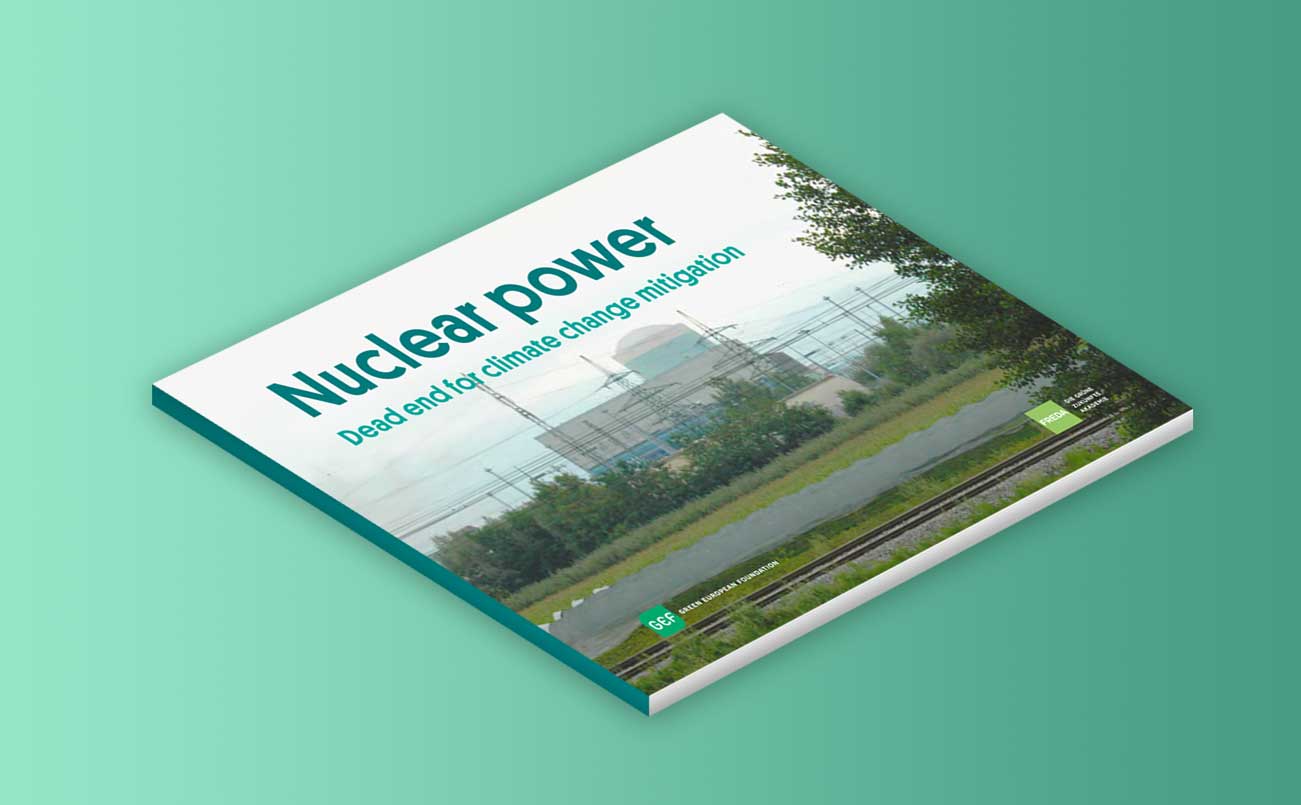
The nuclear power lobby is stronger today than ever. The lobbyists have succeeded in creating an enormous disparity in the perception of what to believe and reality. The post-Chernobyl generation is increasingly falling prey to the fairy tale of modern, safe, cheap and CO2 neutral nuclear power. These arguments can be quickly refuted and often only serve to conceal the ulterior motive: to increase the stockpile of nuclear armaments. Nuclear power will most definitely not save the environment.

Objectives

This publications argues that nuclear power is not the solution to climate change including a critical analysis of the main ten misconceptions about “green” nuclear power. It has been written in close cooperation with Martin Litschauer, Member of the Austrian Parliament and Anti-nuclear Spokesman of the Austrian Greens, and Maria Niedertscheider, Expert Assistant, Austrian Federal Environmental Agency. Th purpose of the brochures is to serve as guidance for a broad European discussion and as a concise summary of the narrative on nuclear power as a supposedly bridge technology.

If we want to protect ourselves and save the environment, we have to use solar, wind and geothermal energy, because these are the fastest and safest ways to achieve the energy transition.

Translations

Available in Turkish

Available in Slovenian


This publication, originally published by FREDA, has been realised by the Green European Foundation and FREDA with the financial support of the European Parliament. The European Parliament is not responsible for the content of this publication.

Go, but Slow: Neue Wege des Reisens

By Uncategorized

Context

When we talk about tourism, it’s all about the economy, but at the same time, we are talking about nature. However, these two terms don’t always go together well.  Moreover, the climate crisis and the energy transition will soon shift the tourism industry as we know it. Because travelling will be different in the future, we have collected a few examples from Austria and its border regions that show how this transformation could take place.

The transition to a more sustainable form of tourism is not a distant utopia. It is feasible – with the involvement of all local stakeholders, with the involvement of politics and economy, with consideration of the needs of people and nature.

Objectives

This brochure aims to call readers to rethink all aspects of the tourism sector at a national and European level. More often than not, the consequences of tourism go from a workforce suffering from low wages to working conditions that circumvent national regulations, especially in structurally weak regions of Europe. The damages caused to people and the environment have serious consequences. The same applies to the cost of a rapidly growing ecological footprint in the industry. All these facts are calling for joint European solutions.


This publication has been published by the Green European Foundation with the support of FREDA foundation (Serbia), and the financial support of the European Parliament to the Green European Foundation. The European Parliament is not responsible for the content of this publication.

Stara Planina: Tourism and Natural Resources

By

Programme

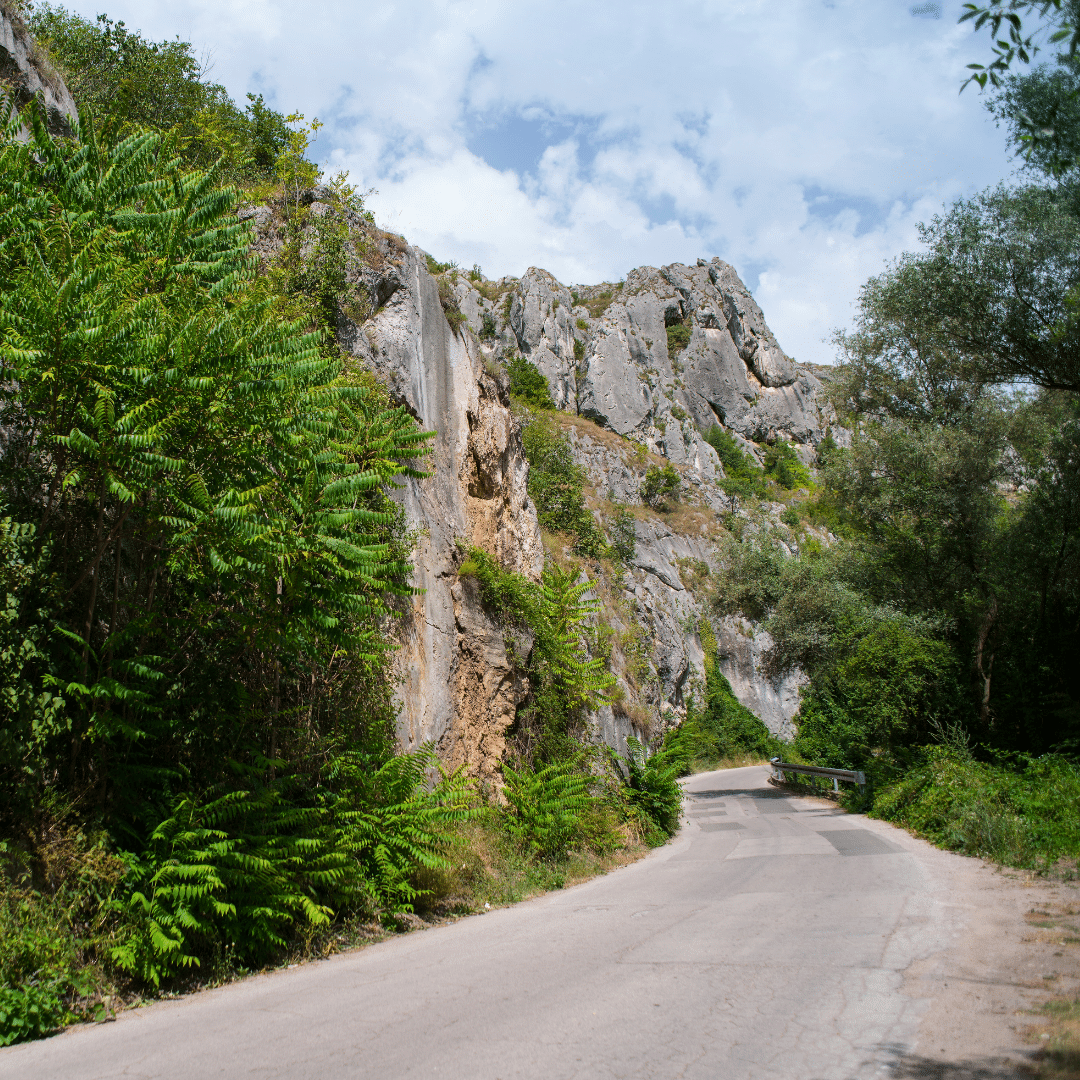
Throughout the study tour, partners will be meeting local stakeholders and activists, from the tourism sector as well as the wider community. Particular attention will be paid to the issue of water, as the mountain range plays an important role in the region’s water flows, but developments over the past two decades have significantly impacted the landscape. The programme is provisional and subject to change. 

September 15th 

  • Arrivals in Belgrade and initial project exchanges 
  • Travel to Pirot in the evening 

September 16th 

  • Visit Temska village, with Milinka Nikolić (environmental activist and Serbian MP for Moramo) – history of the fight for river preservation 
  • Head to Topli Do to see waterfalls and exchange with local activists 
  • Spend the night in Topli Do 

September 17th 

  • Head to Dojkinci village for a sustainable farm visit 
  • Meet members of the first energy collective form Serbia, based in the Balkan Mountains 
  • Return to Belgrade in the evening 

September 18th 

  • Closing partner meeting, departure from Belgrade 

Practicalities

Date: 15-18 September 

Location: Stara Planina and Belgrade, Serbia 

This is a closed study trip for selected project partners. Learn more about the project here. 


This study trip is organised by the Green European Foundation with the support of PolEkol and the financial support of the European Parliament to the Green European Foundation. 

Central and Eastern Europe Network of Green Foundations (Vienna)

By

Context:

In Eastern and Southern Europe, new climate movements and political ecology actors have emerged, and there is a recognizable and growing demand for green contents, ideas and connections. GEF is working on consolidating the greening of the public debate and political sphere in South and the East.

This will be done by bringing together green foundations, NGOs and think tanks working in the region to connect people and content, to facilitate synergies, and advance knowledge sharing political education. Specifically in Central and Eastern Europe, we aim to support the build-up of a self-sustaining community community of green political foundations (and equivalent actors).

Objectives:

  • Build mutual understanding on the political situation in the region.
  • Create safe spaces for sharing common challenges and best practices, as well as the exploration of opportunities for common work in the region.
  • Facilitate the co-creation of an autonomous network of Green political foundations and equivalent organisations from Central and Eastern Europe.

Speakers:

The event will be facilitated by the Green European Foundations Co-Directors, Ioana Banach and Laurent Standaert.

Programme:

Day 1: Political exchange

10h00-12h30 Arrival and setting the scene

14h00-15h30 Political discussion 1

16h00-17h30 Political discussion 2

17h30-21h00 Dinner with Green politicians and host organisation

Day 2: Community Building

8h30-10h30 Breakfast discussion

10h30-13h00 Pillars of CEE Network of Green Foundations

14h30-16h00 Governance and Next steps

Practicalities:

This is a closed event that will bring together representatives from the existing GEF partner organisations in the Central-Eastern Europe region.

You can learn more about GEF’s previous work with the partners in the Central and Eastern Europe region here.


This event is organised by the Green European Foundation in cooperation with FREDA – Die Akademie and with the financial support of the European Parliament to the Green European Foundation. The European Parliament is not responsible for the content of this event.

North Macedonia: Mass Tourism Alternatives

By

Programme

Throughout the study tour, partners will be accompanied by a local expert in sustainable tourist practices as well as a video crew who will be filming and interviewing key case studies and stakeholders along the way. 

May 27th 

  • Arrivals in Skopje and initial project exchanges 

May 28th 

  • Morning departure from Skopje 
  • Visit of Mavrovo national park and Jance village – sustainable tourism practices and presentation on construction and building policies 
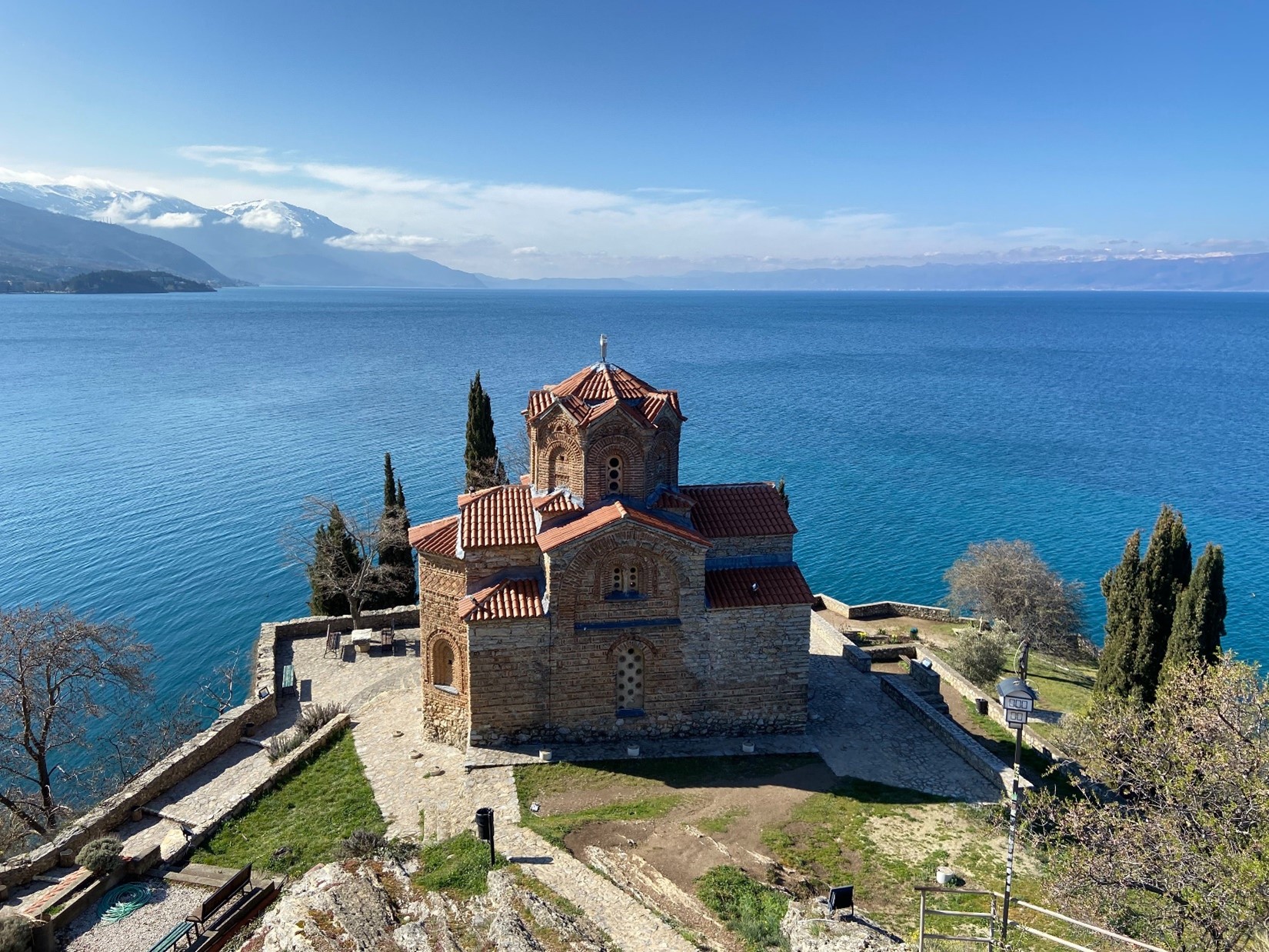
  • Arrival in Ohrid (UNESCO heritage), with dinner at nearby Kuratica village and presentation on alternative touristic offers 

May 29th 

  • Morning exploring Ohrid, partner meetings and stakeholder conversations 
  • Visit village of Dihovo – local tourism practices and slow food movement 
  • Arrival in Demir Kapija – winery tour and accommodation – and meeting with Vlado Srbinovski (Balkan Association of Alternative Tourism) 

May 30th 

  • Partner meetings, return to Skopje 

Practicalities

Date: 27-30 May 

Location: North Macedonia (Skopje and Lake Ohrid region) 

This is a closed study trip for selected project partners. Learn more about the project here. 


This study trip is organised by the Green European Foundation with the support of ASSED Sunrise and the financial support of the European Parliament to the Green European Foundation. 

Barcelona: Proximity Tourism

By

Programme

January 21st

09:00 – 10:30  Introduction of the programme and the Metropolitan Area of Barcelona

11:00 – 12:30     Visit to Fundesplai Youth Hostel

12:30 – 13:30    Guided visit to “Eat, Act, and Impact” exhibition on New Food Systems

13:30 – 15:00    Lunch

15:00 – 16:00   Meeting with Association for Tourism and Gastronomy

16:00 – 17:00    Visit to Agriculture Park of Baix Llobregat

17:00 – …            Dinner and free time

January 22nd

09:30 – 11:30   Guided visit of Natural Park wetlands of Llobregat Delta

12:00 – 12:30    Visit to El Prat beach

12:30 – 13:30    Guided visit to CRAM (Recovery centre for sea animals and coastal birds)

14:00 – 15:30   Lunch

15:30 – 16:00    Closing

Practicalities

Date: 21-22 January

Location: El Prat, Barcelona Metropolitan Area, Spain

This is a closed study trip for selected project partners. Learn more about the project here.


This study trip is organised by the Green European Foundation with the support of Fundacio Nous Horitzons and the financial support of the European Parliament to the Green European Foundation

Rust: National Park Tourism

By

Programme

12 November

17:00 – 19:00    Arrivals

19:00 – 21:00    Traditional tavern dinner with regional cuisine

13 November

10:30 – 12:00    Ferry across Neusiedlersee

12:00 – 13:30    Lunch meeting with national park managing expert Alois Lang

13:30 – 14:30    Presentation on national park management and marketing (visitor centre)

14:30 – 16:30    Hands-on tour of the national park

18:00 – 20:00   Rust city tour with emphasis on tourism management and marketing

20:00 – 21:30   Dinner

14 November

10:30 – 12:00    Tour at sustainable vineyard – showcase of environmentally friendly farming techniques

12:30 – 13:00    Closing and departures

Practicalities

Date: 12-14 November, 2021

Location: Rust, Austria

This is a closed study trip for selected project partners. Learn more about the project here.


This study trip is organised by the Green European Foundation with the support of FREDA and the financial support of the European Parliament to the Green European Foundation.

Pula: Seasonal Tourism

By

Programme

13 October

16:00 – 17:00    Arrivals to Pula

17:00 – 18:30    Short sight-seeing tour of Pula

19:30 – 21:00    Dinner with hotel director

14 October

08:00 – 09:00 Breakfast meeting with Pula tourist board president

9:00 – 12:00     Visit to Arenaturist hotel

12:30 – 14:00    Lunch

14:00 – 15:00   Tour of community centre ROJC

15:00 – 17:00    Meeting with Dušica Radojčić from the Green-Left political platform / Pula city council

17:00 – 20:00   Project partners meeting: fiches, case studies, methodology, and lessons learned

20:00 – 21:30   Dinner

15 October

08:00 – 09:00 Breakfast

09:00 – 11:00   Project partners meeting: publication outline, policy recommendations, 2022 activities

11:30 – 15:00     Visit to Brijuni national park or local farm Kumparička

15:00 – 16:00   Closing and departures

Practicalities

Date: 13-15 October

Location: Pula, Croatia

This is a closed study trip for selected project partners. Learn more about the project here.


This study trip is organised by the Green European Foundation with the support of the Institute for Political Ecology and the financial support of the European Parliament to the Green European Foundation.

Sustainable Woodshop [Goldegg]

By

Context:

This event is part of the Green European Foundations project Deforestation and Climate Change with the support of FREDA and the Green Institute Greece and it follows the three events held in March 2021 on productive reforestation, climate change, desertification, erosion and the EU Recovery and Resilience Fund and one in May 2021 on Agroforestry & Ancient Forest Protection.

About the event

This event will gather experts in the fields of nature conservation, forestry policy and deforestation activists and will provide best practice examples from a Sustainable Woodshop – Thoma Holz – Gesund und nachhaltig wohnen mit Holz. During the event, our green partners will also present a report produced based on the outcomes gathered in the previous three events organised by GEF and the Greek Green Institute. The focus of these previous webinars was mainly on productive reforestation in Greece and will show best practice examples from all over Europe.

Programme


Wednesday 6th April

Arrival of participants until 12:00

A welcome snack will be provided

13:00 – 15:00 Thoma Tour – Thoma Holz – Gesund und nachhaltig wohnen mit Holz

15:30 – 18:00 Presentations of best practices and the Reforestation publication and exchange

18:30 – 19:30 Dinner

20:00  Film screening

Thursday 7th April

9:00 – 10:00 Networking Breakfast

10:30 – 11:30 Tour of Castle Goldegg

11:30 – 12:30 Lunch

Departures

Speakers

  • Dagmar Tutschek – Chairwoman (FREDA), Co-President (Green European Foundation) – Introduction
  • Rigas Tsiakiris, Forest Ecologist, Scientific Committee of the Green Institute Greece
  • Kalliopi Stara, Researcher, Department of Biological Applications and Technology, University of Ioannina
  • Matthias Schickhofer, Conservationist, book author, photographer
  • Bogdan Barbu, Environmental activist and Co-President of a newly formed green-minded party in Romania
  • Simon Heilig-Hofbauer, Salzburg Greens
  • Erwin Thoma, Chief Executive Officer, Ing. Erwin Thoma Holz GmbH; Entrepreneur; Author


Practicalities

Date and time: 6-7th April

Audience: Deforestation & Climate Change Project partners, GEF Partners, interested stakeholders

Venue & Accommodation: the event will take place at Thoma Holz and study visits will be organised to explore different sustainable woodshop best practices.

Registrations: Registrations are now open <<


Audio visual materials

Productive reforestation for living rural landscapes – Publication

In this publication you will find concrete recommendations on how to address the effects of climate change and biodiversity loss through policy change in the agricultural and forestry sectors, with agroforestry systems as part of the solution.


This project is organised by the Green European Foundation with the support of FREDA and Green Institute Greece with the financial support of the European Parliament to the Green European Foundation. The European Parliament is not responsible for the content of this event

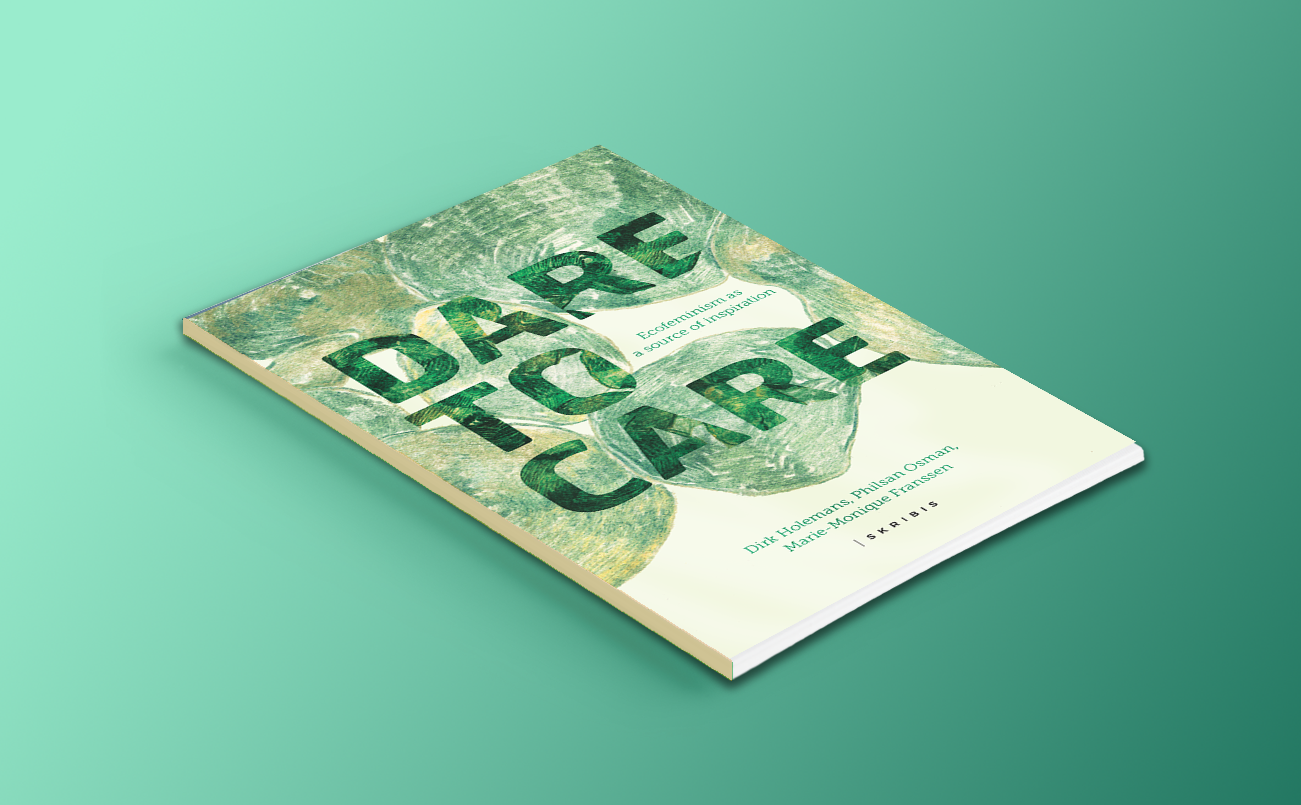
Dare to Care: Ecofeminism as a source of inspiration

By Uncategorized

Context

The concept of care has become increasingly important as COVID-19 continues to make its way through populations worldwide. However, care extends beyond the strictly medical: it encompasses everything we do to preserve and restore our planet. The erosion of the welfare state, the continued plundering of the Global South, the lack of solidarity, and the persistent crossing of planetary boundaries is alarming to say the least. We can only turn the tide if we leave the instrumental view of nature and humans behind and radically care for all earthlings.

Can care offer us a fresh start based on interconnectedness, and generosity? How can care, as an emancipatory principle, underpin politics and the economy?


Objectives

In this booklet, we offer you a crash course in ecofeminism and invite you to get inspired by different people and movements across the world. Ultimately, these lessons, which relate to the many challenges we face today, aim to encourage us all to question ourselves about what truly means to build an “economy of care” in Europe and beyond.


Translations

Available in Polish.

Available in Turkish.

Available in Greek.

Available in Serbian.

Available in E-Reader format or to order in German.


About the authors

Dirk Holemans is the coordinator of Oikos think tank and co-president of the Green European Foundation (GEF). He is a researcher, lecturer and the author of Freedom & Security (EPO, 2016).

Philsan Osman studies African languages and cultures at the University of Ghent, Belgium and is a writer, activist and community builder.

Marie-Monique Franssen is staff member of Oikos think tank and co-author of The Ecological Compass (EPO, 2020). She has a master’s degree in cultural anthropology.


These translations have been realised with the support of Oikos, FREDA, and Strefa Zieleni and the financial support of the European Parliament to the Green European Foundation. The European Parliament is not responsible for the content of this publication.

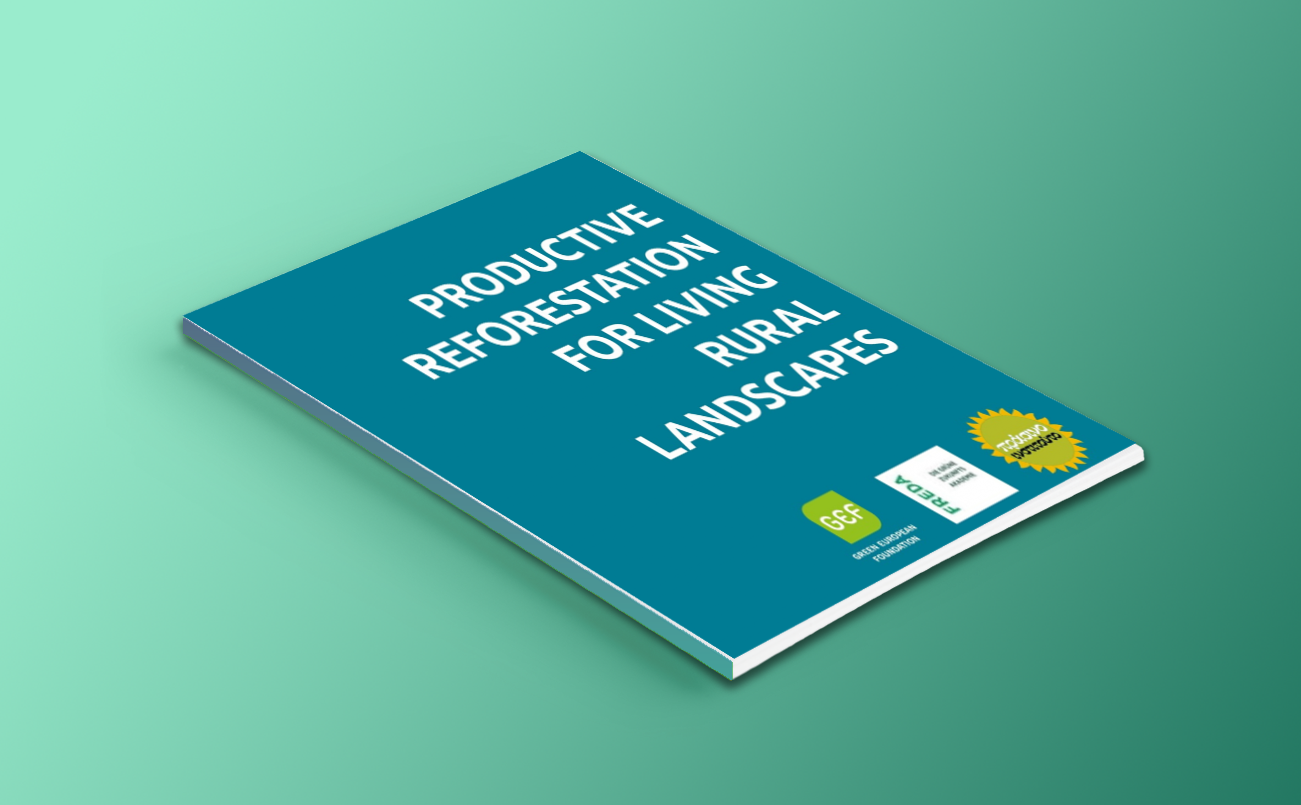
Productive reforestation for living rural landscapes

By Uncategorized

This publication is part of the Green European Foundation’s Deforestation and Climate Change project and it compiles best practice examples gathered during the three webinars organised in March 2021 by GEF and the Green Institute Greece focusing on productive reforestations for pasture, beehiving, recreation and forestry as a means to combat climate change.

Agroforestry and small-scale traditional farming systems as well as multi- functional forest landscapes survived in many rural areas in Europe (as in mountains and islands) that escaped the large scale agricultural transformation that has been supported by the EU Common Agricultural Policy (CAP). In order to make the agricultural landscapes of Europe more resilient to climate change, funds like the NextGenerationEU must be appropriated for only sustainable projects.

In this publication you will find concrete recommendations on how to address the effects of climate change and biodiversity loss through policy change in the agricultural and forestry sectors, with agroforestry systems as part of the solution.


Also available in Greek: PARAGOGIKES ANADASOSEIS


Inside Climate Protection- FREDA Forum Talk

By

Context

Climate protection is a hot topic – but with our webinar, we want to approach it with a long-term outlook, by exploring how climate protection could be a driving economic factor in getting us out of the crisis.

We will be discussing questions like:

  • What effects on the economy, society and ecology will the climate protection measures submitted to RRF and the objectives of Austria`s new climate protection legislation have?
  • Outlook for 2030/2040: What are our current options that will help shape the future and permit us to take advantage of the coming upheavals to create a sustainable outlook for the transformation of society?
  • Feedback & concrete proposals: Strengths and potential weak spots – in which areas do we need to take action? At the national level, at the European level?

Practical Information:

Date and time: May 04, 2021, 19:00-20:30 (CET)

Language: This webinar will take place in German/English

Audience: This webinar is open to the general public.

Please note the event will be organised through the ZOOM platform, with YouTube live.
Simultanous translation with Zoom only.

Registration:  https://zoom.us/webinar/register/WN_XKgyH-odRpK39QTAu1HQFA

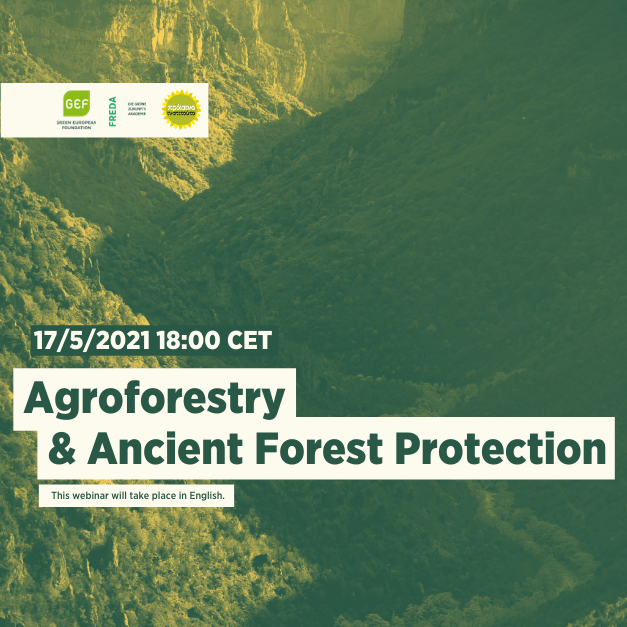
Agroforestry & Ancient Forest protection

By

About the Event:

Agroforestry and small scale traditional farming systems as well as multi- functional forest landscapes survived in many rural areas in Europe (as in mountains and islands) that escaped the large scale agricultural transformation that has been supported by the EU Common Agricultural Policy (CAP). In order to make the agricultural landscapes of Europe more resilient to climate change, funds like the NextGenerationEU must be appropriated for only sustainable projects.

This event will gather experts in the fields of nature conservation, agriculture science & policy and will provide best practice examples from Greece and Romania.

A summary report / booklet produced based on the outcomes gathered in the previous three events organised by GEF and the Greek Green Institute will be presented. The focus of these previous webinars was mainly on productive reforestation in Greece and will show best practice examples from all over Europe.

Context:

This event is part of the Green European Foundations project Deforestation and Climate Change with the support of FREDA and the Green Institute Greece and it follows the three events held in March on productive reforestation, climate change, desertification, erosion and the EU Recovery and Resilience Fund.

The aim of the event is to explore the following questions:

● How applied agroforestry systems in practice could be supported by the EU Common Agricultural Policy?

● How to ensure that farmers, landowners living in less favourable areas benefit from the Recovery Fund?

● How could the EU found/support the multifunctional forestry bases not only on timber production but also on non timber products such as old growth local varieties of fruits and wild fruiting trees and berries as well as mushrooms?

● How to maintain the old multifunctional mountain landscapes and ecosystems that are abandoned by traditional agricultural activities?

Speakers:

Dagmar Tutschek – Chairwoman (FREDA), Board Member (Green European Foundation) – Introduction

Dr. Rigas Tsiakiris – Forest Ecologist,  Scientific Committee of the Green Institute Greece

  • Introduction to the GEF and Greek Green Institute’s Booklet on productive reforestation, presenting best practices

Martin Häusling – MEP, European Parliament

  • EU Common Agricultural Policy and traditional forms of agriculture

Matthias Schickhofer Conservationist, book author, photographer 

  • Integration of (strict) nature protection and small scale agriculture in the Carpathians

Michael Vrahnakis, Professor (Dept. Forestry & Wood Sciences & Design), University of Thessaly, Karditsa, Greece

  • The need to revitalize traditional silvoarable landscapes in the Mediterranean

Anastasia Pantera – Professor, Department of Forestry and Natural Environment Management, Agricultural University of Athens

  • Silvopastoral systems in time

Moderated by: Anna Deparnay-Grunenberg, Member of the Greens/EFA Group, European Parliament


Programme:


17:30 Technical check

18:00 Introduction Anna Deparnay-Grunenberg (Member of the Greens/EFA Group, European Parliament) & Dagmar Tutschek (FREDA)

18:10 Rigas Tsiakiris, Forest Ecologist,  Scientific Committee of the Green Institute Greece

Presenting findings of the first three events as part of the GEF Deforestation & Climate change projects on productive reforestation and best practices.

18:20 Martin Häusling, MEP, European Parliament 

Shortly before the decision on the common agricultural policy – where are we going? Sustainable farming methods. We need to shed light on traditional forms of agriculture in Europe. Currently almost 90% of the farmers have less than 10 hectares.  Austria as an example of what can be rebuilt with well-spent regional funds. What actually is sustainable forestry practice by definition?

18:35 Matthias Schickhofer, Conservationist, book author, photographer – Integration of (strict) nature protection and small scale agriculture in the Carpathians

Biodiversity-rich ecosystems are rare in the EU and continue to vanish. The biodiversity richness of landscapes correlates with the absence or the low degree of industrialization. This applies to agriculturally used areas as well as to forests. In the Carpathians (in particular in Romania), biodiversity-rich natural forests and a mosaic of ancient small-scale agriculture land have survived. Tragically, increased logging intensity is progressively threatening some of EU’s most valueable biodiversity hotspots (which led to a conflict between Romania and the EU). However, strict protection of natural ecosystems and low impact economic use (small scale farming, nature tourism etc.) do not have to be contradictions.

18:45 Michael Vrahnakis, Professor (Dept. Forestry & Wood Sciences & Design), University of Thessaly, Karditsa, Greece – The need to revitalize traditional silvoarable landscapes in the Mediterranean

Traditional silvoarable systems occupy a significant part of the Mediterranean landscapes, although they are either mis-operated or abandoned. It is important to revitalize these systems and to provide again to the society with a variety of ecosystem services. Land abandonment and restoration of traditional (and modern) small-scale agroforestry must be included in environmental policy agenda.

18:55 Anastasia Pantera, Professor, Department of Forestry and Natural Environment Management, Agricultural University of Athens – Silvopastoral systems in time (examples), work of science community

Silvopastoral systems are traditional agroforestry systems where livestock production is integrated with trees and shrubs.  Since their introduction to the Mediterranean region, livestock became part of the environment and co-evolved together over the centuries. Nowadays silvopastoral systems are threatened by the two extremes: overgrazing and abandonment. Sound management is urgently needed to support and preserve them as part of our natural environment heritage.

19:05 Questions by Anna Deparnay-Grunenberg, Member of the Greens/EFA Group, European Parliament

19:30 Questions by the audience / speakers (Open questions with voting)

20:00 End of the webinar 


Practicalities:

Where: Online platform – ZOOM

Date:  17th May

Time:  18:00 to 20:00 CET

Audience: This webinar is open to the general public

Registrations: Click Here

Language:  This webinar will be in English language with simultaneous translation to German.


This event is organised by the Green European Foundation with the support of FREDA – Die Grüne Zukunftsakademie & Greek Green Institute and with the financial support of the European Parliament to the Green European Foundation.The European Parliament is not responsible for the content of this event.

Climate Change, EU Recovery and Resilience Fund and Productive Reforestations

By

About the Event

This third concluding online event aims to map the different aspects and initiatives on productive reforestation, agro-climatic zoning and multi-functional landscapes in Greece. Target groups are government officers, green-minded stakeholders, NGO’s, local-regional authorities and experts. There will be presentations on behalf of the speakers on various topics and a first attempt to derive comprehensive findings. These findings together with the first two events will be compiled in a booklet at the end of the project with concrete recommendations for the forestry sector.


Context

This event is part of the Green European Foundations project Deforestation and Climate Change with the support of FREDA and the Green Institute Greece.


Speakers

  • Dr. Athanasios Kizos – Professor of Rural Geography, Department of Geography, University of the Aegean
  • Dr. Ioannis Xatzigeorgiou – Asssistant Professor of Agricultural University of Athens
  • Dr. Nikolaos Dalezios – Retired Professor of Agrometeorology – Remote Sensing, University of Thessaly
  • Dr. Despina Paetaridou – Forester – Environmentalist, Department of Forest Nurseries, Forest Genetic Resources and Reforestation, Ministry of Environment & Energy
  • Dr. Peristera Kourakli – Forester – Environmentalist,  Coordinator of National Forest Strategy Working Group,  Ministry of Environment & Energy
  • Dr. Petros Kakouros – Forester – Environmentalist, Member of the Editorial Committee of the magazine “ECOTOPIA”


Moderator

  • Dr. Rigas Tsiakiris – Forest Ecologist,  Scientific Committee of the Green Institute Greece


Practicalities

The webinar will be held through the ZOOM platform: https://us02web.zoom.us/j/82743911031?pwd=S1BFUERBT1NkSXRxd0xOOG4yRGFiZz09
Meeting ID: 827 4391 1031

This event will be in Greek language


This webinar is organised by the Green European Foundation with the support of Green Institute Greece and with the financial support of the European Parliament. The European Parliament is not responsible for the content of this webinar.

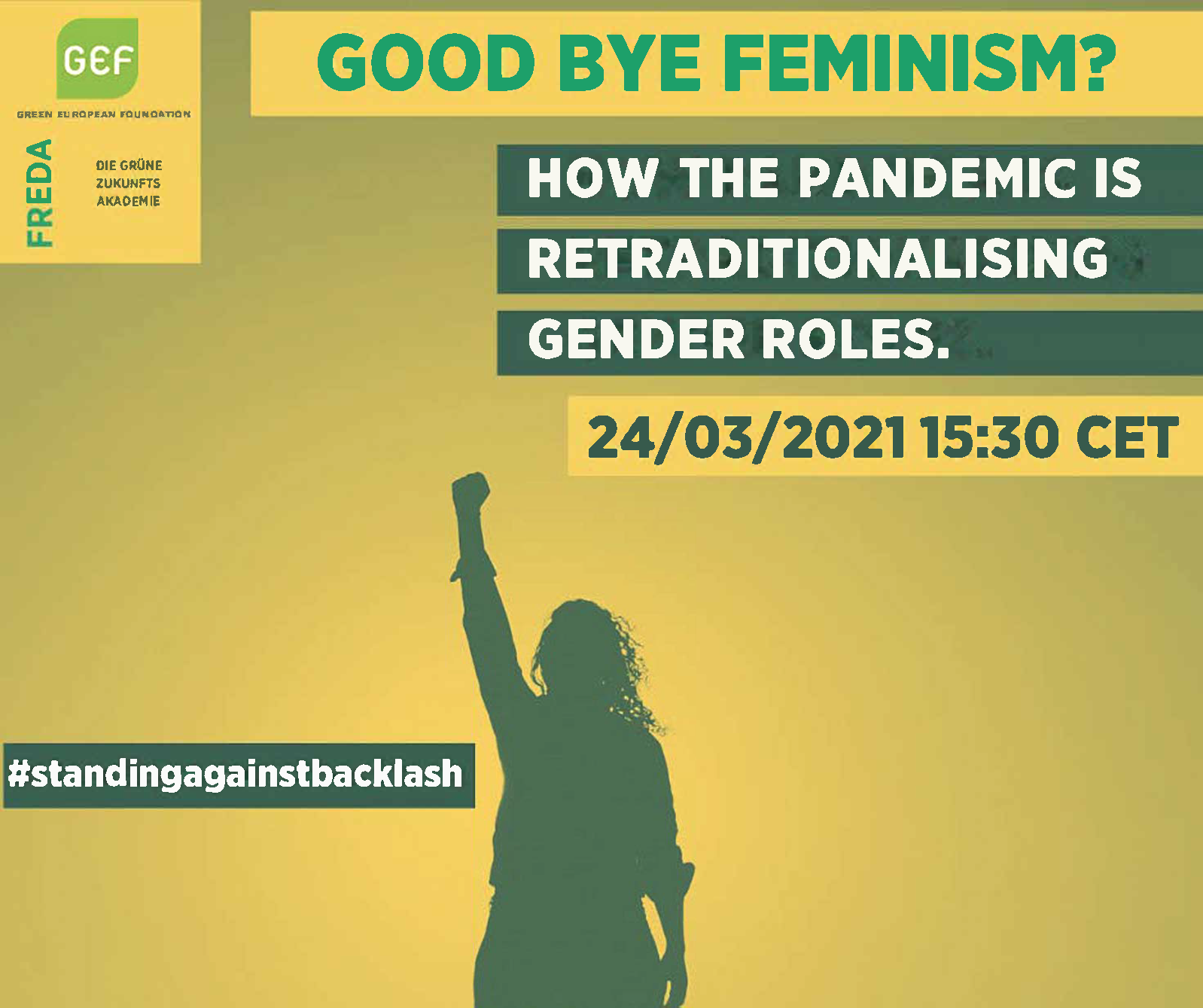
Goodbye feminism? How the pandemic is retraditionalising gender roles

By

About this event

Since March 2020, social life has somehow resembled a “Pandemian Rhapsody”: “caught in a landside, no escape from reality”, and, just like Freddy Mercury in his song, we could in fact wonder if the current times are “the real life or just fantasy”. In any case, daily realities paint an unambiguous picture.

Women’s liberation has been progressing for a century in Europe, and yet in just one year, Covid-19 has acted as a catalyst for political and societal failures. Even in Europe, it seems that we are still generations away from equal rights and structural justice for women. Amending a law does not mean that sexism vanishes from the head of the people. On the contrary, women are still far too often confronted with outright misogyny.

With this talk, we aim to depict how one year of Covid has shaped society and how it is affecting our everyday lives all over Europe – especially those of women. What do we need to consider – as women, and Green politicians – and how do we take it from here?


Speakers

The floor will be given to:

  • Ricarda Lang, Federal Deputy Chairwoman and Spokesperson on women’s affairs for BÜNDNIS 90/DIE GRÜNEN, Germany
  • Liljana Popovska, Former Member of the North Macedonian Parliament and Leader of the Green Party – DOM, Board Member of the NGO Green Institute, North Macedonia
  • Hilal Gencay, Author of the report “Being a Woman during the Pandemic”, Women´s Human Rights – New Solutions Association, Turkey.

Being a feminist means fighting for equality, for the expansion of rights, for the dismantling of stereotypes, and for an end to violence.”
08/03/2021, Constanza Alonso, local politician, Argentina


Practicalities

The webinar will take place on 24th March from 15:30 – 17:00 CET, and will be in English with German interpretation.

The event will be held on Zoom. To register, please head to https://zoom.us/webinar/register/WN_y_CValNETAuq4oFkniWGZwhttps://zoom.us/webinar/register/WN_y_CValNETAuq4oFkniWGZw


This webinar is organised by the Green European Foundation with the support of FREDA – die Akademie and with the financial support of the European Parliament.

Desertification, erosion and productive reforestation

By

About the Event:

This event will focus on rural areas of the EU, the European Green Deal in the frame of the19th session of the Committee for the Review of the Implementation of the United Nations Convention to Combat Desertification..

Green European Foundation with the support of FREDA and the Green Institute Greece are opening the discussion for the new EU budget for “Recovery and Resilience” with the aim of enhancing the production of quality agricultural products, supporting local communities, mitigating the loss of biodiversity and the effects of the climate crisis.

Context:

This event is part of the Green European Foundations project Deforestation and Climate Change.

A total of three events will be organised based on the different aspects of the same topic. The aim is to derive guidelines for the type of expenditures for productive reforestations needed to meet Climate Change mitigation targets (e.g. resilience of Mediterranean anthropogenic forest ecosystem).


Speakers:

  • Soil and Desertification- The case of Greece
    • Dr. Christos Tsadilas – Agronomis, Soil scientist, f. Director of the Soil Mapping & Classification Institute ETHIAGE (now ELGO-DEMETER)
  • Geiospatial technology in the erosion and desertification research
    • Dr. Dionisios Kalivas – Professor at the Agricultural University of Athens
  • Sustainable Rangeland management against desertification: best practice applications
    • Dr. Vasilis Papanastasis – Forest – Rangeland Ecologist. F. Director of the Laboratory of Rangeland Ecology, Professor at the School of Forestry & Natural Environment, Aristotelian University of Thessaloniki
  • Autochthonous breeds of grazing animals: how could we regenerate our islands?
    • Dr. Yannis Kazoglou – Agronomist – Rangeland Ecologist, Assoc. Professor University of Thessaly & General Secretary of the Association of the Greek Shorthorn Cattle Breed
  • The 30 years of experience of the ‘Kallidendron’ method for the successful planting and growing of trees in desert and arid envirionments 
    • Dr. Spiros Karkabounas – Professor of Environmental Physiology, Medical Department, University of Ioannina
  • Landscape restoration in the Aegean: the example of Andros through the project – LIFE TERRACESCAPE 
    • Dr. Theodora Petanidou – Professor of Ecology & Ecogeography, Department of Geography, University of the Aegean


An honorary introductory greeting will be addressed by the emeritus professor of the Agriculture University of Athens, Dr. Nikolaos Giasoglou, f. Chairman of the National Commission for Combating Desertification, pioneer for the participation of Greece in the signing of the Convention for the Suppression of Desertification and the creation of the first National Plan for Combating Desertification (1999).

The event will be moderated by the Forest Ecologist Dr. Rigas Tsiakiris on behalf of the Scientific Committee of the Green Institute Greece

Programme:

Starting time: 18:00

Estimated end time: 20:30

Practicalities:

The webinar will be held through the ZOOM platform:

https://us02web.zoom.us/j/88244683827

Meeting ID: 882 4468 3827


This webinar is organised by the Green European Foundation with the support of Green Institute Greece and with the financial support of the European Parliament. The European Parliament is not responsible for the content of this webinar.

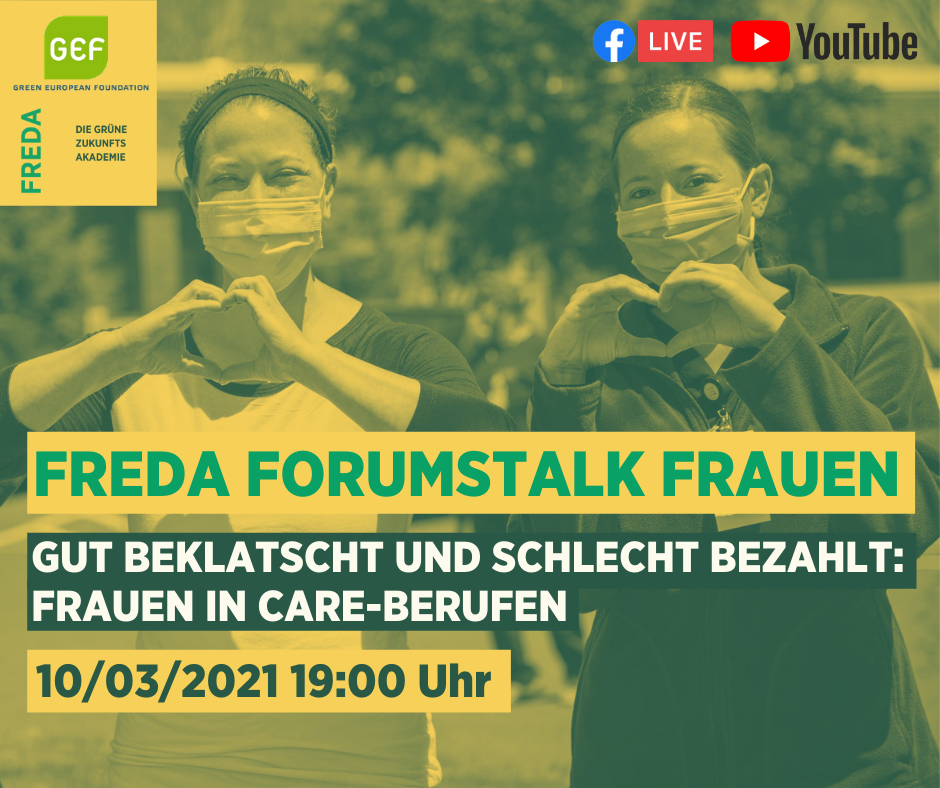
Women in care work during the pandemic

By

About the Event

The Covid crisis has highlighted that an overwhelming majority of care workers are women. This makes them essential, and during the pandemic they have been at the frontline, This event will focus on the following quesions: what has changed for women frontline workers during the pandemic, and what hasn’t? What’s the State of Play and what remains to be done?


Programme

Speakers:

  • Meri Disoski,  Elected representative to the National Council of Austria and Spokeswoman to the Austrian Greens
  • Katharina Mader, researcher at the University of Vienna with a focus on feminist economics
  • Beate Kayer, midwife and Vice-President of the Austrian Committee of Midwives
  • Alexandra Geese, Member of the Greens/EFA Group in the European Parliament

Moderation

To be confirmed


Practicalities:

The online event will be broadcasted via ZOOM


Language:

This event will be in German language only.